How I picked these
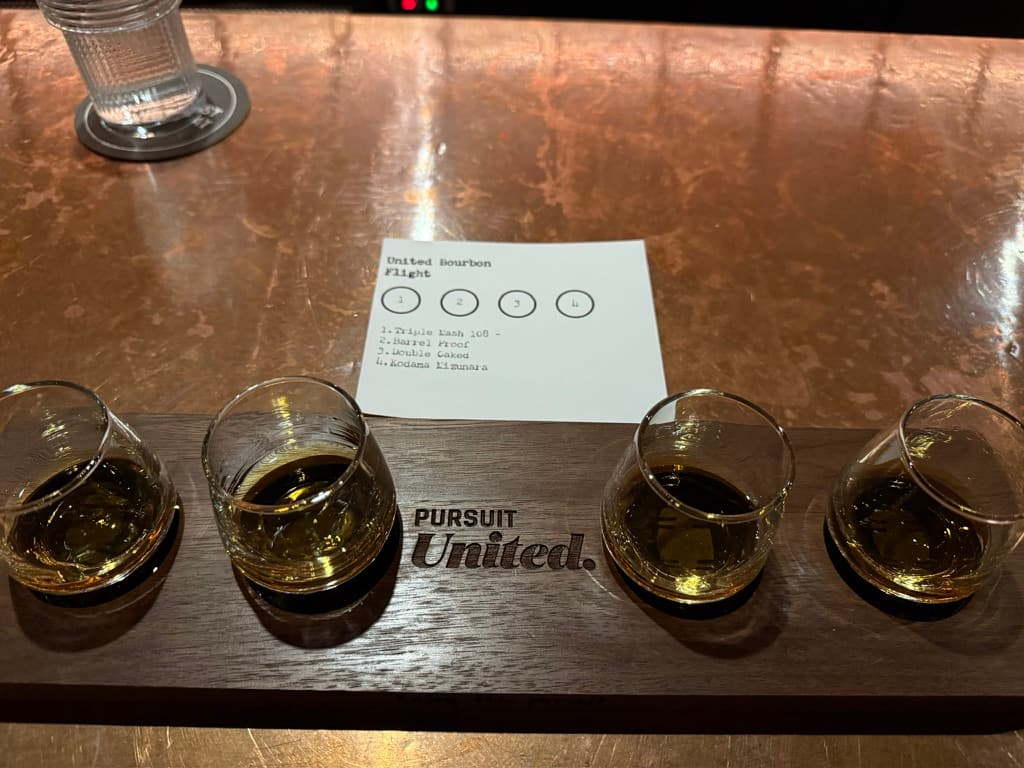
I've hosted a few tastings at home, mostly casual evenings with friends. I pour them in Glencairns, and my go-to format is a proof ladder, lowest proof first and barrel proof last. Bottle suggestions come from our existing guides and a 150+ bottle collection; the pour sizes and bottle math are arithmetic, not a drinking target.
Updated Sep 23, 2026
Three bourbons. Four to eight friends. A half-ounce pour of each, in the same kind of glass for everyone, lowest proof first. Hide the bottles until everyone has picked a favorite, then reveal them one at a time with the price. That's a bourbon tasting, and you can host one this Friday with what's already in your kitchen plus a bottle or two.
Everything below is the detail behind that paragraph: how much to buy, how to run the flight, what to put on the table, and how to pace the night so it ends well. I've hosted a few of these, mostly casual ones with friends, and this is how I'd set one up again.
How many bourbons, how many guests, and how much to pour
Three bourbons is the sweet spot. Two is a comparison, not a flight. Four works for a group that tastes often, but by the fourth glass most palates are tired and the conversation has started to drift. Three gives the night a beginning, a middle, and an end, and it keeps the total amount of alcohol reasonable.
Four to eight guests. Below four, it's just drinks with friends (which is fine, but you don't need a plan). Above eight, the table splits into side conversations and the reveal loses its moment. If you have twelve people coming, run two tables with the same three bottles and reveal together.
Half an ounce per pour. That's enough to nose, sip twice, and go back for a third look. If your group is newer to bourbon or you're pouring barrel proof, a quarter ounce is plenty. A standard US tablespoon holds almost exactly half an ounce, so you don't need a jigger to keep pours even.
The bottle math
A 750 mL bottle holds about 25 ounces. Even a full table barely makes a dent.
| Guests | From each bottle | All three bottles | Bottles to buy |
|---|---|---|---|
| 4 | 2 oz (60 mL) | 6 oz (180 mL) | One of each |
| 6 | 3 oz (90 mL) | 9 oz (270 mL) | One of each |
| 8 | 4 oz (120 mL) | 12 oz (360 mL) | One of each |
So don't buy doubles. One bottle of each bourbon covers the flight with most of it left over for pours after the reveal, or for the next tasting. If you already own one or two of the bottles, you may only need to buy one.
Blind or open? Pour it blind
At one of my tastings, the cheapest bottle on the table won. It was poured blind, so nobody was voting for a label or a price tag. They just liked that glass best. That's the best argument I know for hiding the labels.
When people can see the bottle, the label and the price do a lot of the tasting for them. A familiar name gets a pass. An expensive bottle gets the benefit of the doubt. Pour the same three bourbons blind and people start trusting their own palate, which is the whole point.
Open tastings have their place. If you're teaching friends the difference between styles, or everyone wants to know what to buy afterward, seeing the bottles helps. But for a party, blind is more fun and more honest.
How to run it blind
- Cover the bottles. Brown paper lunch bags work. So does a dish towel and a rubber band. Tape a letter (A, B, C) to each one.
- Assign the letters privately. Don't always make the cheapest bottle A. Write the key on a piece of paper and put it in your pocket.
- Pour out of sight if you can. Bottle shapes give things away, even in a bag.
- Admit you know. Whoever pours knows the answers. Say so up front. The tasting is blind for the guests, not the host.
Pick a flight format
Three random bottles make a pleasant evening. Three bottles chosen around one idea make a conversation. Here's how to choose.
Which flight is for you
- First tasting, or a mixed group of new and regular drinkers
- The proof ladder · Lowest proof to highest is easiest on every palate and gives the night a natural build
- Your friends argue about whether expensive bourbon is worth it
- Price vs. palate · Similar proof, very different prices; the reveal settles it
- No time to shop, or you already have open bottles
- The shelf flight · Nothing to buy, and the question becomes which one you would pour again
- The group already knows it likes bourbon and wants to learn why
- A style flight · Wheated vs. high rye vs. rye whiskey shows how the recipe changes the glass
The proof ladder (the one I reach for)
This is the format I use most. Pour the three bourbons in order of proof, lowest first and highest last, so the palate isn't blown out early.
The logic is simple. A barrel-proof pour at 115 or 120 proof coats your mouth and dulls everything after it. Taste it first, and the 90-proof bourbon that follows tastes like water. Taste it last, and every glass gets a fair shot. The ladder also gives the night a shape: easy and familiar, then a step up, then the big finish.
A good ladder has one bottle from each rung:
| Rung | Proof | What to look for | Example bottles |
|---|---|---|---|
| 1. The warm-up | 80-90 | A standard, approachable bourbon most people will recognize | Buffalo Trace, Four Roses Small Batch |
| 2. The step up | 100 | A bottled-in-bond bourbon: at least four years old, exactly 100 proof | Evan Williams Bottled-in-Bond, Old Grand-Dad Bonded |
| 3. The finish | 110+ | A barrel-proof bourbon, bottled at the strength it came out of the barrel | Wild Turkey Rare Breed, Elijah Craig Barrel Proof |
The first rung comes straight from our best bourbon for beginners list. For the middle rung, types of bourbon explains what bottled-in-bond guarantees, and high rye bourbon covers Old Grand-Dad Bonded if you want some spice in the lineup. The top rung is where the best barrel proof bourbon guide earns its keep. Rare Breed is the easiest honest barrel proof to find on a shelf.
If you want the cleanest possible comparison, build the whole ladder from one distillery. Wild Turkey 81, Wild Turkey 101, and Rare Breed share a house style, so the main thing changing from glass to glass is proof.
Yes, guests will figure out that the last glass is the strongest. That's fine. They still don't know which bottle is which or what any of them cost, and that's what the blind reveal is about.
Price vs. palate
Pick three bourbons at clearly different prices and keep the proof close, ideally all three around 100 proof, so strength isn't the obvious tell. The question for the night: can anyone taste the price?
Our best bourbon under $30 and best bourbon under $50 guides are good places to find a cheap bottle and a middle one. Add something pricier you or a friend already owns. This is the format where the cheapest bottle winning makes the best story.
The shelf flight
Pull three bourbons you already have, ideally in a similar proof range. Include one bottle most people know by name, and keep all three hidden. The question isn't which is best. It's which one each person would actually pour again. No shopping required.
A style flight
For a group that already likes bourbon, line up a wheated bourbon, a high-rye bourbon, and a rye whiskey. Now the conversation is about why they taste different, not just which one people like. Our bourbon vs. rye whiskey comparison and what is bourbon explainer give you enough background to host it. It also works for a general whiskey tasting at home if your friends lean toward rye or Scotch.
What to buy and what you already own
Most of what you need is already in your kitchen. The only thing worth buying for a first tasting is the bourbon, and maybe glasses.
Already in the house:
- Small glasses that match. Guests should be comparing bourbons, not glassware, so the same glass for everyone matters more than which glass.
- A water glass per person and a pitcher of water.
- Plain crackers or plain bread.
- Paper and pens, or printed tasting sheets.
- A few cups or mugs to use as dump cups.
- Something to cover the bottles: paper bags, towels, foil.
How many glasses: side by side is better, with three glasses per person so guests can go back and compare. That's 18 glasses for six people. If you don't have that many, give everyone one glass and pour the flight one at a time, with a rinse and a shake-dry in between. It works, but going back to glass A is harder.
The glass I use: Glencairn
I use Glencairns for tastings. The tulip shape funnels aroma to your nose and the bowl is big enough to swirl a half-ounce pour without losing it, so guests actually smell the differences between glasses instead of guessing. They're sturdy, easy to wash, and a table full of the same glass looks like you meant it.
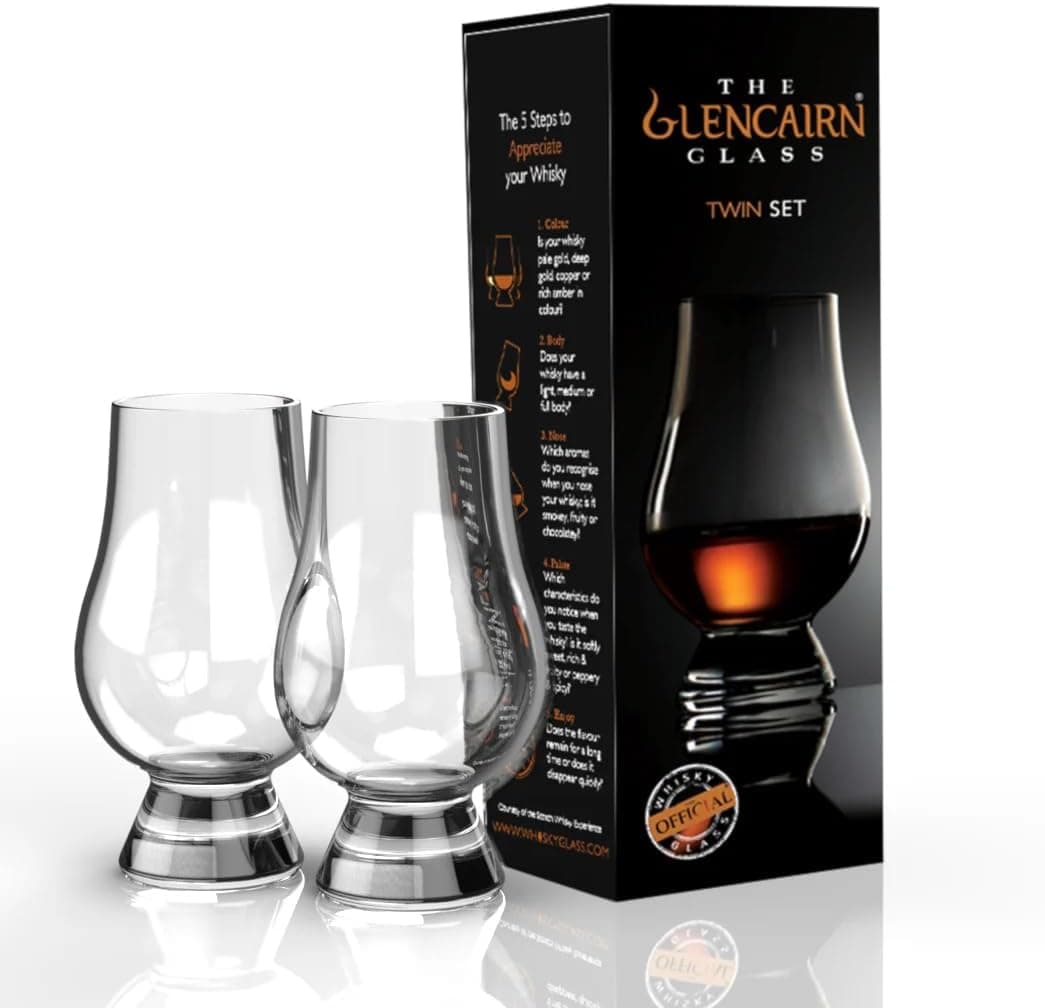
Glencairn Whisky Glass (Set of 2)
The tasting glass a 150-bottle collector reaches for 90% of the time. The tulip bowl concentrates aroma — the single biggest upgrade to any pour.
Other glasses worth considering
Glencairns aren't the only good answer. Two other options do the same job, depending on how you host.
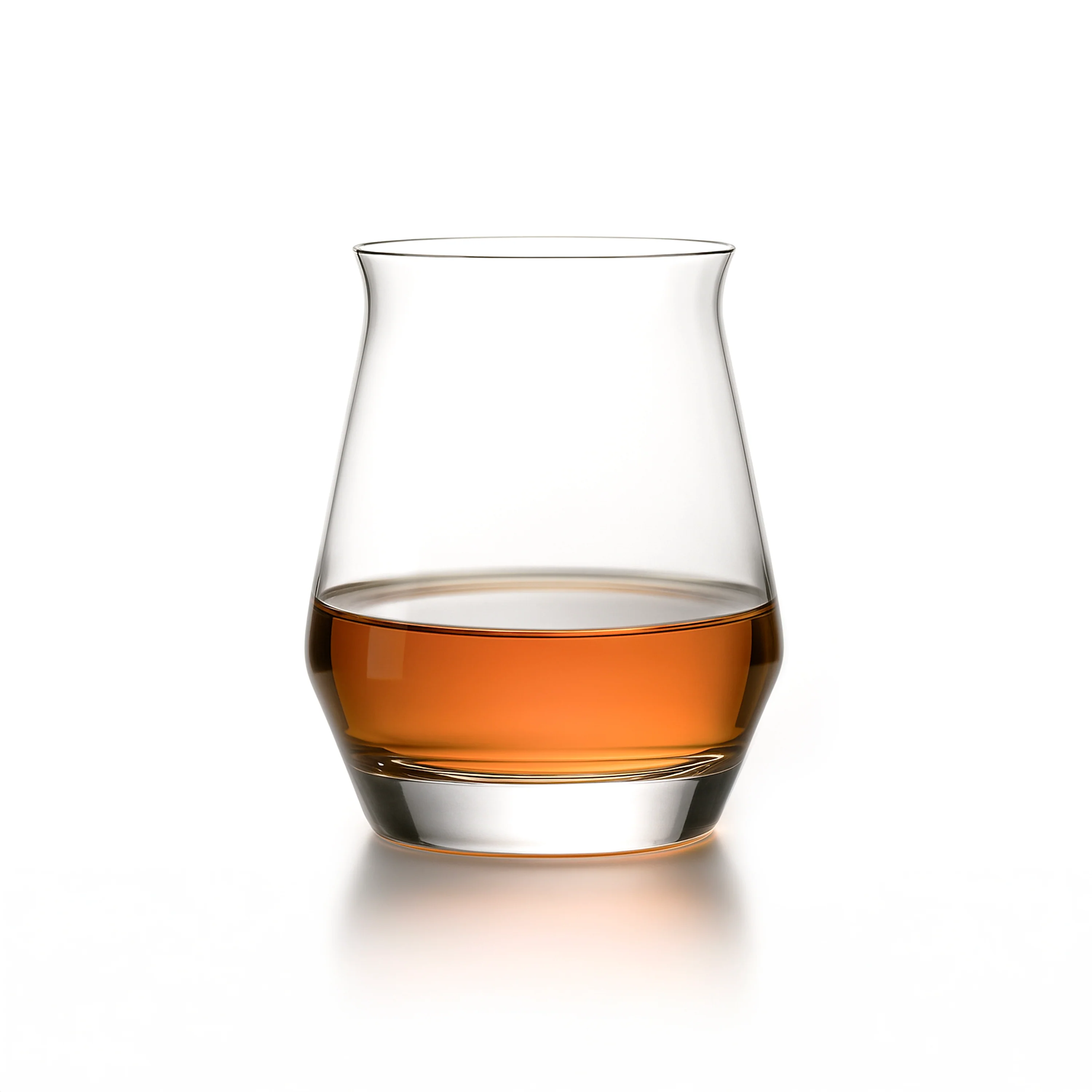
Aged & Ore Neat Glass
A hand-blown, lead-free crystal neat glass with a narrowed mouth that concentrates aroma and a flared lip built for a comfortable sip. Most bourbon drinkers already own a Glencairn — this is the upgrade almost nobody has.
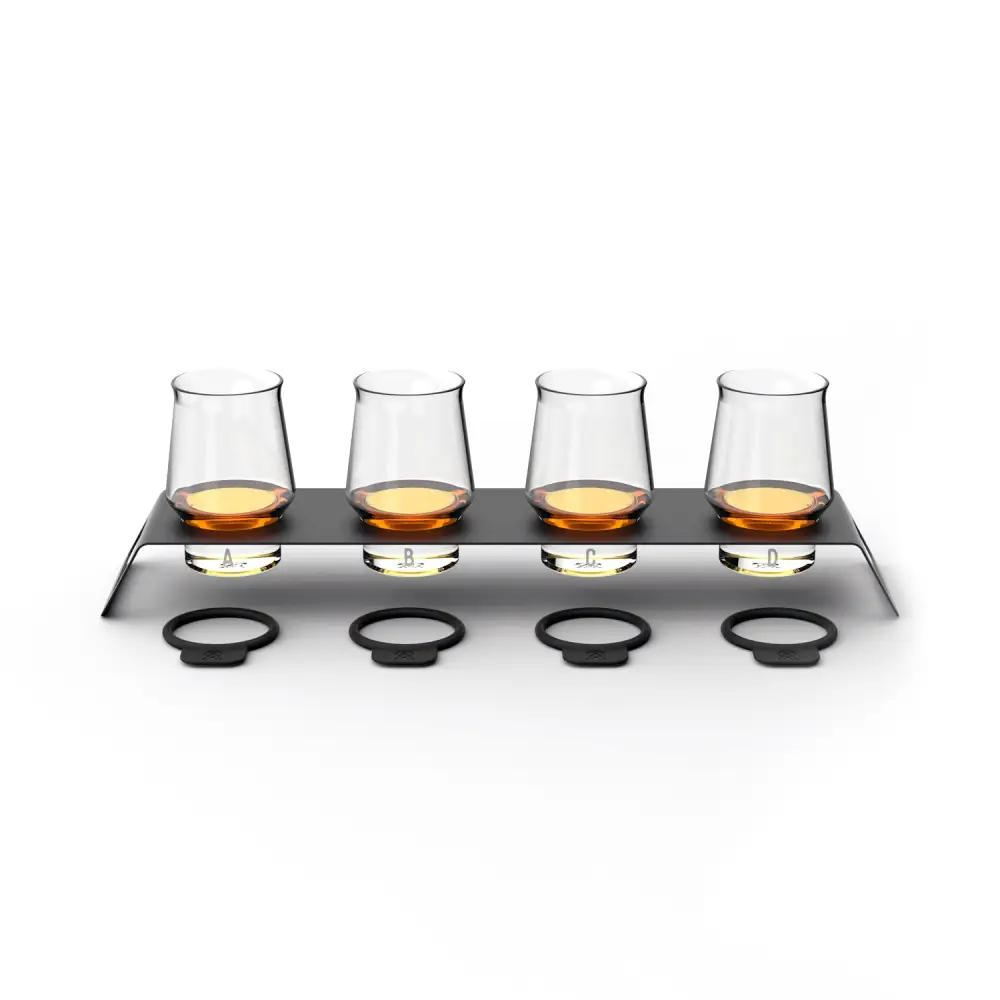
Aged & Ore Spirits Flight
Four lead-free crystal tasting glasses on a wall-mountable powder-coated aluminum tray, each etched A through D with matching silicone bottle tags for blind tastings. Built for someone who already runs their own side-by-side comparisons at home.
If you want to compare other shapes first, types of whiskey glasses explains what each one does, and best whiskey glasses covers what to buy at each price.
Set the table
Each seat gets the same four things: the tasting glasses in order (left to right, A to C), a water glass, a tasting sheet, and a pen. If you're pouring side by side, put the glasses on a sheet of paper with the letters written below each one so nobody mixes them up after a swirl.
In the middle of the table:
- Water. A full pitcher, refilled before anyone asks.
- Dump cups. One for every two guests, for leftover pours and spitting. Say out loud that spitting and dumping are both fine. Nobody should feel they have to finish every glass.
- Plain crackers or bread. Water crackers, saltines, a sliced baguette. These reset the palate between pours.
- A nonalcoholic option for anyone who wants one.
Save the strong flavors for later. Salty snacks, chocolate, and cheese all change how the next sip tastes, so put the charcuterie out after the reveal, not during the flight.
A run of show for the night
You don't need a speech. You need an order of operations. Plan on about two hours from arrival to the last pour.
- Before anyone arrives. Bag and letter the bottles, write your key, and put it away. Set every place. Pre-pour the first glass if you're doing one at a time.
- Arrival and food (20 to 30 minutes). Feed people before the flight, not during it. A real meal or heavy snacks first means everyone tastes better and drinks slower. Water on the table from the start.
- The two-minute intro. Three bourbons, lettered A, B, and C. Write down whatever you notice. There are no wrong answers. Pick a favorite before anything is revealed.
- Pour A and taste it quietly. Give everyone five minutes to nose, sip, and write before anyone talks. The first opinion said out loud tends to become everyone's opinion.
- Talk about A, then repeat for B and C. Lowest proof to highest. Remind people about the water for the last glass.
- Go back. Once all three are poured, give everyone ten minutes to revisit any glass. This is where the interesting shifts happen.
- Lock in favorites. Everyone writes down or circles their pick. You collect them or read them out.
- The reveal. Unbag A, then B, then C, with the price of each.
- Open bar, lightly. Bottles out, charcuterie out, and pour what people want to revisit. Small pours are still the move.
How to taste each pour
Give your guests a simple routine, one they can repeat for every glass. It takes about a minute.
- Look. Tilt the glass against something white. Note the color if you like, but don't read too much into it. Color won't reliably tell you age, quality, or proof.
- Smell gently. Hold the glass at chin level, mouth slightly open, and breathe normally. Shoving your nose into the glass just gets you a blast of alcohol. Lift it closer only once you know how hot it is.
- Sip small, twice. The first sip mostly resets your mouth. The second sip is the one that tells you something. Let it sit on your tongue for a moment before you swallow.
- Notice the finish. How long does it last after you swallow? What's still there: sweetness, spice, oak, heat?
- Write it down before talking. A few words is plenty.
When people get stuck for words, point them toward a few families: sweet (caramel, vanilla, honey), fruit (cherry, apple, orange peel), spice (cinnamon, pepper, clove), oak (toast, leather, tobacco), and grain (corn, bread, nuts). Nobody finds all of them in one glass, and two people writing different words about the same pour are both right.
For more on nosing, water, and the three-sip approach, how to drink bourbon goes deeper.
The reveal
This is the part people remember, so don't rush it.
Collect everyone's favorite first, before a single bag comes off. Then reveal in order, A to C, and say what each bottle costs. Read out how many people picked each one. Then ask two questions: which glass would you pour again, and did anything change when you saw the bottle?
A few things make it land better:
- Let people re-taste after the reveal. Knowing what's in the glass changes how it tastes, and that's worth experiencing too.
- Don't make anyone feel foolish. If someone picked the cheapest bottle, that's a win. They just found a great everyday pour.
- Write down the results if you plan to host again. The next flight is easier to build when you know what this group liked.
If a guest falls for one of the bottles, you can send them home with a pour of it for another night.
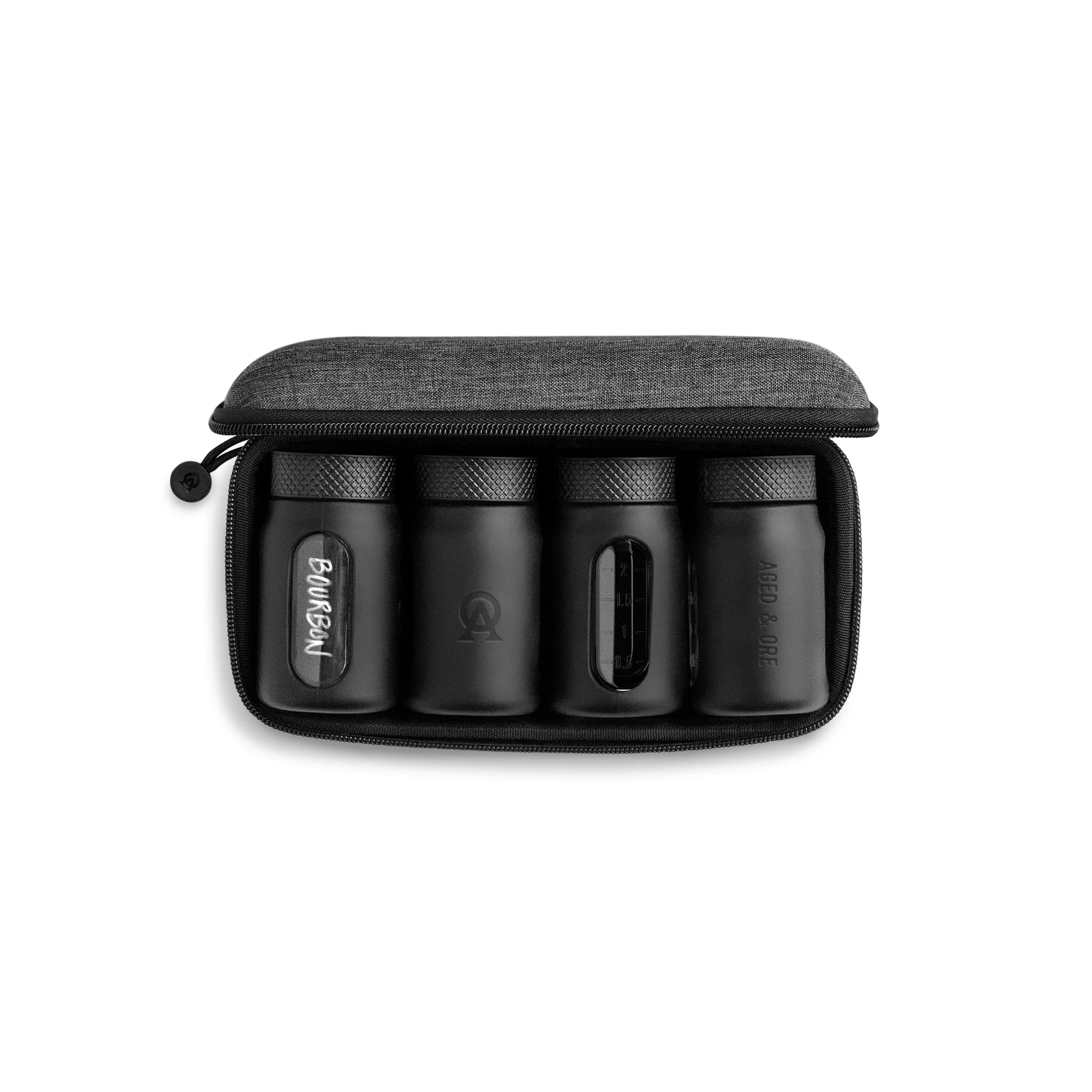
Aged & Ore Bottle Flight
Four custom 3oz glass bottles wrapped in protective silicone, housed in a compact EVA travel case. Wide-mouth openings for easy filling, built-in measurement lines, and a reusable glass marker so you don't need permanent labels. The case I actually bring on every bourbon trip.
Pace it, and get everyone home safe
The flight itself is modest. Three half-ounce pours at these proofs add up to a little more than one standard drink. The risk is the open bar after the reveal, when the bottles are out and everyone's having a good time.
- Sort out rides before the night starts. Rideshare, a designated driver, or a couch. Mention it in the invitation so nobody has to decide at 11 p.m.
- Food first, water throughout. Keep the pitcher full and the water glasses topped off without being asked.
- Keep post-reveal pours small. Half an ounce to revisit a favorite is plenty.
- Make not drinking easy. Spitting, dumping, skipping a pour, and switching to the nonalcoholic option should all feel normal.
- Adults only. Every guest should be of legal drinking age.
A good host's job is to make sure the evening ends as well as it started. The reveal is the highlight; nobody should remember the drive home.
Frequently asked questions
- How many bourbons should you have at a tasting?
- Three. It is enough for a real comparison and few enough that palates stay sharp. Experienced groups can go to four with smaller pours, but more than that and the later glasses blur together.
- How much bourbon do you pour per person at a tasting?
- About half an ounce (15 mL) of each bourbon, or a quarter ounce for newer drinkers or barrel proof. A full three-bourbon flight at half an ounce each is 1.5 ounces per person, and one 750 mL bottle of each bourbon covers up to eight guests with plenty left over.
- What order should you taste bourbon in?
- Lowest proof to highest. High-proof bourbon dulls your palate, so tasting a barrel-proof pour first makes everything after it seem thin. A proof ladder, such as a 90-proof bourbon, then a 100-proof bottled-in-bond, then a barrel proof, gives every glass a fair shot.
- How do you do a blind bourbon tasting?
- Cover each bottle with a paper bag or towel and label it A, B, or C. Assign the letters privately, write down the key, and pour out of sight if you can. Guests taste, take notes, and pick a favorite before you reveal the bottles and their prices.
- What food should you serve at a bourbon tasting?
- Plain crackers or bread during the flight to reset the palate between pours. Serve a real meal or heavier food before the tasting, and save strong flavors like cheese, chocolate, and cured meat for after the reveal.
- What glasses do you need for a bourbon tasting?
- The same small glass for everyone. A tulip-shaped tasting glass like a Glencairn is ideal because it concentrates aroma. For a side-by-side flight you need three per guest; for one-at-a-time, one per guest, rinsed between pours.
- How long does a bourbon tasting take?
- About two hours, including arrival, food, the flight, the reveal, and conversation. The tasting itself takes around 45 minutes to an hour.
The bottom line
Pick three bourbons, climb from lowest proof to highest, and pour them blind. Feed people first, keep the water coming, and make the reveal the main event. That's the whole method, and it works as well for four friends at the kitchen counter as for eight around the dining table.
If you run it once, you'll want to run it again. Next time, try a different format and see if the cheapest bottle wins twice.
Keep exploring
- New to tasting? How to drink bourbon covers nosing, water, ice, and the three-sip method
- Building the first rung? Best bourbon for beginners has the approachable bottles
- Building the top rung? Best barrel proof bourbon explains how to approach high proof without wrecking your palate
- Need the vocabulary? Types of bourbon sorts out bottled-in-bond, single barrel, small batch, and barrel proof
- Invited to someone else's tasting? A set of glasses or a bottle for the flight makes a good host gift; see our best gifts for bourbon lovers