How I picked these
Chosen from a 150+ bottle collection for forgiving proof, wide availability, and a fair price. These are the bottles I hand to people starting out, not the ones I'd pick for myself.
Updated Sep 23, 2026
For most beginners, the first good bourbon is not the boldest or the most hyped bottle. It is the one that makes you want a second pour instead of making you work to get through the first.
One thing I tell everyone new to bourbon: stay in the 80-90 proof range to start. Avoid anything labeled barrel proof, barrel strength, or cask strength. Those expressions run 110-130+ proof, and they will give you what bourbon drinkers call the "Kentucky Hug" — a burn in the back of your throat that can make you think you dislike bourbon when really you just started too hot. The flavor profile you are looking for is in a lower-proof bottle. The heat comes later, once your palate is ready for it.
What to look for in a first bottle
Most new bourbon drinkers respond well to bottles that lean sweet, rounded, and easy to revisit. You want vanilla, caramel, baking spice, and enough proof to give structure without turning the sip into a chore.
| Trait | Why it helps | What to avoid at first |
|---|---|---|
| 80-90 proof | Lets the flavors show up before the heat dominates | Barrel proof, barrel strength, cask strength |
| Sweeter profile | Feels familiar and inviting for new drinkers | Dry, tannic, heavily oak-forward pours |
| Wide availability | Lets you buy a second bottle easily once you enjoy it | Highly allocated bottles you cannot re-buy |
Three bottles to start with
These are the three bottles I recommend to anyone getting into bourbon. All three are 90-94 proof, widely available, and showcase what the category does well without overwhelming you.
Buffalo Trace
The best entry point in bourbon, full stop. Vanilla, caramel, a little oak, and a clean finish. At 90 proof it is approachable without being thin. It also happens to be one of the most respected names in bourbon regardless of experience level.
Elijah Craig Small Batch
A natural step up from Buffalo Trace. At 94 proof there is a bit more presence in the glass, with deeper caramel, light baking spice, and a finish that lingers a little longer. It is the bourbon I recommend when someone has tried Buffalo Trace and is ready for something with more character.
Four Roses Small Batch
More fruit-forward than the other two, with ripe stone fruit, honey, and gentle spice from the high-rye mashbill. Four Roses uses a unique recipe system that makes their bourbon taste noticeably different from most Kentucky distilleries.
How to taste your first pours
The most common mistake beginners make: one sip, too much heat, decision made. Here is a better approach.
Take three small sips before forming an opinion. The first sip primes your palate — your mouth is adjusting to the proof and temperature. The second sip gives you the actual flavor. The third is where you start picking up the finish and the nuance. Most people write off a bourbon after a single sip when they just needed to give their palate a moment to adjust.
What to avoid as a beginner
High-proof expressions. Barrel proof and cask strength releases are for drinkers who have already developed their palate. Starting there is like learning to cook with the hottest pepper in the store. You will not taste anything except heat.
Highly allocated bottles. Pappy Van Winkle, Buffalo Trace Antique Collection, and similar releases are hard to find, expensive when you do find them, and tell you almost nothing about whether you like bourbon as a category. Save those for when you have context for what makes them special.
Novelty-flavored whiskeys. Honey bourbon, apple bourbon, cinnamon whiskey — these are not bourbon in the traditional sense and will not help you develop a palate. If you want sweetness, a well-chosen 90-proof bourbon gives you more of it in a more interesting way.
Where to go next
Once you have worked through a bottle or two at the entry level, the best thing you can do is a flight tasting. Most distillery tasting rooms and many good whiskey bars will set up 3-4 pours side by side. Sitting with multiple bourbons at once is the fastest way to start identifying what you actually like — the different notes, how the finish changes, how the nose differs from what you taste.
That experience accelerates your palate faster than buying bottles one at a time. You will come out of a single flight knowing whether you prefer higher rye, more corn sweetness, more oak influence, or something in between. You can also set one up at your own table: how to host a bourbon tasting walks through the pours, the order, and the blind reveal.
After that, natural next steps:
- Higher proof: Try a bottled-in-bond expression (always 100 proof, always at least 4 years old). Henry McKenna or Evan Williams Bottled-in-Bond are good entry points. If the label terms are starting to pile up, what each label designation means sorts out bonded, single barrel, small batch, and barrel proof.
- More age: Elijah Craig 18 or Four Roses Single Barrel show what more barrel time does.
- Cocktails: The Old Fashioned is the best cocktail for understanding how bourbon works with other flavors.
The right first bottle should make bourbon feel inviting, not like homework. Start simple, stay curious, and let your palate tell you when it is ready for more.
Start with the right glass
The glass makes a bigger difference than most beginners expect. A proper tasting glass concentrates aromas so you actually smell the vanilla, caramel, and spice before you sip. It turns a casual pour into a tasting.
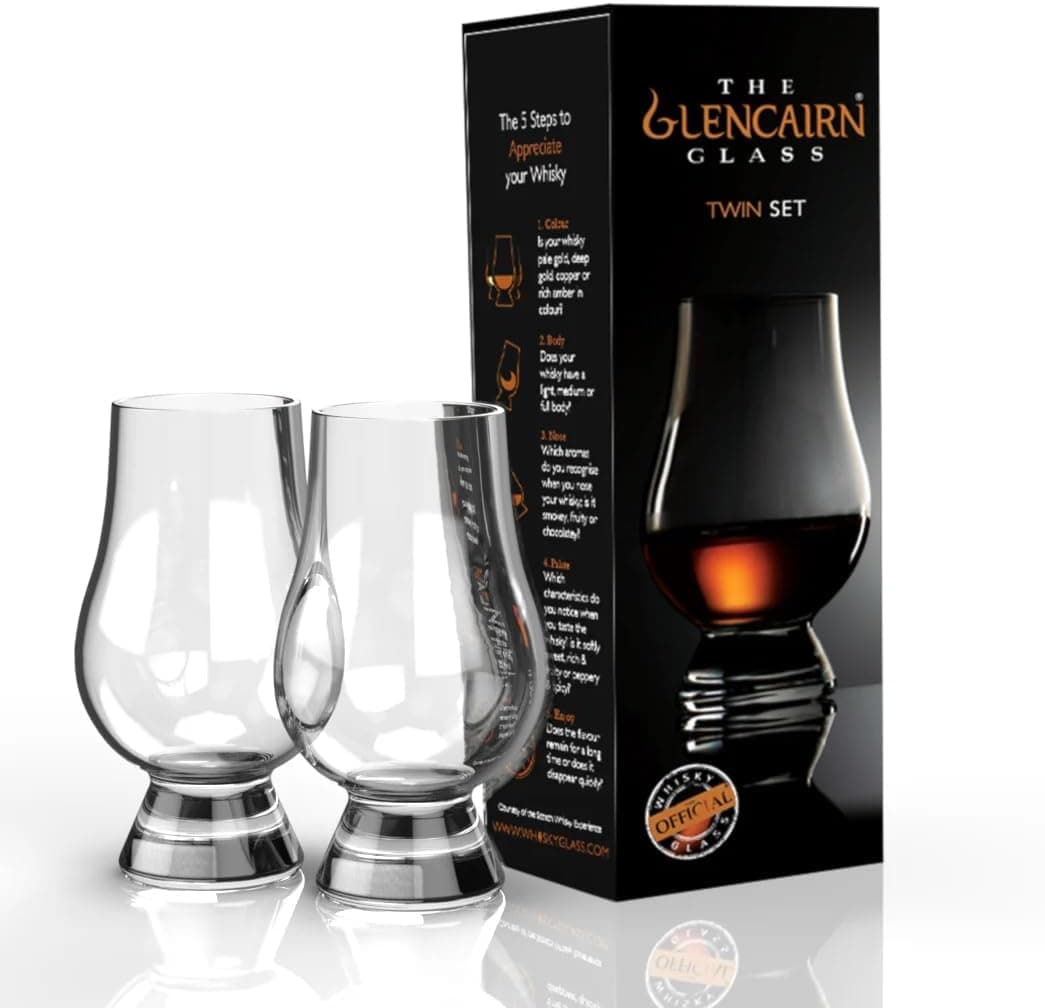
Glencairn Whisky Glass (Set of 2)
The standard tasting glass used by distillers worldwide. The tulip shape funnels aromas toward your nose so you pick up flavors you would miss in a regular tumbler. A set of two is perfect for your first side-by-side tasting.