How I picked these
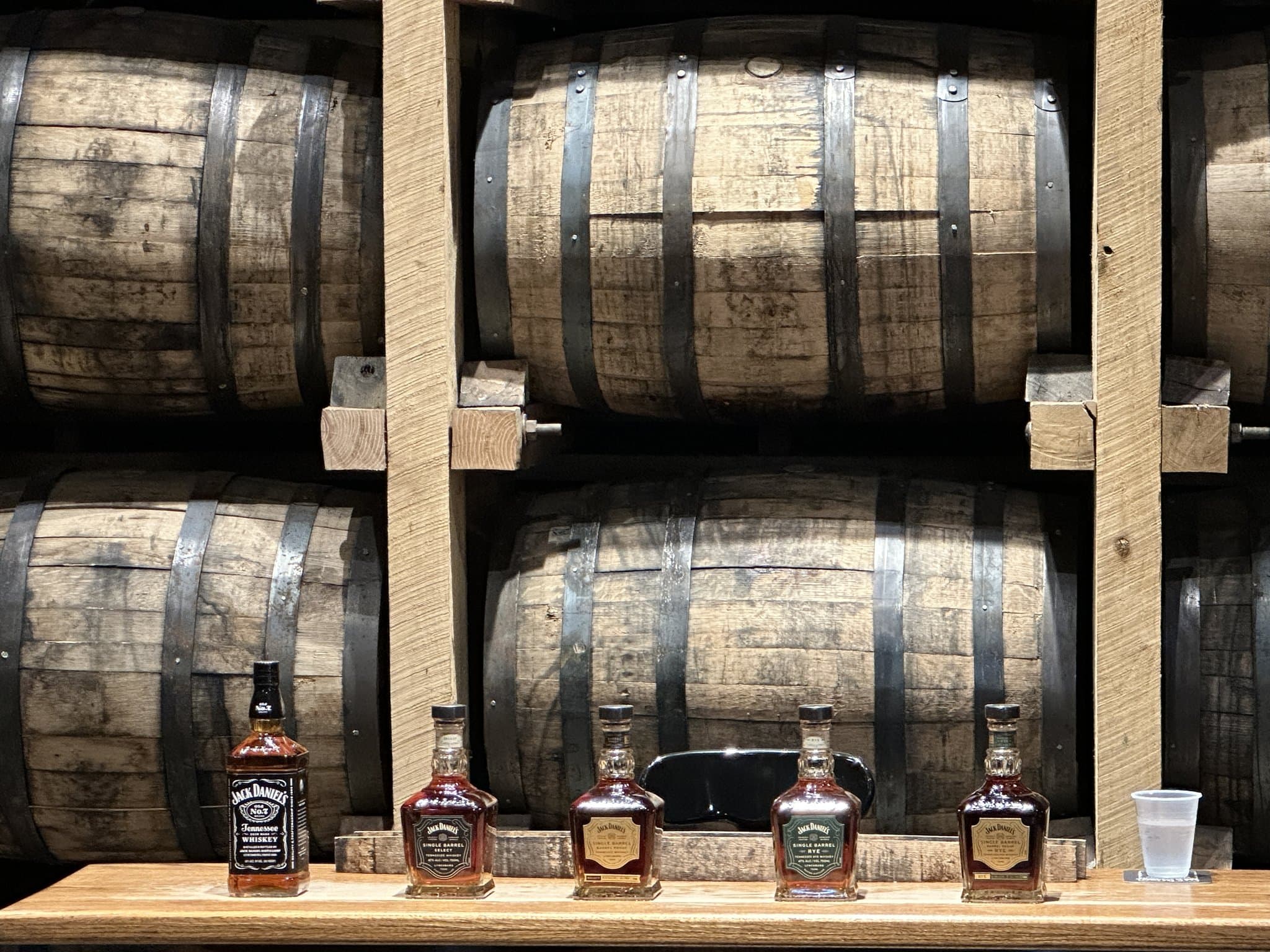
Definitions come from the federal standards of identity. The tasting notes and bottle picks come from a 150+ bottle collection and 51 distillery visits, including the store-pick lesson in the aging section.
Updated Sep 18, 2026
The short answer: all bourbon is whiskey, but not all whiskey is bourbon. Bourbon is a specific type of whiskey that has to meet a set of legal requirements to earn the name. Those requirements are what give bourbon its distinctive flavor and character.
The longer answer is more interesting, and knowing it will change how you shop, taste, and talk about what you drink.
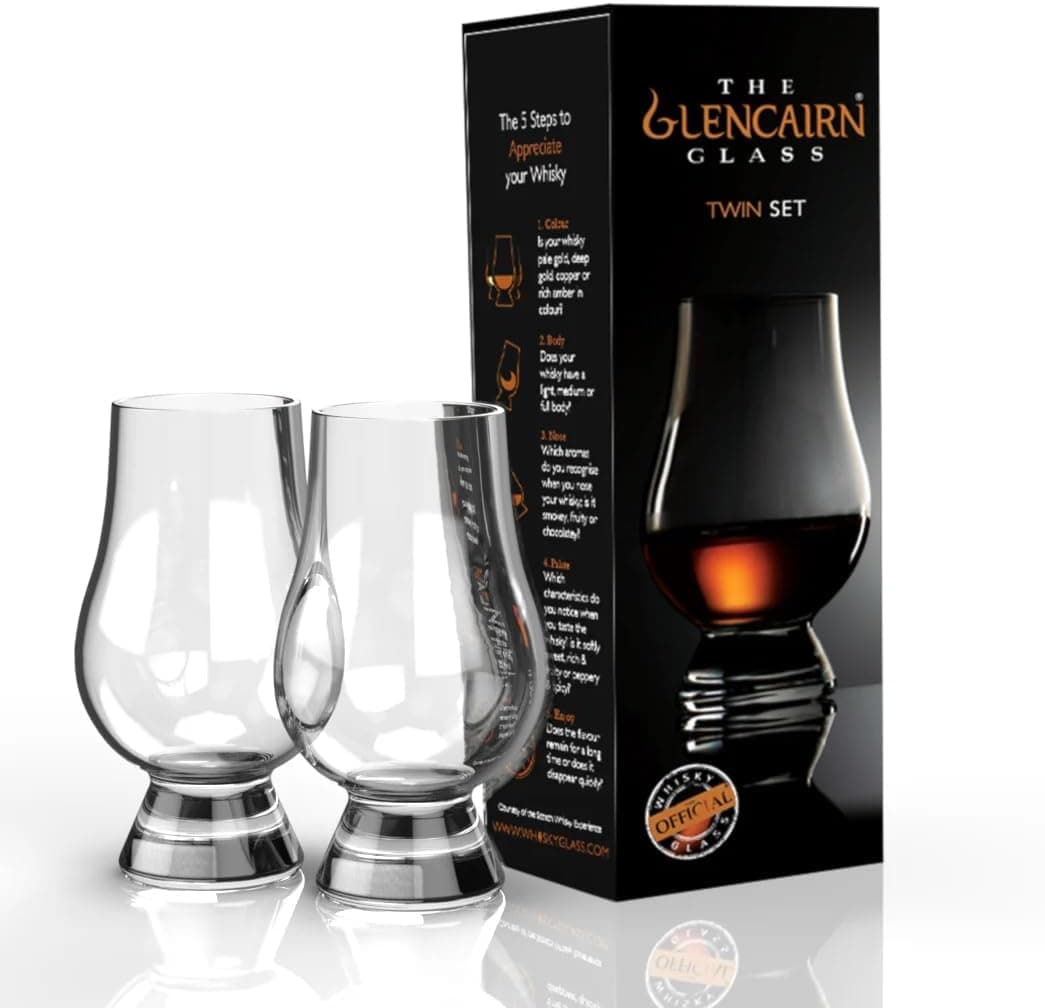
Glencairn Whisky Glass (Set of 2)
The tasting glass a 150-bottle collector reaches for 90% of the time. The tulip bowl concentrates aroma — the single biggest upgrade to any pour.
What is whiskey?
Whiskey is a broad category of distilled spirits made from fermented grain. That grain can be corn, barley, wheat, rye, or any combination. The spirit is aged in wooden barrels, which gives it color and flavor.
Every whiskey-producing country has its own traditions and rules, but the basic process is the same everywhere: grain gets mashed, fermented, distilled, and aged. The differences come down to which grain, what kind of barrel, how long it ages, and where it is made.
Scotch, Irish whiskey, Japanese whisky, rye whiskey, and bourbon are all whiskey. They are siblings, not competitors.
What makes bourbon bourbon?
Bourbon has to meet specific legal requirements defined by U.S. federal law. These are not guidelines or traditions. They are rules, and any bottle labeled "bourbon" must follow all of them.
| Requirement | What it means |
|---|---|
| Made in the United States | Bourbon must be produced in the U.S. It does not have to be made in Kentucky, though most of it is |
| At least 51% corn in the grain mix | The mashbill must be majority corn, which gives bourbon its characteristic sweetness |
| Aged in new charred oak barrels | The barrels cannot be reused. The charring caramelizes the wood sugars and creates bourbon flavor |
| Distilled to no more than 160 proof | This preserves grain character. Higher distillation strips flavor |
| Entered into barrels at no more than 125 proof | Controls how the spirit interacts with wood during aging |
| Bottled at 80 proof or higher | Ensures the final product has enough strength to carry its flavor |
| No added coloring or flavoring | What you taste comes from the grain and the barrel, nothing else |
These rules are what create the flavor profile people associate with bourbon: sweetness from corn, vanilla and caramel from new charred oak, and a warmth that comes from the proof requirements.
What makes regular whiskey different?
Whiskey that is not bourbon has more flexibility. Scotch uses malted barley and aged in used barrels. Irish whiskey is typically triple-distilled for smoothness. Canadian whisky blends multiple grain spirits. Each tradition creates a different flavor profile because the rules are different.
| Style | Primary grain | Barrel type | Flavor character |
|---|---|---|---|
| Bourbon | Corn (51%+) | New charred American oak | Sweet, rich, vanilla and caramel |
| Scotch | Malted barley | Used oak (often ex-bourbon) | Smoky, malty, sometimes peaty |
| Irish whiskey | Barley (malted and unmalted) | Used oak | Smooth, light, approachable |
| Rye whiskey | Rye (51%+) | New charred American oak | Spicy, dry, peppery |
| Canadian whisky | Various grains (often corn and rye) | Used or new oak | Light, smooth, blended |
The biggest practical difference for most drinkers: bourbon tends to be sweeter and richer because of the corn content and the new barrel requirement. Other whiskeys tend to be drier, smokier, or lighter depending on their tradition.
Does bourbon have to be made in Kentucky?
No. This is the most common misconception about bourbon. Federal law requires bourbon to be made in the United States, but it does not have to come from Kentucky. Bourbon is produced in all 50 states.
Kentucky dominates bourbon production for historical and practical reasons: limestone-filtered water, a climate with hot summers and cold winters that accelerates aging, and generations of distilling expertise. About 95% of the world's bourbon comes from Kentucky, which is why the association is so strong. But it is not a legal requirement.
You can find excellent bourbon made in Texas, Tennessee, New York, Colorado, and dozens of other states. One worth calling out specifically: Smoke Wagon out of Nevada makes genuinely great bourbon. If you see it on a shelf, it is worth trying — it is a good reminder that geography is not a proxy for quality.
The "straight bourbon" distinction
You will sometimes see bottles labeled "straight bourbon" instead of just "bourbon." Straight bourbon meets all the standard requirements plus two additional ones:
- Aged for at least two years (regular bourbon has no minimum aging requirement)
- No added coloring, flavoring, or other spirits
If a straight bourbon is aged less than four years, the age must be stated on the label. If it is aged four years or more, no age statement is required. This is why many bourbons on the shelf do not list their age. They have met the four-year threshold and are not required to.
Proof, age, and what they mean for flavor
Proof
Proof is simply twice the alcohol percentage. An 80-proof bourbon is 40% alcohol. A 100-proof bourbon is 50%. Higher proof generally means more intense flavor and more noticeable heat on the palate.
Bottled-in-bond bourbon is always 100 proof, aged at least four years, and produced at a single distillery in a single season. It is one of the oldest consumer protection labels in American history, and it is a reliable indicator of quality.
Age
Longer aging is not automatically better. Bourbon picks up vanilla, caramel, and oak character from the barrel. After a certain point (usually 8-12 years depending on climate), the oak can start to dominate and the bourbon becomes overly tannic or woody.
The sweet spot for most bourbon is 4-8 years. This gives enough barrel contact for complexity without overwhelming the grain character. I learned this firsthand with a store pick of Still Austin Cask Strength — a distillery I genuinely love. But that particular barrel had gone too far. The oak was so dominant it was essentially undrinkable. Not every barrel hits the sweet spot, which is part of why single barrel and store pick releases vary as much as they do.
How this changes how you buy bourbon
Understanding the difference between bourbon and whiskey gives you a framework for shopping:
- If you like sweet, rich flavors: Bourbon's corn base and new barrel aging will probably appeal to you.
- If you prefer smoky or dry flavors: Look at scotch or rye whiskey instead.
- If you want something smooth and light: Irish whiskey or a lower-proof bourbon might be the best starting point.
- If you are deciding between bourbon and scotch to start: Go bourbon. The sweetness and vanilla character from new oak aging makes it more immediately accessible for most people. Scotch is worth exploring once you have developed your palate on bourbon.
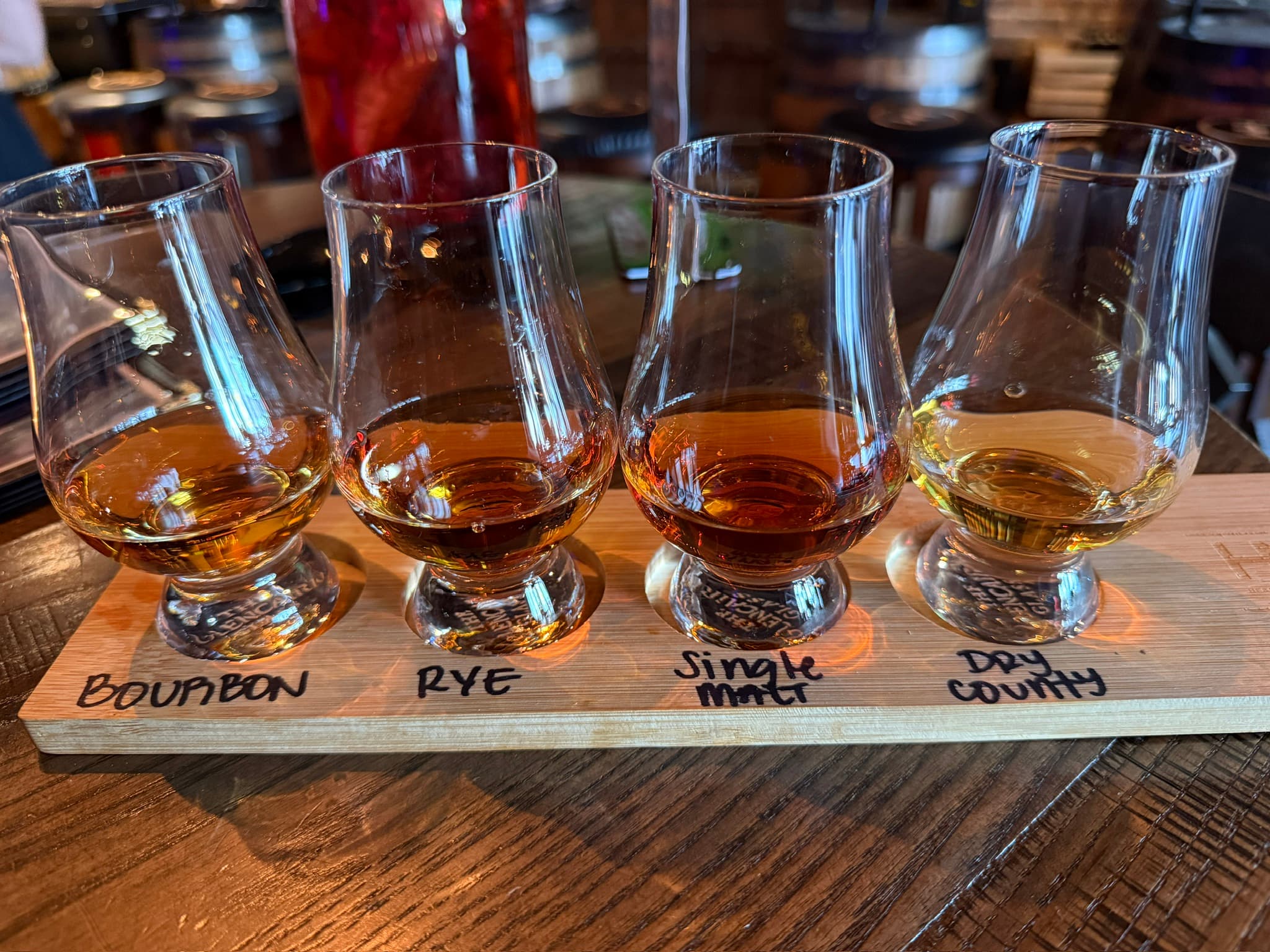
- If you want to understand the differences: Do a flight tasting. Sitting with 3-4 pours side by side — even within just bourbon — is the fastest way to start identifying what you actually like: different notes, finishes, how the nose changes between products. Most distillery tasting rooms will set this up for you.
Can't get to a distillery tasting room this week? The Ultimate Whiskey Sampler ships bourbon, Scotch, and Irish minis in one box, so you can run that same side-by-side comparison from your own kitchen table.
Once you understand what makes bourbon bourbon, every bottle on the shelf starts to make more sense.
Where to start if you are new
The best first bourbon is one that showcases what the category does well — sweetness, vanilla, caramel — without overwhelming you. Stick to the 80-90 proof range. Avoid anything labeled barrel proof, barrel strength, or cask strength until you have some experience. Those expressions run 110-130+ proof and will give you what bourbon drinkers call the "Kentucky Hug" — a burn in the back of your throat that can make you think you dislike bourbon when really you just started too hot.
My three go-to starter recommendations:
| Bottle | Proof | Why it works for beginners |
|---|---|---|
| Buffalo Trace | 90 proof | Balanced, sweet, and available everywhere. The best entry point at the price. |
| Elijah Craig Small Batch | 94 proof | Slightly more complexity than Buffalo Trace with caramel and light spice. A natural second bottle. |
| Four Roses Small Batch | 90 proof | Fruit-forward and approachable. Great for understanding how different mashbills affect flavor. |
One technique worth knowing: when you try a new bourbon for the first time, take three small sips before forming an opinion. The first sip primes your palate. The second gives you the actual flavor. The third is where you start picking up the finish and the nuance. Most people write off a bourbon after one sip when they just needed to give their palate a moment to adjust.
For a more complete breakdown of beginner bottles, see our best bourbon for beginners guide.
Now try it yourself
The best way to understand the difference between bourbon and whiskey is to taste it. Start with the right glass and one of the starter bottles above.
Glencairn Whisky Glass (Set of 2)
The standard tasting glass used by distillers and whiskey enthusiasts worldwide. The tulip shape concentrates aromas so you smell what makes bourbon different from scotch, rye, and other whiskeys.
Keep exploring
Now that you understand what makes bourbon bourbon, here is where to go next:
- Ready to buy your first bottle? Our best bourbon for beginners guide breaks down the three best starter bottles and how to taste them
- Want to make a cocktail? The Old Fashioned is the best cocktail for understanding how bourbon works with other flavors
- Curious about high proof? Our barrel proof bourbon guide covers what happens when you skip the dilution entirely
- Shopping for a bourbon lover? See our best bourbon gifts guide for bottles, glassware, and accessories at every budget
- Planning a trip? Our guide to the best time to visit the Kentucky Bourbon Trail covers what each season actually feels like on the ground