How I picked these
Definitions follow the federal standards of identity. The beginner bottles are the lineup I'd actually pour for someone's first bourbon, from a 150+ bottle collection.
Updated Sep 18, 2026
The single most common thing I have to correct when someone asks me about bourbon: it doesn't have to come from Kentucky. That's the myth. Bourbon is an American whiskey, full stop. It can legally be made in any of the fifty states, and great bourbon is being distilled in Texas, Tennessee, New York, Indiana, and Colorado right now. Kentucky makes the most of it, and most of the famous brands are based there, but "bourbon" describes how it's made, not where.
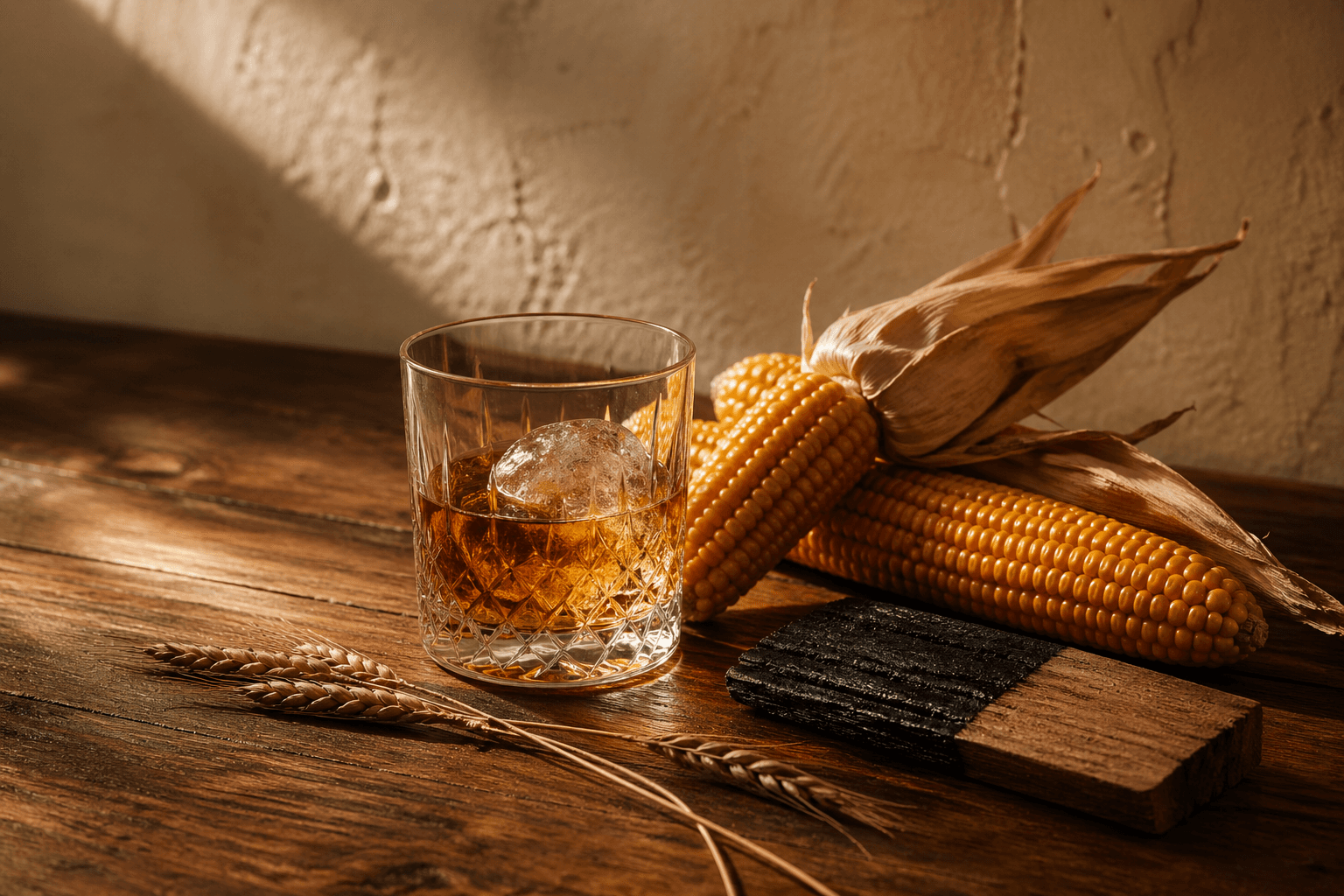
Once you get past that, the rest of what makes bourbon bourbon is straightforward. It's whiskey made mostly from corn, aged in brand-new charred oak barrels, with no shortcuts allowed. The flavor profile (sweet, oaky, vanilla, caramel) comes directly from those two facts. This guide breaks down the legal definition, what bourbon is actually made from, what it tastes like, and the three bottles I'd put in front of anyone starting out.
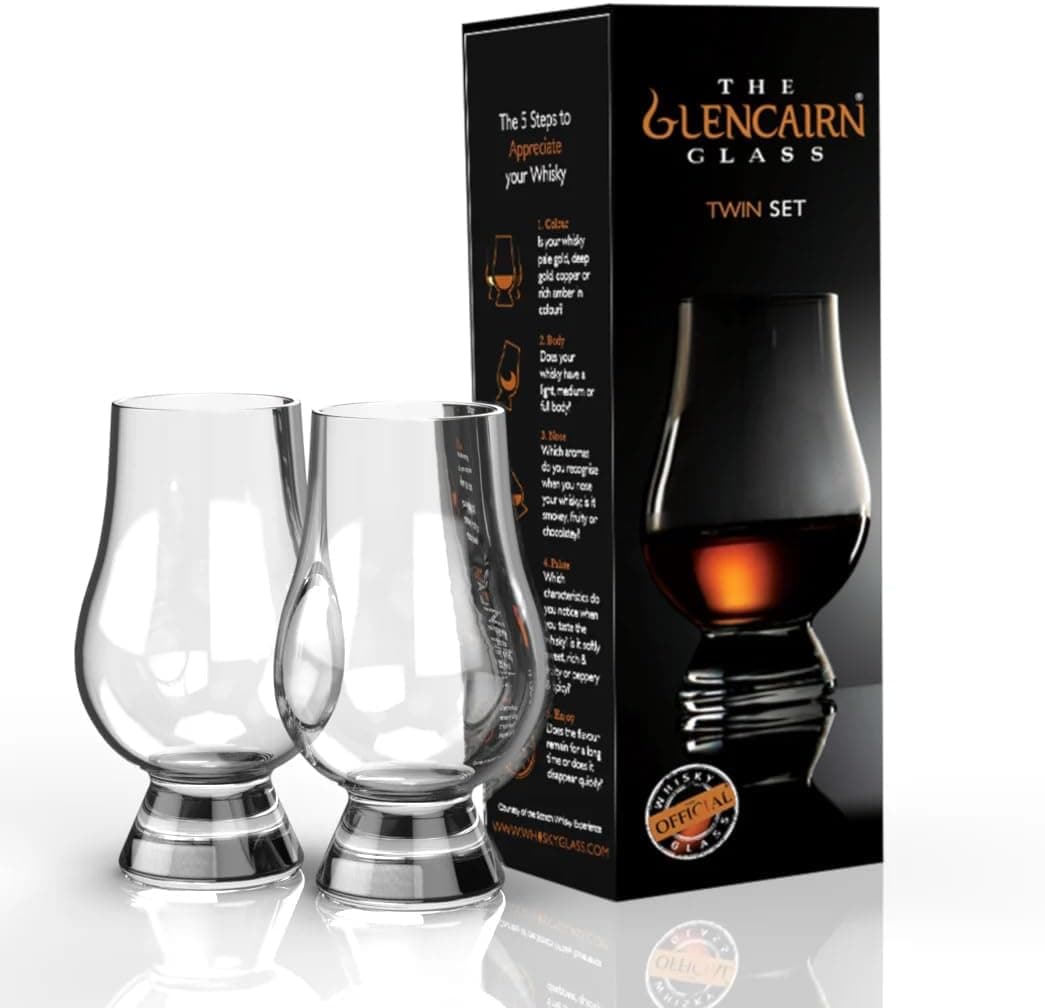
Glencairn Whisky Glass (Set of 2)
The tasting glass a 150-bottle collector reaches for 90% of the time. The tulip bowl concentrates aroma — the single biggest upgrade to any pour.
What bourbon actually is, by law
Bourbon is a federally regulated category in the US. To put "bourbon" on the label, the whiskey has to meet every one of these requirements set by the TTB (Alcohol and Tobacco Tax and Trade Bureau):
- Made in the United States (any state, not just Kentucky)
- Mashbill of at least 51% corn (the rest is usually rye or wheat, plus malted barley)
- Distilled at no more than 160 proof (80% ABV)
- Entered into the barrel at no more than 125 proof (62.5% ABV)
- Aged in new charred oak barrels
- Bottled at 80 proof or higher (40% ABV)
- Nothing added except water to bring it down to bottling proof
That last rule does a lot of quiet work. Bourbon can't have caramel coloring, glycerin, "natural flavors," or any other additive. The color in the glass comes from the barrel. The flavor in the glass comes from the grain, the yeast, the water, the wood, and time. That's it. It's the same no-additives rule that applies to straight rye whiskey, and it's the cleanest single quality signal in American whiskey.
If you see "Straight Bourbon" on the label, that's the same definition plus two more requirements: aged at least two years, and if it's under four years old, the age must be stated on the label. Most quality bourbon you'll find on a shelf is straight bourbon. Straight is just one of several designations, though — single barrel, small batch, bottled-in-bond, and barrel proof each mean something specific, and the types of bourbon guide decodes every term on the label.
The Kentucky misconception, addressed directly
The reason people think bourbon has to come from Kentucky is because, historically, almost all of it did. Kentucky's limestone-filtered water, the climate that swings hot in summer and cold in winter (which pushes whiskey in and out of the wood as the barrel expands and contracts), and the corn-belt geography all made it the natural home of the category. Today, around 95% of the world's bourbon is still made in Kentucky.
But "most of it is made there" and "it has to be made there" are two different statements. Garrison Brothers in Texas, Balcones in Texas, Wyoming Whiskey in Wyoming, Hudson Whiskey in New York, Leopold Bros in Colorado, and dozens of others are making real, legally-defined bourbon outside of Kentucky. Some of it is excellent. Calling it anything other than bourbon would be wrong.
The category that actually has a geographic restriction is Tennessee whiskey, not bourbon. Jack Daniel's and George Dickel meet every requirement to be called bourbon, but they go through an extra charcoal-filtering step (the Lincoln County Process) and choose to call themselves Tennessee whiskey instead. The geography matters there. With bourbon, it doesn't. We dug into that specific case in is Jack Daniel's a bourbon.
What bourbon is made from
Three things go into bourbon: grain, water, and yeast. The barrel does the rest.
The mashbill: corn, plus a "small grain"
The mashbill is the recipe of grains used to make the whiskey. Bourbon's mashbill has to be at least 51% corn, but in practice most bourbons run between 65% and 80% corn. Corn is what gives bourbon its sweetness. It contributes the vanilla, caramel, and brown sugar notes that define the category.
The remaining 20-49% is a mix of one "small grain" plus malted barley. The choice of small grain is what gives a bourbon its character beyond sweetness:
- Rye is the most common small grain. It contributes spice, pepper, dryness, and a longer finish. Most "classic" bourbons (Buffalo Trace, Wild Turkey, Four Roses, Knob Creek) use rye in the mashbill at around 8-15%.
- Wheat is used in "wheated bourbons." It softens the profile and pushes the corn sweetness forward. Maker's Mark, Weller, and Pappy Van Winkle are wheated. They drink rounder and easier than rye-mashbill bourbons.
- Malted barley is in almost every bourbon at around 5-10%, but it's not for flavor. It's for the enzymes barley provides, which convert the corn and rye starches into fermentable sugars during the mash.
A "high rye bourbon" pushes the rye content up to 20-35%, which gives it a noticeably spicier, drier profile. Bulleit and Four Roses Single Barrel are good examples. There's a full guide to high rye bourbon if you want to go deeper on that style.
The water and the yeast
Kentucky's limestone water is famously good for whiskey because limestone naturally filters out iron (which throws off fermentation) and adds calcium and magnesium (which yeast loves). Distilleries outside of Kentucky have to source or treat their water carefully to get to the same starting point.
Yeast is the quiet variable. Each distillery uses its own proprietary yeast strain, often kept on staff for decades or longer, and the strain affects which esters and flavor compounds develop during fermentation. Four Roses famously uses five different yeast strains in combination with two different mashbills to make ten distinct bourbons. It's one of the reasons their lineup tastes so varied.
The new charred oak rule (and why it matters)
This is the requirement that separates bourbon from almost every other whiskey on earth, and the one most articles bury at the bottom of the legal section. It's the single biggest contributor to what bourbon tastes like.
Bourbon has to be aged in new charred oak barrels. Not used. Not toasted. New, and charred. Each barrel is built once, charred on the inside (usually a "char level 3" or "char level 4," meaning the inside is set on fire for 35-55 seconds), filled once, and then never used for bourbon again. Every drop of bourbon you've ever had was the first and only thing that barrel held.
The char layer acts as a filter and a flavor source at the same time. As the whiskey moves in and out of the wood with the seasons, it pulls vanilla, caramel, coconut, and tannins out of the toasted oak underneath the char layer. That's where the color comes from. That's where the sweetness gets its depth. It's also why bourbon can age beautifully in five to ten years when Scotch (aged in used barrels) often needs twelve, fifteen, or twenty.
Once a bourbon barrel has been emptied, it gets sold off. Most of them go to Scotland, Ireland, and Mexico, where they're used to age Scotch whisky, Irish whiskey, and tequila. The fact that those categories rely on used American oak is why bourbon's new oak rule shapes global whiskey flavor as much as it shapes American whiskey flavor.
What bourbon actually tastes like
If you've never had bourbon, the easiest way to set expectations is this: bourbon leads with sweetness. Vanilla, caramel, brown sugar, and toasted oak come up first. Behind that, you'll find layers of fruit (often dark fruit like cherry or fig), spice (from the rye), and sometimes leather, tobacco, or chocolate as the bourbon ages longer.
A young bourbon (4-6 years) tends to taste brighter and grain-forward. A mid-aged bourbon (7-10 years) gets rounder and more layered. An older bourbon (12+ years) leans heavier on oak and tannin, which can be either rich and beautiful or dry and woody depending on how it was aged.
The "Kentucky Hug" is the warm spread you feel in your chest after a real sip of bourbon. It's not a flaw. It's the whiskey doing what it's supposed to.
If you're new to bourbon, two things to know going in. First, take small sips. The biggest mistake beginners make is trying to drink bourbon like beer or wine, taking a normal-sized swallow, and then deciding the whole category tastes like fire. Bourbon is meant to be sipped in quarter-ounce pulls, held on the front of the tongue for a second, and then swallowed slowly.
Second, be patient with your palate. The first few times you drink bourbon, you'll mostly feel the alcohol, what bourbon drinkers call the "Kentucky Hug." That's normal. Bourbon enthusiasts who talk about picking up "leather, dark cherry, and crème brûlée" on the third pour didn't taste any of that the first time either. It takes practice. After your fourth or fifth bottle, your palate sharpens and the notes start to separate. There's a full guide to how to drink bourbon that walks through the tasting process step by step.
Three bottles to start with
If you're trying bourbon for the first time, here's the lineup I'd actually pour. Each one represents a different price tier and a slightly different style, so by the end of the three you'll have a real sense of what bourbon can be.
Entry level: Buffalo Trace
Buffalo Trace Bourbon
Buffalo Trace is the bourbon I recommend more than any other for someone trying the category for the first time. It's bottled at 90 proof, aged 8-10 years, and built on a low-rye mashbill that's classically sweet without being one-note. Vanilla and caramel up front, soft oak through the middle, and a clean, gently spiced finish. Made by the same Frankfort, Kentucky distillery that produces Pappy Van Winkle, George T. Stagg, and Eagle Rare.
Mid-shelf: Four Roses Single Barrel
Four Roses Single Barrel
Four Roses Single Barrel is bottled at 100 proof from a single barrel using their highest-rye mashbill (35% rye). Each bottle comes from one specific barrel and includes the warehouse, rick, and barrel number on the label. Expect a more assertive, spicier profile than Buffalo Trace: black pepper, dried fruit, baking spice, and a long, warm finish.
Treat yourself: Woodford Reserve Double Oaked
Woodford Reserve Double Oaked
Woodford Reserve Double Oaked spends its first round of aging in a standard new charred oak barrel, then gets transferred into a second deeply toasted, lightly charred barrel for an additional aging period. The result is dramatically richer than a standard bourbon: dark caramel, maple, dark chocolate, toasted nuts, and a long oak-driven finish. Bottled at 90.4 proof.
Bourbon vs other whiskeys
Bourbon is one branch of a much bigger whiskey family. Scotch, Irish whiskey, rye, Canadian whisky, and Japanese whisky all play by different rules and taste different as a result. Bourbon's defining traits (the corn base, the new charred oak) make it sweeter and more vanilla-forward than almost any other whiskey on the shelf.
The shortest comparisons:
- Bourbon vs rye: Rye is spicier, drier, more peppery. Bourbon is sweeter, rounder, more vanilla. The bourbon vs rye whiskey guide covers the side-by-side in detail.
- Bourbon vs Scotch: Scotch is aged in used barrels and often dried over peat smoke, which gives it a leaner, smokier, more complex profile. Bourbon's new-oak sweetness has no real Scotch equivalent.
- Bourbon vs Tennessee whiskey: Tennessee whiskey meets every requirement to be bourbon but adds a charcoal filtration step before barreling, which softens the spirit. Jack Daniel's is the famous example, and the full answer on whether it counts as bourbon is more interesting than the label suggests.
For the full breakdown of how bourbon, rye, Scotch, and Irish whiskey all relate, see bourbon vs whiskey.
The right glass
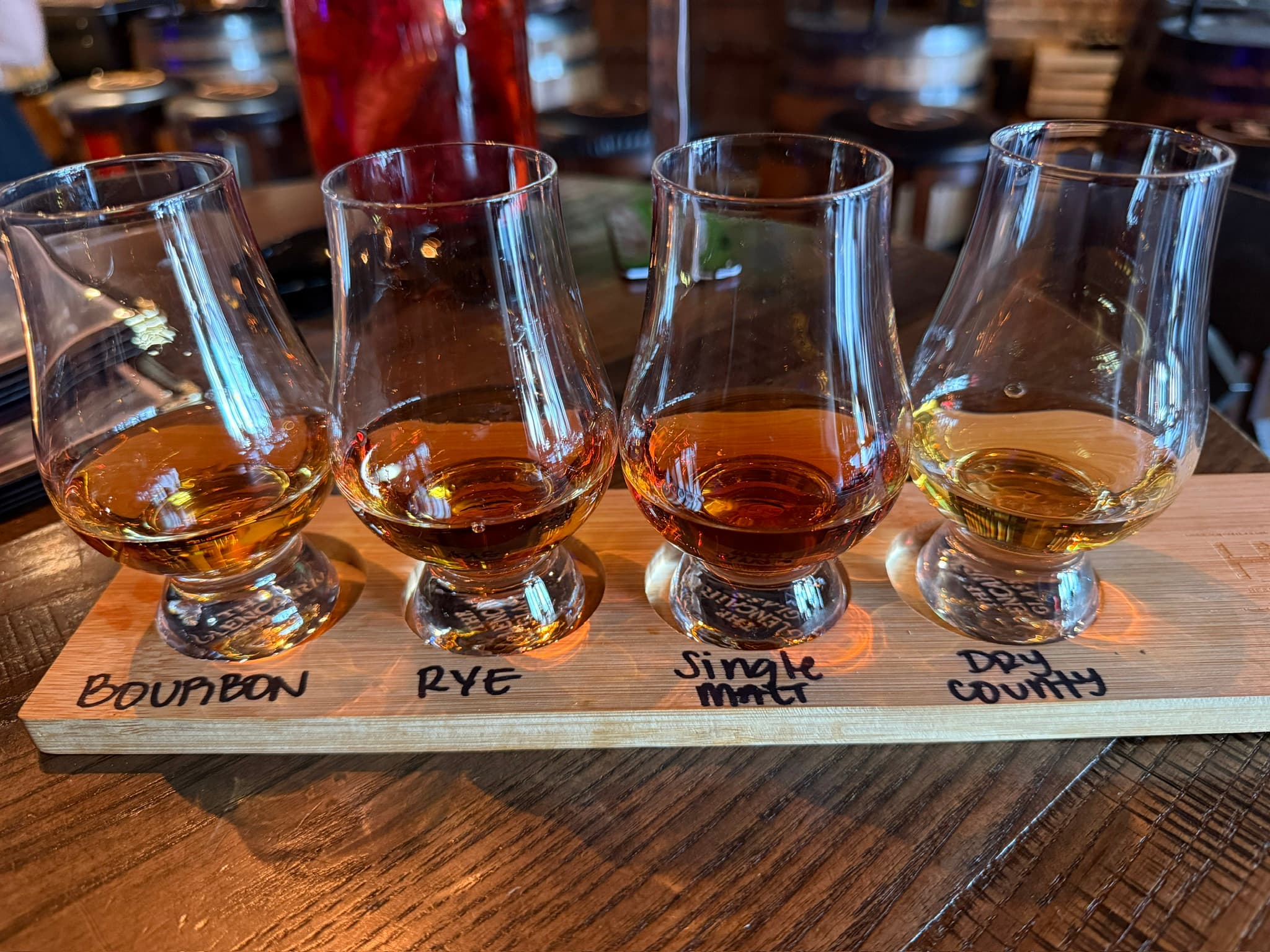
Bourbon doesn't require special glassware to enjoy, but a good glass makes a real difference for nosing. The tulip shape of a Glencairn concentrates the aromas at the rim, which lets you pick up vanilla, caramel, and oak before the first sip. That nosing step is where a lot of the flavor actually lives.
Glencairn Whisky Glass (Set of 2)
The standard tasting glass used by distillers, master blenders, and serious bourbon drinkers. The tulip shape funnels aromas toward the nose, which doubles the perceived flavor on the palate. Heavy enough to feel substantial, dishwasher safe, and nearly unbreakable.
Where to go from here
If you're new to bourbon, buy Buffalo Trace and a set of Glencairns. Pour an ounce, let it sit for a minute, nose it before you sip, and take small pulls. After a few pours over a few weeks, your palate will start to separate the vanilla from the caramel, the oak from the spice, the sweetness from the warmth. That's bourbon.
When you're ready for the next step, read the best bourbon for beginners guide for a deeper bench of starter bottles, or jump into how to drink bourbon for the full tasting walkthrough. If you want to understand how bourbon fits into the wider whiskey world, bourbon vs whiskey is the next read.