How I picked these
I keep both high-rye and wheated bourbons in heavy rotation, and the picks here are the bottles I reach for in each style. Mash-bill figures are the distilleries' published numbers.
Updated Jul 31, 2026
The grain recipe behind a bourbon — the mashbill — is the single biggest driver of flavor before aging even begins. And the most meaningful split in that recipe is between rye-forward bourbons and wheat-forward bourbons. Understanding that difference changes how you shop, how you mix, and how you sip.
High rye bourbons are spicier, drier, and more assertive. They're the ones that cut through a cocktail without getting lost, that reward slow sipping with layers of complexity, and that consistently punch above their price. Some of my most-reached-for bottles in a 150+ bottle collection are high rye. Most of them cost under $50.
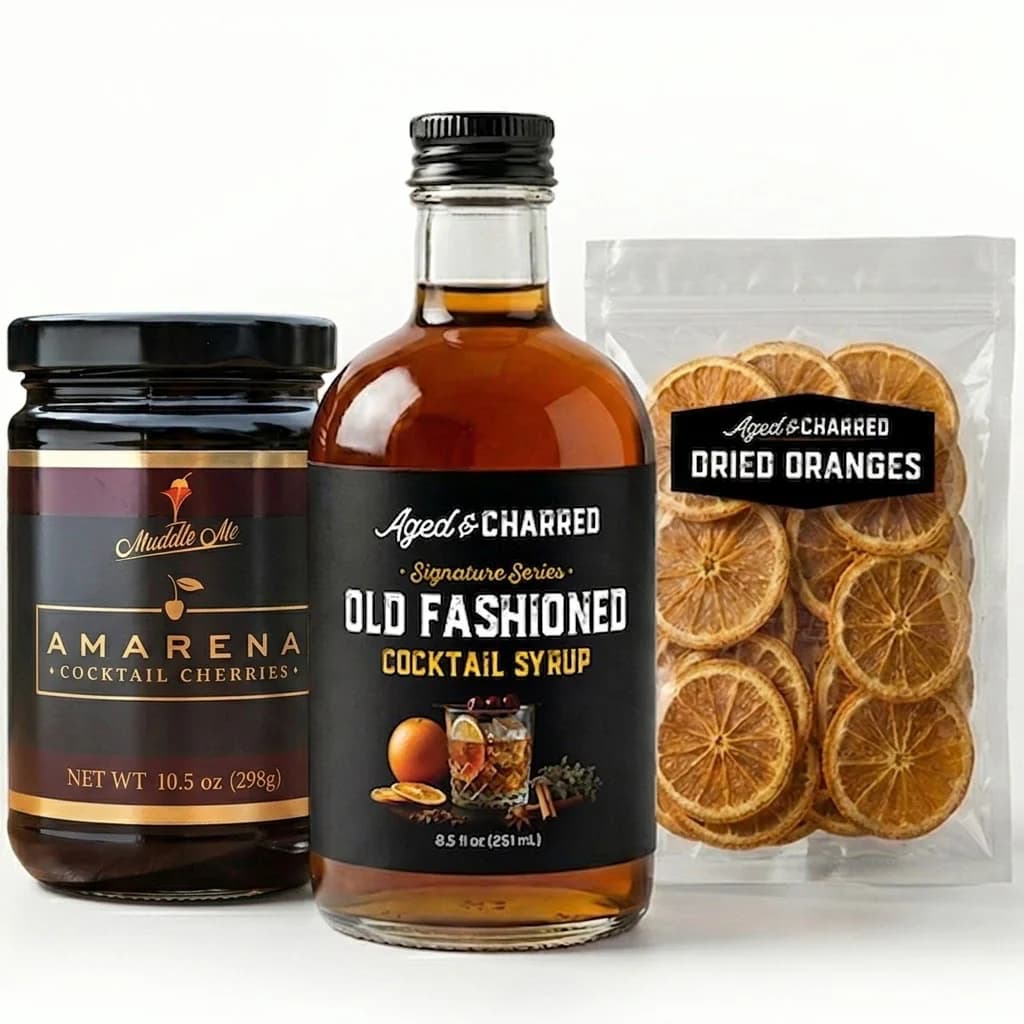
Aged & Charred Ultimate Old Fashioned Kit
Everything but the bourbon — the part most people get wrong. The complete-gift pick that turns any bottle into a proper Old Fashioned setup.
What makes a bourbon "high rye"
Every bourbon is made from at least 51% corn. The remaining grains — called the small grains — are where distilleries differentiate themselves. Most use rye and malted barley. Some swap the rye for wheat, producing the softer, sweeter style made famous by Maker's Mark and the Weller lineup.
A standard rye-in-mashbill percentage lands somewhere between 10–15%. High rye is an informal term for anything meaningfully above that threshold, typically 18–35%.
There's no legal definition. No TTB regulation says a bottle must hit a certain rye percentage to call itself high rye. It's a descriptor the industry uses loosely, and marketing teams use liberally. The bottles worth paying attention to are the ones where the grain bill is documented and the flavor backs it up.
The three most significant high rye mashbills in American bourbon:
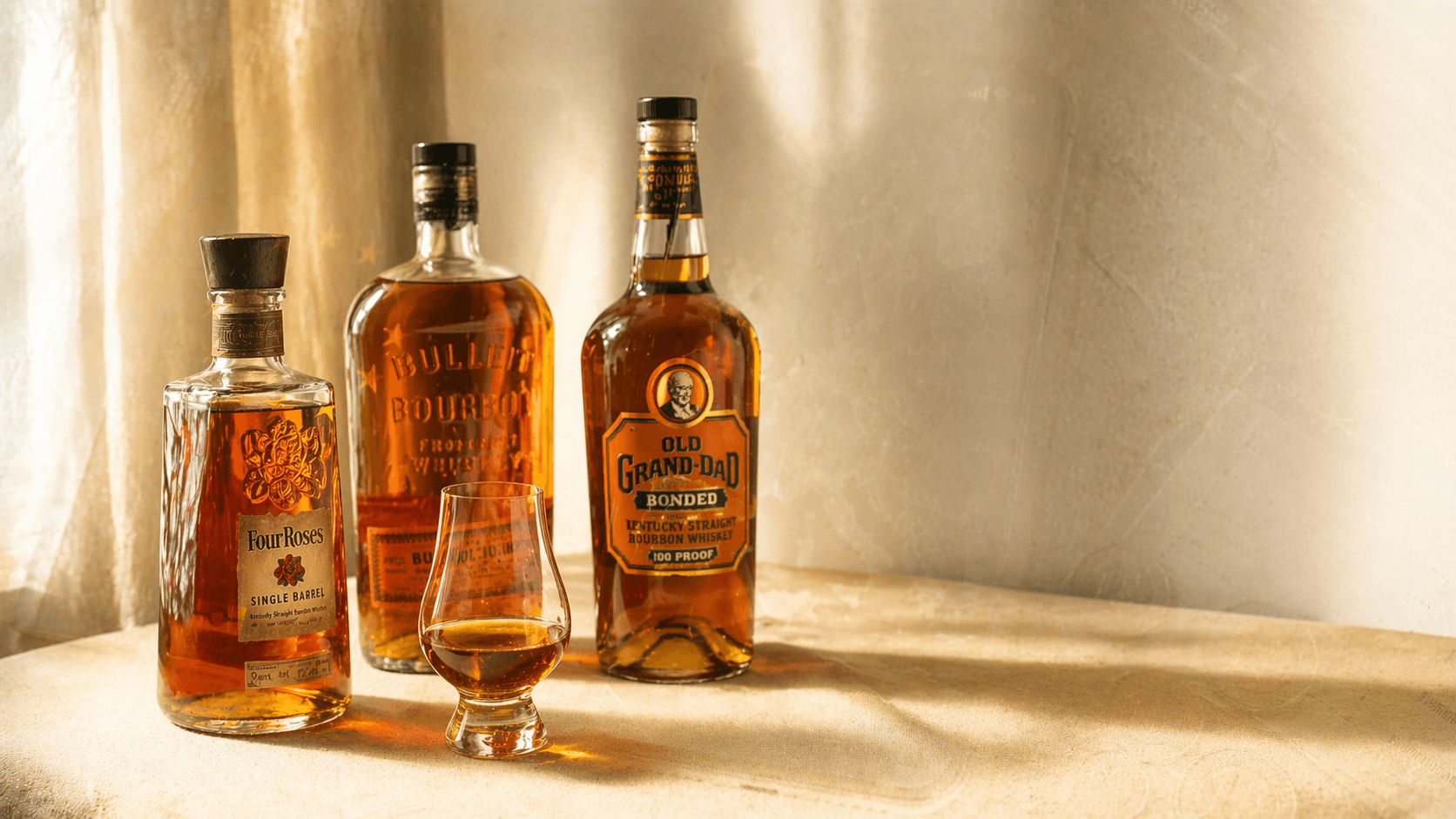
- Bulleit — 68% corn, 28% rye, 4% malted barley. One of the highest rye percentages among widely distributed bottles.
- Four Roses B mashbill — 60% corn, 35% rye, 5% malted barley. Used in their Single Barrel releases, it's one of the highest rye counts in Kentucky.
- Jim Beam high rye mashbill — 63% corn, 27% rye, 10% malted barley. The recipe behind Old Grand-Dad and Basil Hayden's.
How high rye bourbon actually tastes
The rye grain contributes spice — think black pepper, caraway, dried herbs, a dry, slightly savory edge that lingers on the finish. More rye means more of those notes dominate.
Where a wheated bourbon like Weller 12 or Weller Antique 107 tends toward vanilla, caramel, and a round softness, a high rye bourbon is leaner and more angular. The sweetness is still there — it's still bourbon, still made from primarily corn, still aged in new charred oak — but it's checked by that rye backbone.
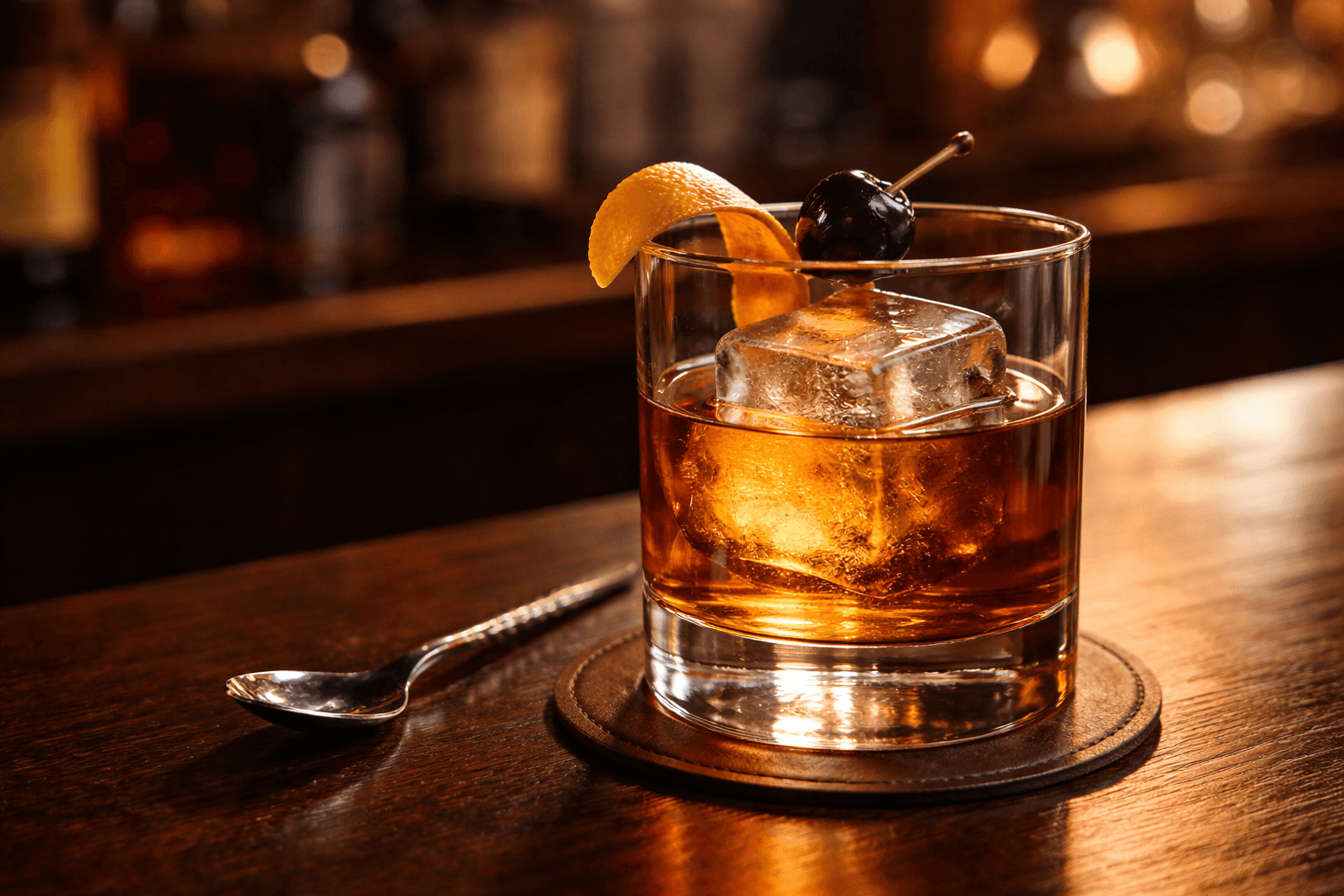
That's exactly what makes high rye bourbons such strong cocktail builds. In an Old Fashioned, the rye spice cuts through the sugar and bitters in a way that a sweeter, softer bourbon can't. The cocktail stays bright and defined rather than going cloying. Four Roses Single Barrel is my go-to for exactly this reason.
A high rye bourbon in an Old Fashioned doesn't compete with the sugar — it balances it.
For slow sipping, the complexity high rye adds rewards attention. You get more going on as the pour opens up, more to notice as it evolves in the glass. If you like peated scotch for that same "there's something happening here" quality, you'll likely gravitate toward high rye bourbon over wheated.
I keep both styles in heavy rotation. Weller 12 gets poured when I want something easy and meditative. Four Roses Single Barrel gets poured when I want a bottle with opinions.
The best high rye bourbon bottles
You don't need to spend much to get excellent high rye bourbon. The category's sweet spot sits between $25 and $50, and it's crowded with great bottles.
Best overall
Four Roses Single Barrel
Four Roses uses two distinct mashbills across their lineup. The Single Barrel is bottled from their B mashbill — 35% rye, the highest in their stable — drawn from individual barrels rather than blended. The result is a bourbon that's floral, fruity, and layered with spice. Fruit-forward on the nose, dry and complex on the finish.
A note on the recipes: Four Roses produces bourbon from five yeast strains crossed with two mashbills, resulting in 10 distinct recipes. What's on the shelf as a standard Single Barrel will vary slightly by recipe, but all of them use the B mashbill at 35% rye. Any bottle you pick up is the right one.
Best for cocktails (and everyday pours)
Bulleit Bourbon
Bulleit's 28% rye mashbill is what separates it from the crowd at this price point. It's noticeably drier and spicier than most bourbons under $30, with a distinct black pepper and dried fruit quality that shows up particularly well in cocktails. Clean, lean, and consistent.
Bulleit gets a lot of flak from bourbon enthusiasts for being a "beginner bottle," which misses the point. The grain bill is legitimately interesting. It just also happens to be approachable and affordable, which shouldn't count against it.
Best value in the category
Old Grand-Dad Bonded
100 proof, 27% rye mashbill, and somehow less than $25 most places. Old Grand-Dad Bonded is the high rye bourbon that enthusiasts point to when they want to make the case that expensive bottles are mostly a waste of money. Spicy and full-flavored at 100 proof, with plenty of oak and a long, dry finish.
The Bonded is the version I'd point most people toward. The 100 proof is assertive enough to be interesting but approachable enough that you're not fighting it. If you like the Bonded and want more intensity, the 114 is waiting.
If you want more heat
Old Grand-Dad 114
Same 27% rye mashbill as the Bonded, bottled at 114 proof. The higher proof amplifies the rye spice significantly — this is a big, bold pour. Raw and honest, with a long finish that doesn't quit. Add a few drops of water if you want to soften it; drink it neat if you want to know what it's actually doing.
The approachable entry point
Basil Hayden's
Made from the same 27% rye mashbill as Old Grand-Dad, but bottled at 80 proof — significantly lower than both the Bonded and the 114. The lower proof softens the rye spice into something gentler and easier to approach. Still distinctly rye-forward by bourbon standards, but without the intensity.
High rye vs. wheated: how to choose
Neither style is objectively better. They're different tools.
| Category | High Rye | Wheated |
|---|---|---|
| Flavor profile | Spicy, dry, assertive, complex | Soft, sweet, round, approachable |
| Best for cocktails | Old Fashioneds, Whiskey Sours, Manhattan | Milk Punch, lighter builds, simple sippers |
| Best for sipping | Rewards attention and slow drinking | Easy, low-effort pours |
| Examples | Four Roses Single Barrel, Bulleit, Old Grand-Dad | Weller 12, Weller Antique 107, Makers Mark |
| Price range | $22-50 for excellent bottles | $25-60+ (Weller runs higher due to demand) |
I keep both styles in the cabinet. The Weller lineup — Weller Special Reserve, Weller Antique 107, Weller 12, Weller Full Proof — are some of my favorite wheated bourbons and represent that style at its best. But when the Old Fashioned recipe comes out, I'm reaching for Four Roses Single Barrel.
The simplest way to decide: if you want something soft and easy, go wheated. If you want something with backbone and complexity, go high rye. If you're building a cocktail, almost always go high rye.
The right glass makes a difference
High rye bourbon rewards attention, and the right glass is part of that. A Glencairn concentrates the aromas in a way that a standard tumbler can't — you'll pick up the rye spice on the nose before the first sip, which frames the whole experience.
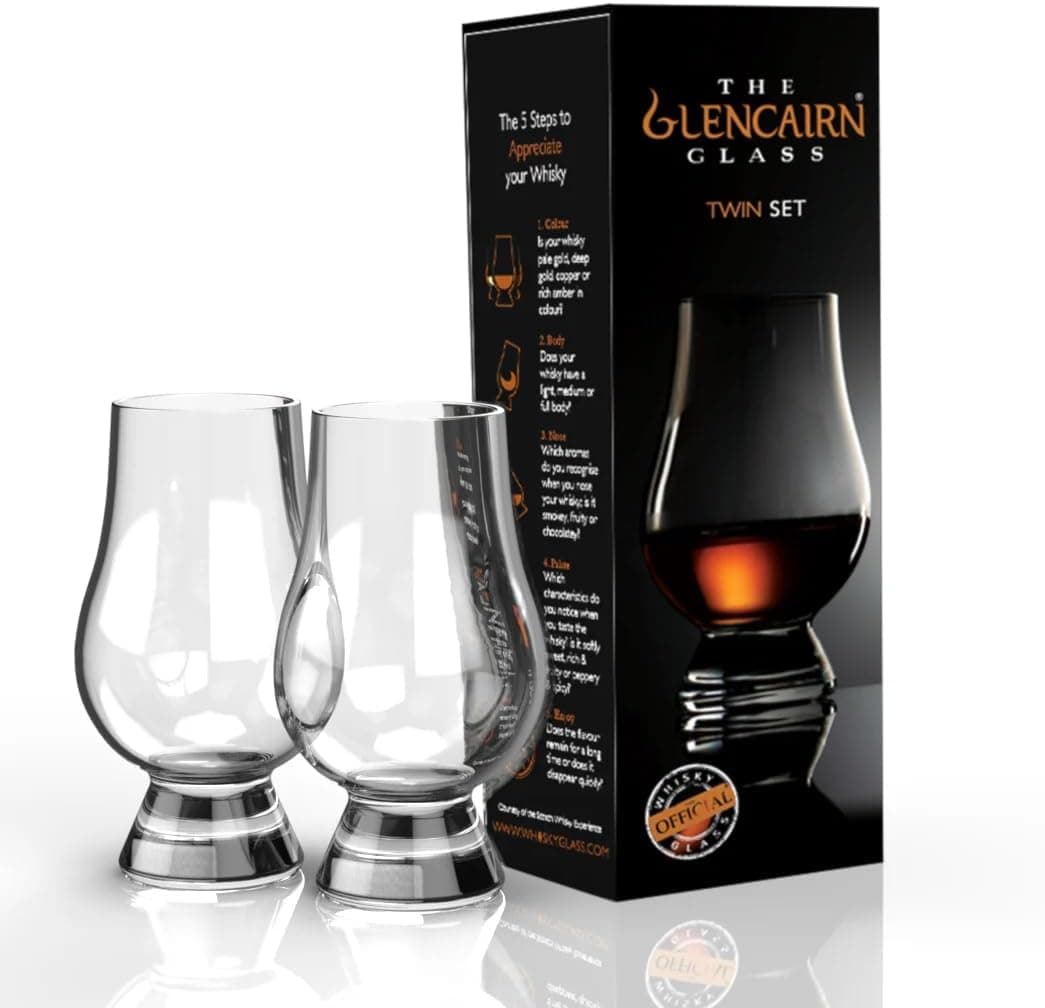
Glencairn Whisky Glass (Set of 2)
The standard tasting glass used by distillers and bourbon enthusiasts. The tulip shape funnels aromas toward the nose, making the rye spice in high rye bourbons noticeably more pronounced. Worth having for any serious sipping session.