How I picked these
The comparison comes from keeping both styles in my bar and tracking how my own pouring breaks down across a year. Bottle picks are the ones I reach for most in each style.
Updated Sep 16, 2026
My whiskey collection is roughly 90% bourbon and 10% rye. That ratio is honest, not strategic. I have a sweet palate, and bourbon's corn-forward sweetness is what I want when I'm pouring two ounces neat after dinner. Rye has its own job in my bar, and it's a job bourbon can't do, but it's not the everyday pour.
That's the whole bourbon-vs-rye question in one sentence: same family, different jobs. Both are American whiskey. Both are aged in new charred oak. Both can be excellent. The grain is what splits them, and the grain is what tells you when to reach for each.
This guide breaks down what actually separates them, how to taste the difference in your glass, when to pour each one, and the bottles I'd put in front of you for a real side-by-side.
Don't want to commit to two full bottles just to run this comparison? The Ultimate Whiskey Sampler ships a guided flight of minis, an easy low-stakes way to find out which side of the corn-vs-rye line your palate lands on.
The legal difference: it's the grain
Bourbon and rye whiskey are both legally defined American whiskey categories. They share most of the same rules. The mashbill is the only meaningful difference on paper.
| Requirement | Bourbon | Rye Whiskey |
|---|---|---|
| Primary grain | At least 51% corn | At least 51% rye |
| Where it can be made | Anywhere in the U.S. | Anywhere in the U.S. |
| Barrel type | New charred oak | New charred oak |
| Distillation proof | No more than 160 | No more than 160 |
| Barrel entry proof | No more than 125 | No more than 125 |
| Bottling proof | 80 proof or higher | 80 proof or higher |
| Additives allowed | None | None |
| Straight designation | Aged 2+ years, no additives | Aged 2+ years, no additives |
Every other rule is identical. New charred oak. No additives. The same proof ceilings. The 51% threshold for the named grain. That's why both categories taste like American whiskey at the core. The mashbill is what pulls them in different directions.
If you want a deeper read on the bourbon side, the bourbon vs whiskey guide covers exactly what makes bourbon bourbon. For the rye side, what is rye whiskey covers the "straight" designation and the legal definition in detail.
How they actually taste in your glass
The legal definitions are useful, but the easier way to understand bourbon vs rye is to taste them side by side. The grain difference is dramatic on the palate.
Bourbon leads with sweet. Corn contributes vanilla, caramel, brown sugar, baked apple, and a round, soft mouthfeel. Even a high-proof bourbon tastes sweet first. The new charred oak amplifies that sweetness with toasted sugars and warmth. Bourbon is the whiskey you can hand to someone who's not sure they like whiskey.
Rye leads with spice. Rye grain contributes black pepper, cinnamon, cloves, dried mint, caraway, and a dry, slightly savory finish. The mouthfeel is leaner and more angular than bourbon. Rye is what you reach for when you want a whiskey with opinions.
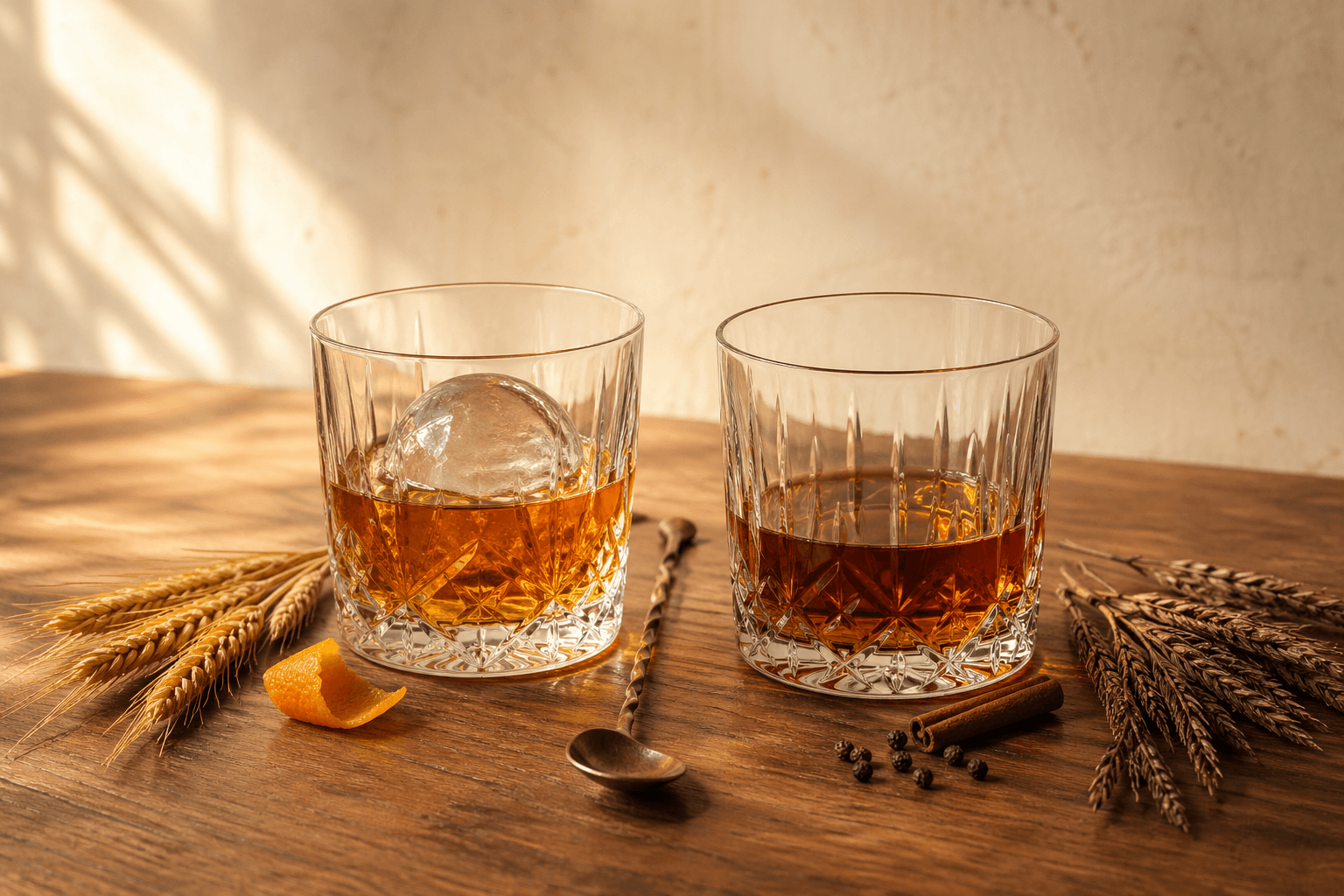
A clean side-by-side tells the story faster than any paragraph. Pour Buffalo Trace next to Bulleit Rye. The bourbon comes in soft, sweet, and rounded. The rye comes in dry, peppery, and structured. Same family. Different personalities.
Bourbon is the answer when you want sweetness. Rye is the answer when you want backbone.
One thing worth flagging: rye spice is a flavor, not a sensation. A well-made rye is peppery without being harsh. If a rye feels like it's burning your throat, that's not spice, that's a bad bottle. The peppery character should sit on the palate and finish dry, not sting on the way down.
When I reach for each: the 90/10 rule
Here's how my own pouring breaks down across a year, and why.
Bourbon, neat, after dinner. Almost always. The sweet, round profile is what I want when I'm slowing down. Pour, sit, sip. A wheated bourbon like Weller 12 or a balanced classic like Buffalo Trace gets the call most nights. This is where 90% of my whiskey drinking happens.
Rye, in cocktails. Almost always. Sweet vermouth, sugar, bitters — every classic American whiskey cocktail was originally built on rye, and the math still works. The spice cuts through sweet mixers and keeps the drink defined. A bourbon Old Fashioned can go cloying. A rye Old Fashioned stays bright.
Rye, neat, at tastings or distillery flights. This is the third place rye shows up. When I'm doing a structured tasting or working through a flight at a distillery bar, rye gets pours alongside bourbon because the contrast is the entire point. Tasting them next to each other is when the differences become obvious in a way they never quite are in isolation.
If your palate runs sweeter, you're probably going to land where I did. If you genuinely prefer dry, peppery, savory profiles, your ratio might be flipped. Neither is wrong. They're different answers to the same question.
How to taste bourbon and rye side by side
The single best way to understand the difference is a real side-by-side. You need three things: one good bourbon, one good rye, and proper glassware. The setup runs about $100 total and gives you a tasting framework you'll use for years.
The bourbon for the comparison
Buffalo Trace
The default reference bourbon for a reason. 90 proof, balanced, with classic bourbon notes — vanilla, brown sugar, mild oak, a touch of clove. It's the bottle distillery tour guides pour when they want to show what bourbon is supposed to taste like, and it's the bottle I'd put on the bourbon side of any first side-by-side tasting.
If Buffalo Trace is hard to find in your area (it can be allocated in some markets), Wild Turkey 101 or Eagle Rare are equally good comparison bottles. The point is to start with a balanced, classic bourbon and let the rye do the contrast work.
The rye for the comparison
Bulleit Rye
A 95% rye mashbill, one of the highest in the category. Bulleit Rye is intensely rye-forward: black pepper, clove, dried mint up front, a long dry herbal finish. Clean, consistent, bottled at 90 proof. The high mashbill means every note tastes like rye rather than a softer grain blend.
Bulleit Rye is the bottle I most often hand to someone who says they don't like rye. It's almost always that they tried a bad rye once. Bulleit's clarity makes the category click.
The glassware
Libbey Whiskey Tasting Glasses (Set of 4)
Small-format tasting glasses designed for side-by-side comparisons. The size encourages two-ounce pours so you can do a proper flight without wasting whiskey, and the shape concentrates aromas at the rim. A set of four lets you do a bourbon-and-rye comparison plus add a high-rye bourbon as the bridge.
If you want a single-pour tasting glass instead of a flight setup, a Glencairn is the standard. The tulip shape funnels aromas more aggressively than the Libbey, which matters if you're really nosing a single pour deeply.
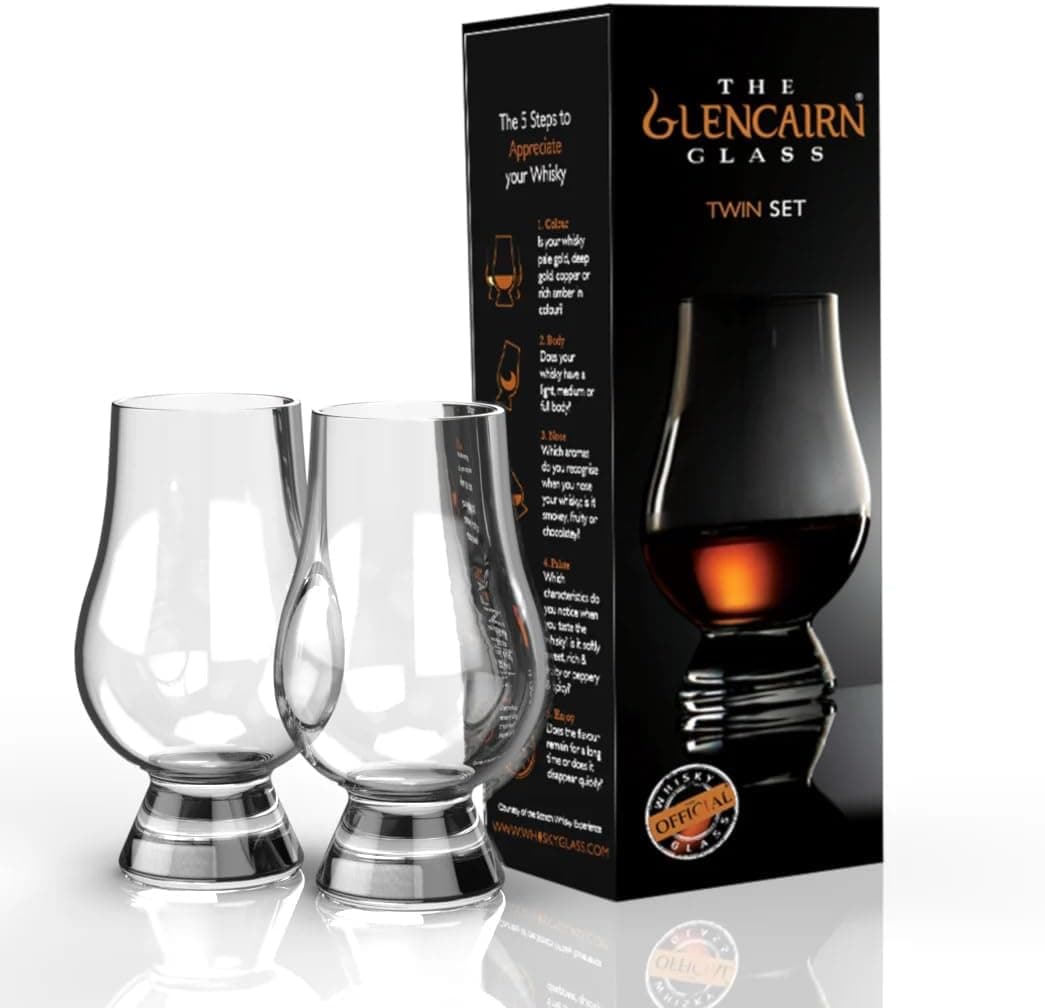
Glencairn Whisky Glass (Set of 2)
The standard whiskey tasting glass used by distillers and bourbon enthusiasts worldwide. The tulip shape concentrates aromas toward the nose, which makes the spice on a rye and the sweetness on a bourbon both more pronounced. Dishwasher safe and nearly unbreakable.
Three more rye whiskeys worth keeping in the bar
Once you've done the side-by-side and decided rye has a place in your collection, these are the bottles I'd add next.
Best rye for Manhattans
Rittenhouse Rye Bottled-in-Bond
100 proof, Bottled-in-Bond, made by Heaven Hill. The BIB designation requires a single distillery, single distilling season, at least four years aged, and exactly 100 proof. Full-bodied, peppery, dried fruit, long dry finish. Punches dramatically above its price.
Best splurge rye for sipping
Bulleit 12 Year Rye
The same 95% rye mashbill as standard Bulleit Rye, aged twelve years. The longer aging adds depth — caramel, dried fruit, more oak structure — without dulling the rye spice that makes the line distinctive. Bottled at 92 proof. Excellent neat or as the rye in a higher-end Manhattan.
Premium splurge: high proof and not for beginners
Jack Daniel's Single Barrel Barrel Proof Rye
A 70% rye mashbill, single barrel selection, bottled at barrel strength — typically 130-140 proof depending on the barrel. The Tennessee charcoal mellowing softens some of the edges, but this is still a big, intense rye with serious heat. Spice, dark dried fruit, charred oak, long warm finish.
If you want a wider rye lineup with more under-$40 picks, the what is rye whiskey guide covers Sazerac Rye and the broader rye starter set.
Cocktails: where rye actually earns its keep
Rye is a cocktail whiskey by nature. Every classic American whiskey cocktail — the Manhattan, the Old Fashioned, the Sazerac, the Whiskey Sour — was originally built on rye. Bourbon replaced rye in most of them after Prohibition because rye production collapsed and bourbon was what was available. Rye is the historically correct answer.
Manhattan: Rittenhouse
Two ounces of rye, one ounce of sweet vermouth, two dashes of Angostura, stirred, strained, cherry. The sweet vermouth needs a spicy whiskey to push against. A bourbon Manhattan can taste flat. Rittenhouse at 100 proof keeps the drink defined.
Old Fashioned: Bulleit Rye
Same logic. The sugar and bitters in an Old Fashioned benefit from a whiskey with some bite. Bulleit Rye's 95% rye mashbill cuts through cleanly. If you want the full breakdown of how rye and high-rye bourbons perform in this cocktail, see the best bourbon for Old Fashioneds guide.
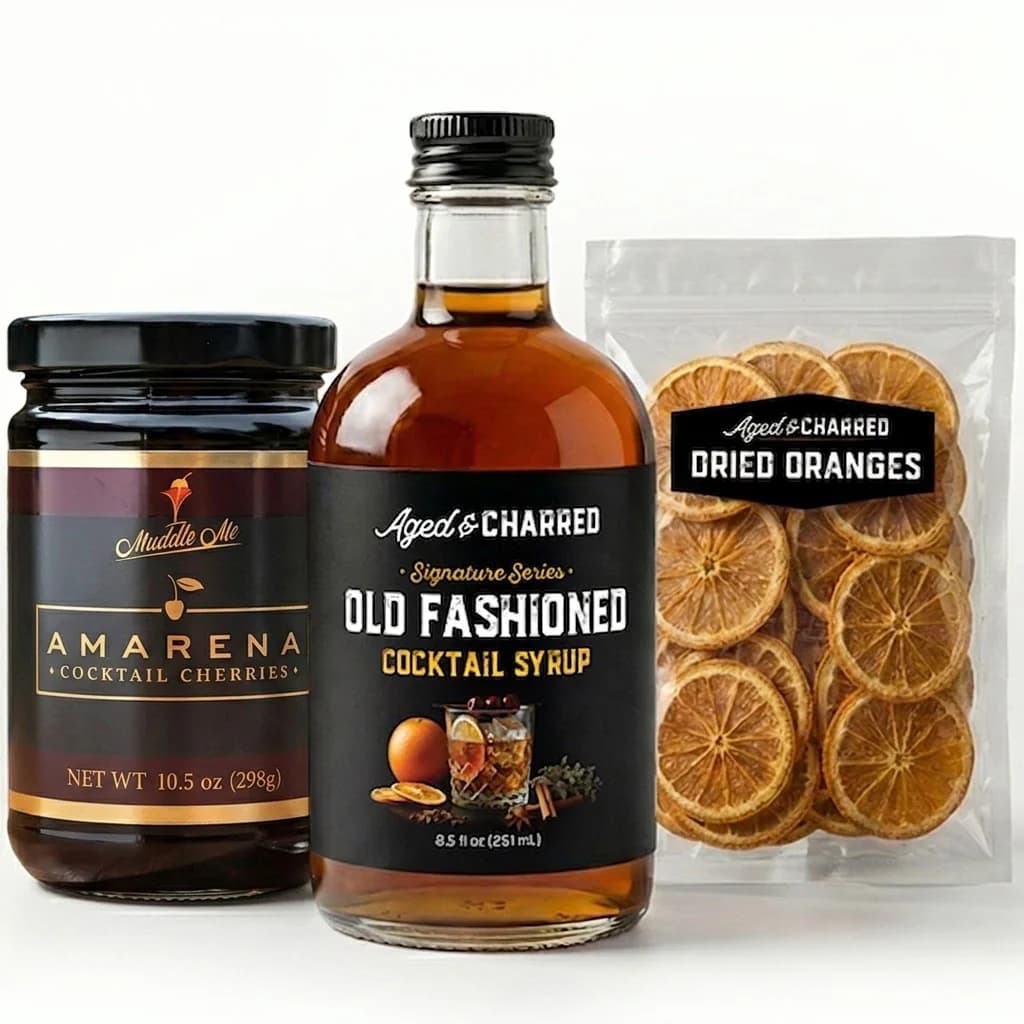
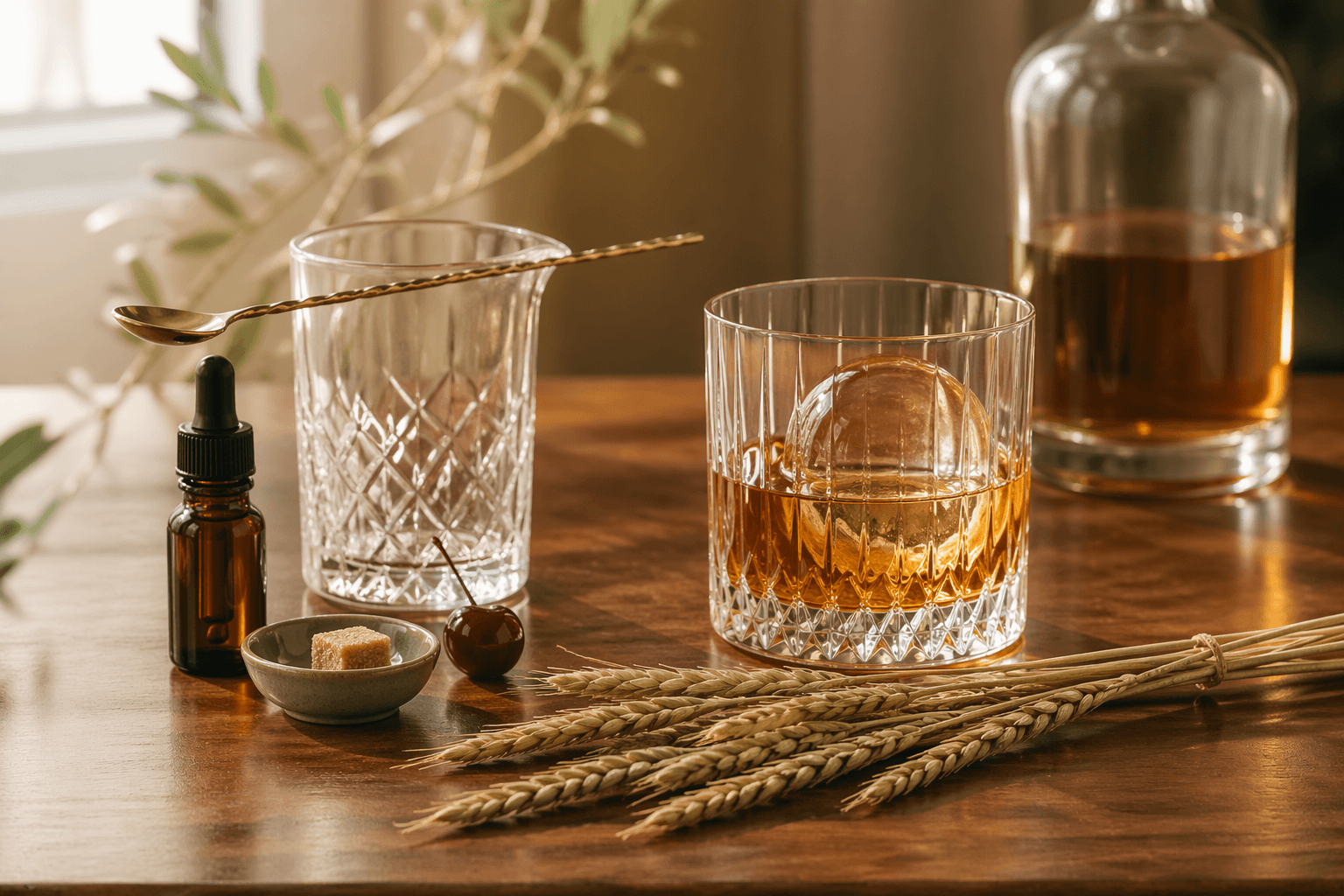
Aged & Charred Ultimate Old Fashioned Kit
Everything but the bourbon — the part most people get wrong. The complete-gift pick that turns any bottle into a proper Old Fashioned setup.
Sazerac: Sazerac Rye (when you can find it)
The original cocktail built specifically for rye whiskey. New Orleans tradition: rye, Peychaud's bitters, sugar, absinthe rinse. Sazerac Rye is the historically and practically correct bottle, made by Buffalo Trace.
High rye bourbon: the bridge between the two
If the bourbon-vs-rye question is really a question about how much spice you want in your whiskey, there's a category that lives directly in the middle. High rye bourbons are still legally bourbon — at least 51% corn — but they push the rye in the mashbill up to 28-35% instead of the usual 10-15%. The result is a whiskey that drinks sweeter than rye and spicier than standard bourbon.
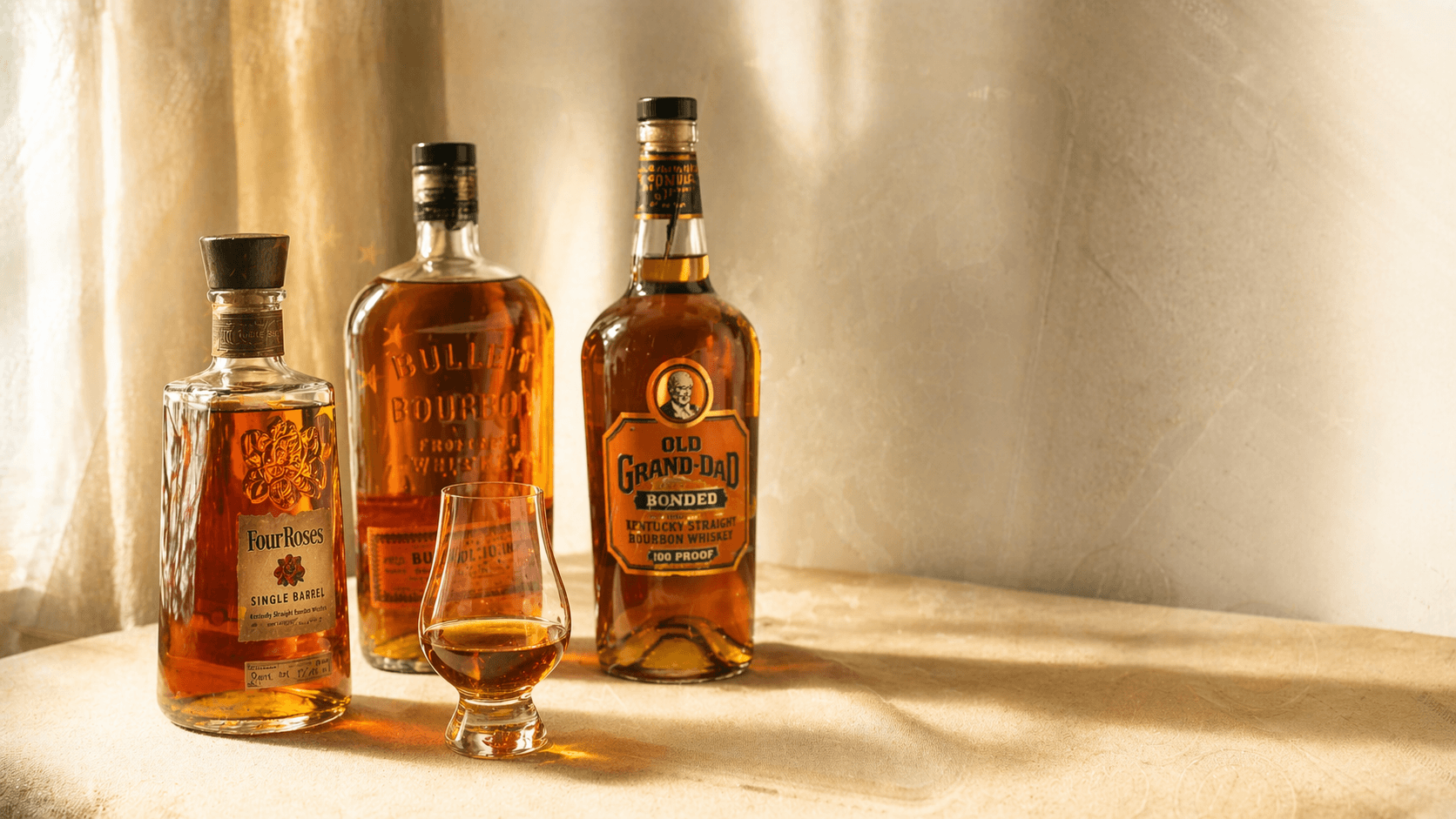
If you've done the side-by-side and want something that splits the difference, this is where to look. Four Roses Single Barrel and Bulleit Bourbon are the two I reach for most. Full breakdown in the high rye bourbon guide.
Bourbon vs rye at a glance
| Category | Bourbon | Rye Whiskey |
|---|---|---|
| Mashbill | At least 51% corn | At least 51% rye |
| Flavor profile | Sweet, round, vanilla, caramel | Spicy, dry, peppery, herbal |
| Best for sipping | Drinkers with a sweet palate | Drinkers who like assertive, dry profiles |
| Best for cocktails | Mint Julep, Boulevardier, simpler builds | Manhattan, Old Fashioned, Sazerac, Whiskey Sour |
| Starter bottles | Buffalo Trace, Wild Turkey 101, Knob Creek | Bulleit Rye, Rittenhouse, Sazerac |
| Premium picks | Eagle Rare, Weller 12, Four Roses Single Barrel | Bulleit 12 Year, Jack Daniels Single Barrel Barrel Proof Rye |
| Price for excellent bottles | $25-50 | $28-40 (premium runs $55-85) |
Where to go from here
If you're new to whiskey and trying to decide where to start, go bourbon. The sweetness and approachability make it the easier first step, and most rye drinkers got there by way of bourbon first. Buffalo Trace and Bulleit Rye, side by side in Libbey or Glencairn glasses, will give you the clearest answer for your own palate.
If you already drink bourbon and want to understand rye, do the side-by-side. You'll know within the first sip whether the spicy, dry profile is something you want more of or whether bourbon is going to remain your default. Both are valid landing spots.