How I picked these
Based on 150+ bottles across bourbon, rye, Scotch, and Japanese whiskey, poured almost entirely through two shapes. The other shapes here are ones I've tried, and I say which I don't reach for day to day.
Updated Sep 23, 2026
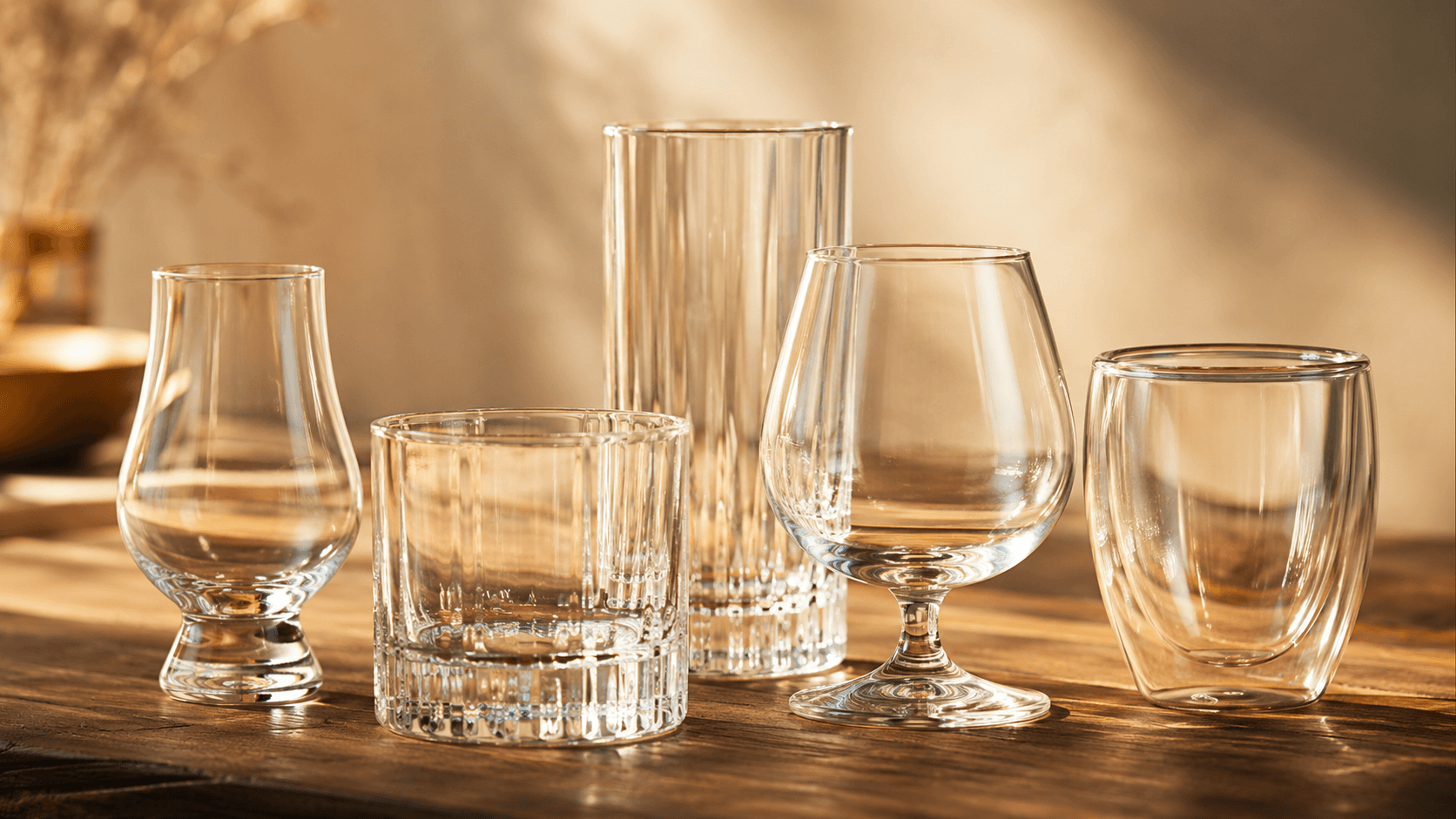
Walk into any liquor store's barware aisle and you'll find a dozen glasses labeled "whiskey glass," and most of them are the same wide tumbler with a different logo etched on the side. That's not what actually separates whiskey glass shapes. Each real shape does a specific job — concentrating aroma, holding a big ice cube, or slowing down how a high-proof pour opens up — and knowing which is which changes how a whiskey actually tastes in your hand.
I own over 150 bottles across bourbon, rye, Scotch, and Japanese whiskey. Across all of it, I use exactly two shapes for almost everything I drink. This is a breakdown of every shape you'll actually run into, what each one is built for, and which ones are worth owning.
Why the shape actually matters
A glass isn't neutral. Three things change based on shape, and they're the reason a $22 glass can make a $25 bottle taste better than it does in a mislabeled souvenir tumbler:
- Aroma concentration. A narrower opening funnels vapor toward your nose instead of letting it dissipate into the room. This is the entire reason tasting glasses exist.
- Ice and dilution. A wide, short glass gives a large ice cube room to sit without crowding the pour, and controls how fast that cube melts and dilutes the whiskey.
- Aeration. A wider bowl exposes more surface area to air, which softens a high-proof pour faster than a narrow glass does, similar to what swirling does in a wine glass.
Every shape below is really just a different balance of those three things.
Tulip / nosing glass (Glencairn)
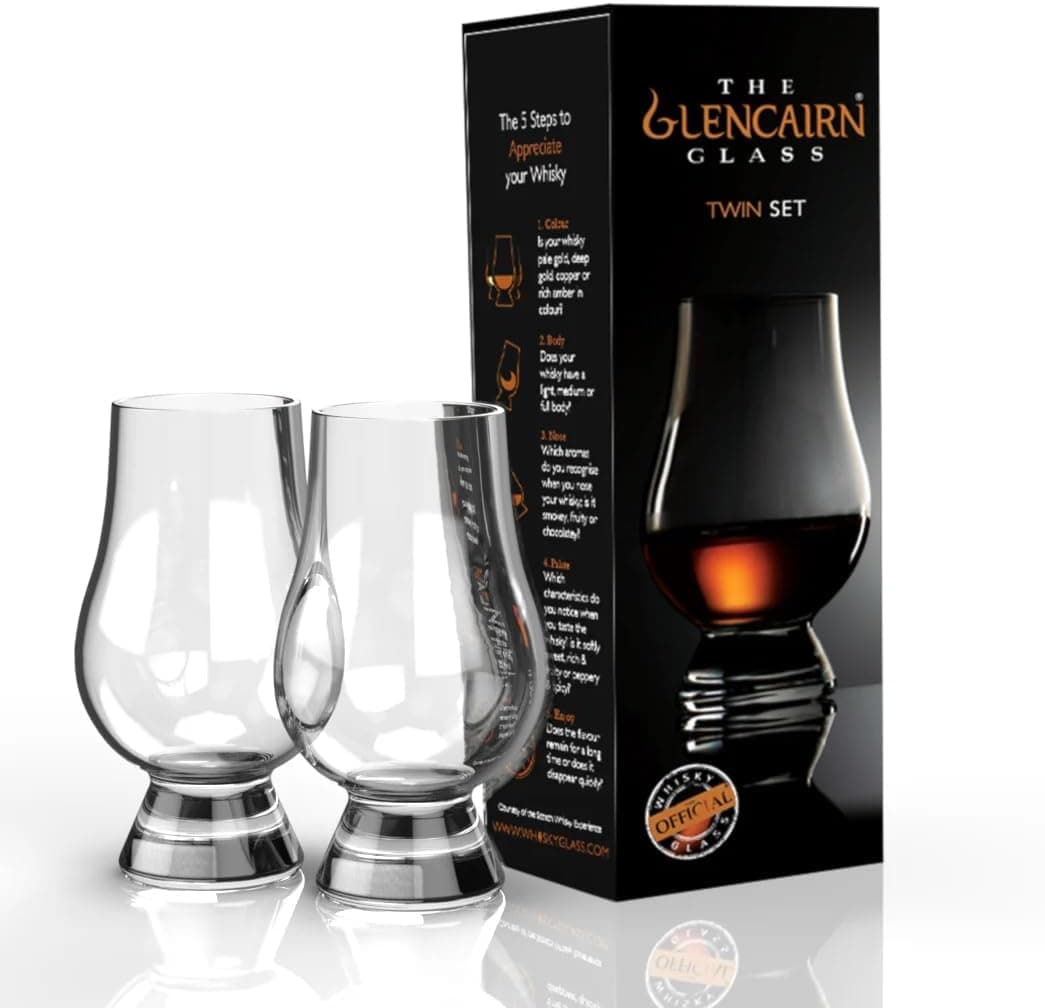
Glencairn Whisky Glass (Set of 2)
The tasting glass a 150-bottle collector reaches for 90% of the time. The tulip bowl concentrates aroma — the single biggest upgrade to any pour.
This is the glass I reach for at home more than any other. It's a squat glass with a bulbous body and a narrower, slightly flared top, designed specifically for nosing and sipping whiskey neat. The wide bottom lets the whiskey breathe; the narrow top holds that aroma together until it reaches your nose.
It became the industry standard for a reason: distilleries use it in tasting rooms because it makes whiskey smell and taste better than a standard rocks glass does, full stop. If you're new to whiskey glassware and want to buy exactly one glass, this is it. It's also what I set out when friends come over to taste; how to host a bourbon tasting covers how many you need for a side-by-side flight.
Rocks glass / Old Fashioned glass
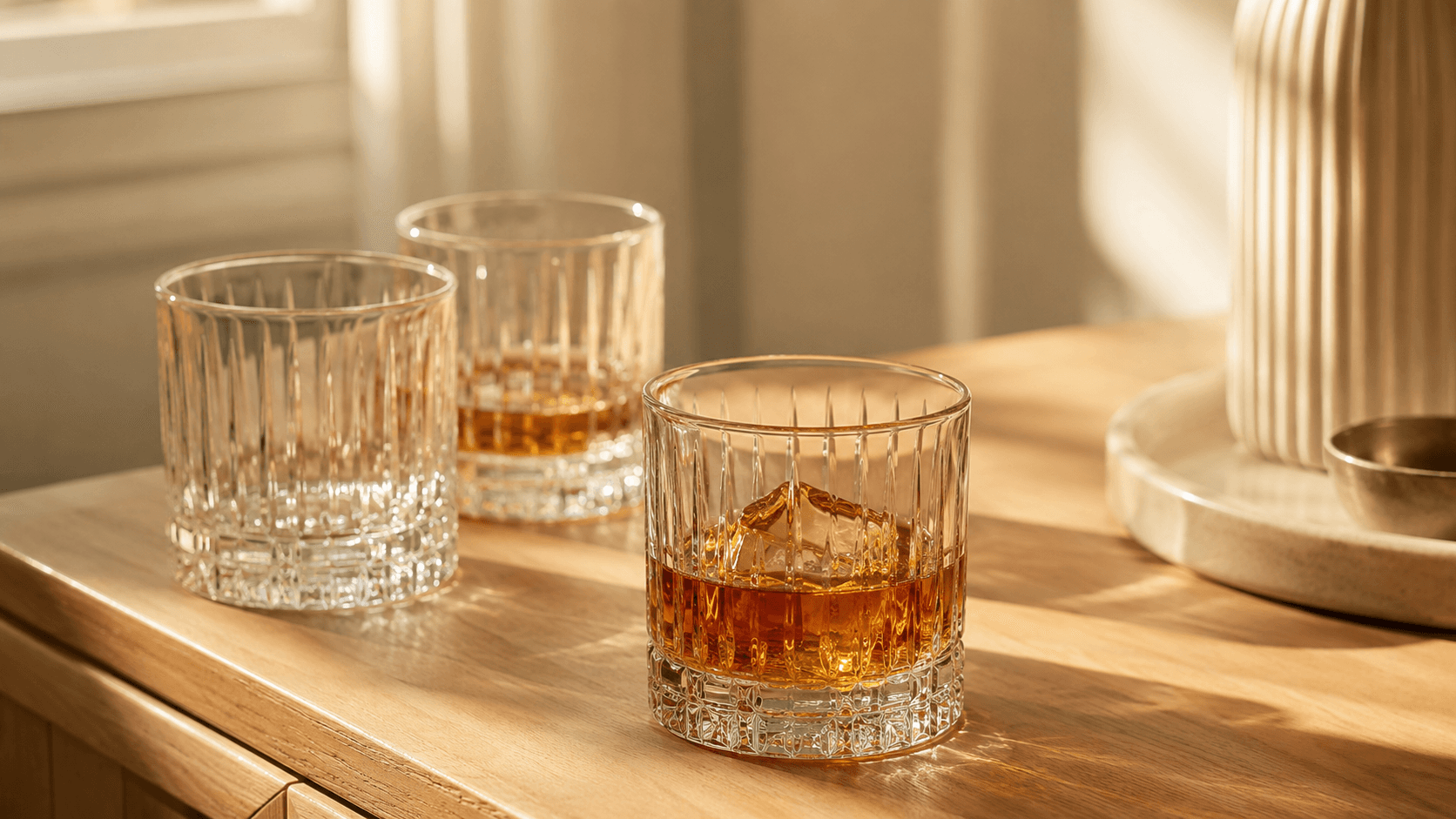
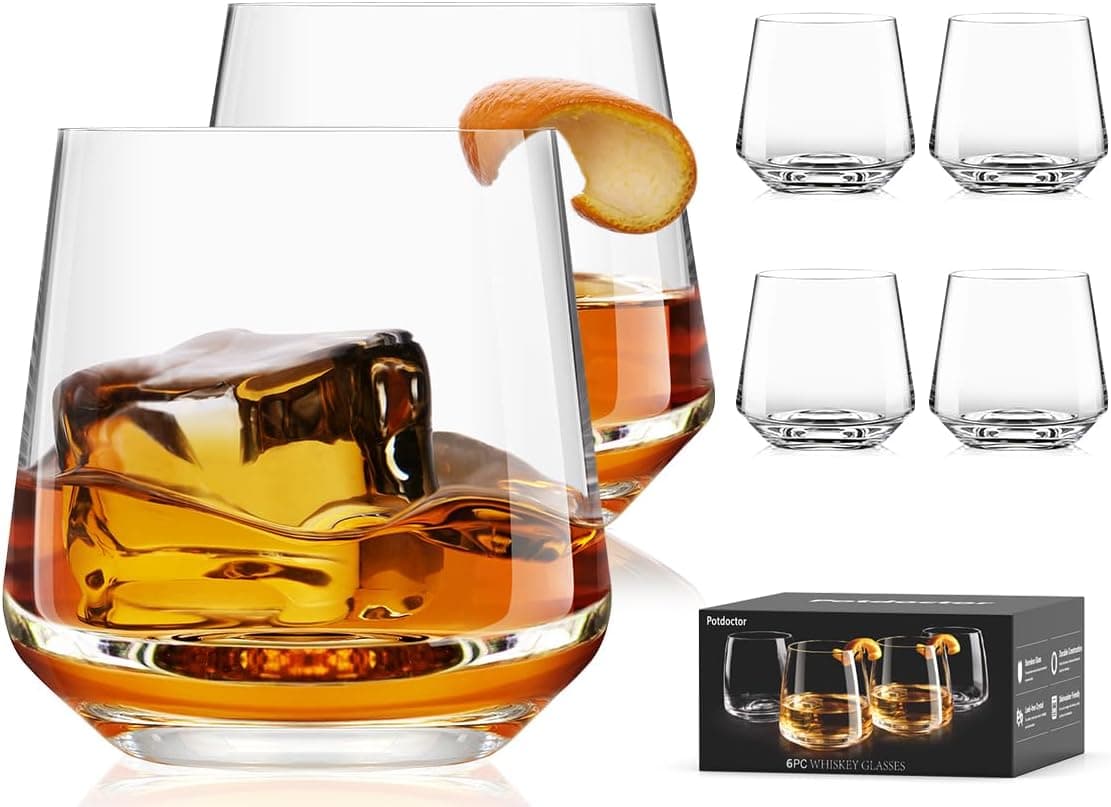
The rocks glass is the one most people already own: short, wide, straight or slightly tapered walls, heavy base. It exists for one job the Glencairn can't do — holding whiskey over ice without the narrow top getting in the way of a large cube.
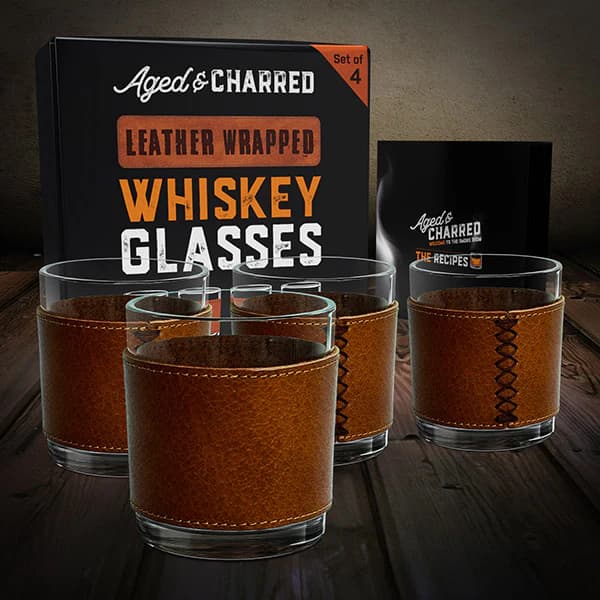
Aged & Charred Leather Wrapped Rocks Glasses (Set of 4)
Four lead-free crystalline rocks glasses wrapped in hand-stitched genuine leather, boxed and gift-ready. A rocks-glass set with real character — the kind of barware most people never buy for themselves.
If you make Old Fashioneds or Manhattans at home, this is also the glass those cocktails are traditionally built and served in — the name isn't a coincidence. A wide-enough rocks glass fits a large clear ice cube, which melts slowly and keeps the drink from watering out in the first ten minutes the way small cubes do.
Highball glass
A highball is tall, narrow, and straight-walled — built to hold more ice and mixer than whiskey. This is the glass for a whiskey and soda, a whiskey ginger, or any long mixed drink where whiskey is one part of a bigger pour rather than the whole show.
It's less essential than the first two shapes if you're focused on sipping whiskey itself, but it's worth having if whiskey highballs are part of your regular rotation — a trend that's grown a lot as Japanese-style highballs have gotten more attention outside Japan.
If you want one pair for bourbon and ginger or a whiskey highball, pick a 16-ounce crystal highball with a weighted base. The extra height leaves room for plenty of ice and mixer, and the weight keeps a tall glass from feeling tippy.
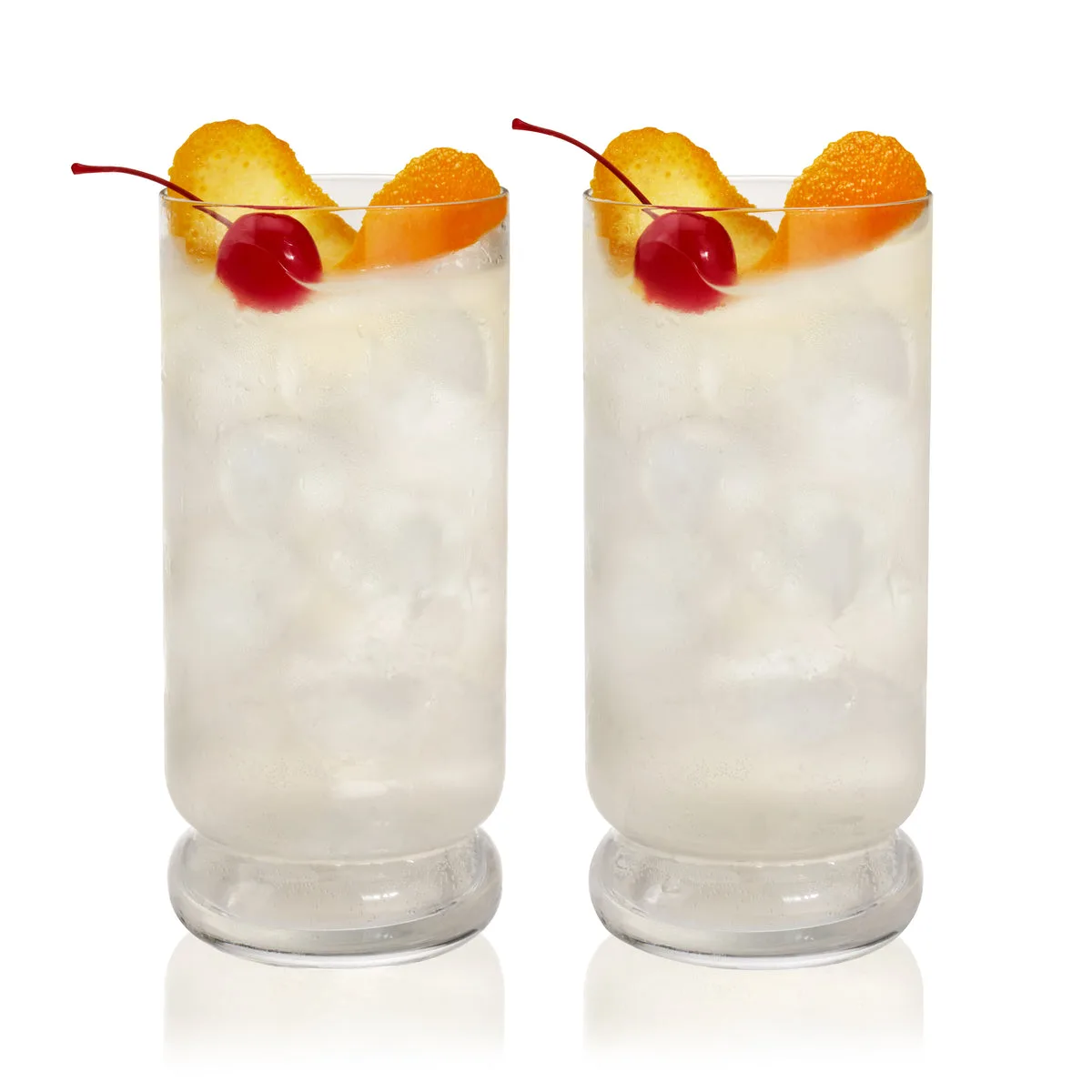
Viski Mercury Crystal Highball Glasses (Set of 2)
Two 16oz lead-free crystal highballs with clean midcentury lines and a subtly weighted base. Built for a bourbon and ginger or a whiskey highball, dishwasher safe, and boxed for gifting.
Copita and snifter
A copita or snifter has a rounder, wider bowl than a Glencairn that tapers to a narrower opening — the traditional shape for sherry, brandy, and aged, high-proof spirits. The wider bowl exposes more surface area, which softens a hot, high-proof pour faster than a tighter tulip shape does.
This is where cask-strength Scotch and older single malts genuinely benefit from the extra room. For bourbon and rye at typical proof — 90 to 110 — I don't think a snifter earns its place over a Glencairn; the tulip shape already does the job at that proof range without the bowl being so wide that aroma dissipates before it reaches you.
Buy the shape that matches how you actually drink, not the one that looks most impressive on a shelf. A tulip glass and a rocks glass cover almost every real pour.
Double-walled / aerating glasses (Norlan-style)
Double-walled glasses are the newest entrant in whiskey glassware — an inner and outer wall with an aerating notch built into the bowl, designed to mimic what swirling does to a pour without you having to do it. They sit between a Glencairn and a full snifter: a wider bowl than a tasting glass, but still narrow enough at the top to hold aroma.
The double wall also keeps a pour cooler in your hand longer, which is a genuinely noticeable perk in a warm room. I don't reach for one over a plain Glencairn day to day, but as a gift for someone who already owns the basics and wants something they wouldn't buy themselves, it's a real upgrade rather than a gimmick.
What to skip entirely
- Novelty shot-glass-sized "whiskey glasses." Too small to nose properly, too small to hold a real cube.
- Globe and skull-shaped glasses. They photograph well and drink poorly — awkward to hold, worse to actually nose from.
- Anything advertised mainly on "whiskey lover" text or branding. If the printing is the selling point, the glass underneath is usually an afterthought.
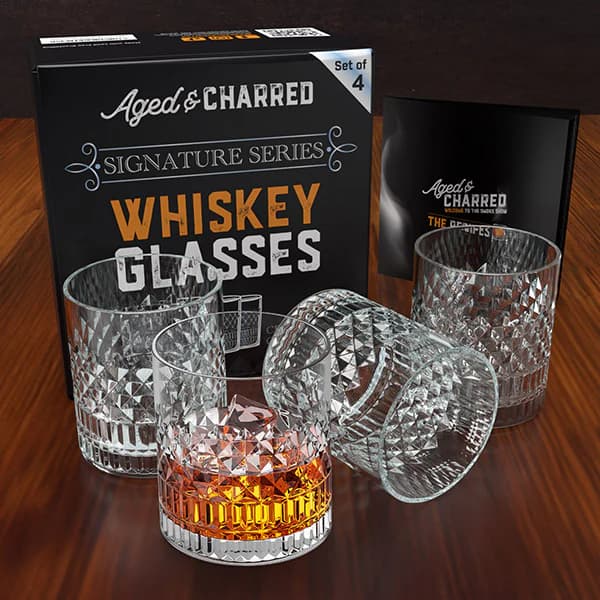
Aged & Charred Signature Series Glasses (Set of 4)
Four lead-free crystalline whiskey glasses in a gift-ready box, with a thick, sturdy base wide enough for a large ice cube. The giftable glassware upgrade that arrives ready to wrap.
Comparison at a glance
| Shape | Best for | Skip if |
|---|---|---|
| Tulip / Glencairn | Neat pours, any whiskey category | You mostly drink on ice |
| Rocks / Old Fashioned glass | Whiskey on ice, Old Fashioneds, Manhattans | You only drink neat |
| Highball | Whiskey and soda, whiskey ginger, long mixed drinks | Whiskey is rarely mixed with a big pour of something else |
| Copita / snifter | Cask-strength or aged Scotch, high-proof pours neat | You drink mostly bourbon or rye at 90-110 proof |
| Double-walled / Norlan-style | Upgrading someone who already owns a tulip glass | Budget is under $40 for a pair |
Frequently Asked Questions
- What is the difference between a whiskey glass and a rocks glass?
- A rocks glass (also called an Old Fashioned glass) is one specific type of whiskey glass — short, wide, and straight-walled, built to hold a large ice cube. 'Whiskey glass' is the broader category that also includes tulip-shaped tasting glasses, snifters, highballs, and double-walled aerating glasses.
- Does the shape of the glass really change how whiskey tastes?
- Yes. A narrower opening concentrates aroma toward your nose, which is a large part of how whiskey flavor is actually perceived. A wider bowl exposes more surface area and softens a high-proof pour faster. This is why tasting rooms use tulip-shaped glasses instead of standard tumblers.
- What glass do bourbon distilleries use in their tasting rooms?
- Almost universally a tulip-shaped nosing glass, the same style as a Glencairn. It's the closest thing whiskey has to a universal standard shape across bourbon, rye, Scotch, and Japanese whiskey tasting rooms.
- Is a snifter or a Glencairn better for whiskey?
- It depends on proof and whiskey style. A Glencairn's narrower tulip shape works well for typical-proof bourbon and rye (90-110 proof). A snifter's wider bowl is better suited to cask-strength Scotch or older, high-proof aged whiskey where slower aroma release helps.
- How many types of whiskey glasses do I actually need?
- Two: a tulip tasting glass for neat pours and a rocks glass for anything on ice or in a cocktail. That combination covers the vast majority of real-world whiskey drinking. A highball, snifter, or double-walled glass is worth adding only if it matches a specific way you already drink.