How I picked these
Sourcing facts come from public filings, label statements, and distillery tours; the taste opinions come from my own shelf, including the bottles where I couldn't taste the price gap.
Updated Jul 31, 2026
Pick up four different bottles of rye whiskey with four different names, four different stories, and four different prices. There's a real chance that two or three of them were distilled in the same building, in Indiana, possibly in the same week.
That sounds like it should be a scandal. It isn't. But it does mean that if you're choosing rye by the story on the label, you're choosing badly — because the story is the part that's easiest to invent. What's actually worth paying for is what a brand does after the barrels arrive: which mash bills they pick, how they blend them, what proof they land on, and whether they had the patience to wait.
This guide is the map. Who distills their own rye, who buys it, and how to tell in about ten seconds at the shelf.
The rye ownership map, at a glance
| Brand | Who owns it | Where the rye is distilled | Own juice or sourced |
|---|---|---|---|
| Rittenhouse, Pikesville | Heaven Hill | Bernheim (Louisville, KY) | Own juice |
| Sazerac Rye, Thomas H. Handy | Sazerac | Buffalo Trace (Frankfort, KY) | Own juice |
| Wild Turkey 101 Rye, Russell's Reserve Rye | Campari Group | Wild Turkey (Lawrenceburg, KY) | Own juice |
| Jim Beam Rye, Knob Creek Rye, Old Overholt | Beam Suntory | Jim Beam (Clermont, KY) | Own juice |
| Old Forester Rye, Woodford Reserve Rye | Brown-Forman | Louisville / Versailles, KY | Own juice |
| New Riff Rye | Independent | New Riff (Newport, KY) | Own juice |
| Peerless Rye | Independent | Peerless (Louisville, KY) | Own juice |
| Castle & Key Restoration Rye | Independent | Castle & Key (Frankfort, KY) | Own juice |
| Wilderness Trail Rye | Campari Group | Wilderness Trail (Danville, KY) | Own juice |
| Bulleit Rye | Diageo | Ross & Squibb / MGP (Lawrenceburg, IN) | Sourced |
| Redemption, George Remus, James E. Pepper, Templeton | Various | Ross & Squibb / MGP (Lawrenceburg, IN) | Sourced |
| Dickel Rye | Diageo | Ross & Squibb / MGP, then filtered in TN | Sourced |
| Angel's Envy Rye | Bacardi | Sourced, finished in rum casks | Sourced |
| Sagamore Spirit | Independent | MGP-sourced blend, now distilling in Baltimore | Both |
| WhistlePig 10 Year | Independent | Historically Canadian-sourced; now farming and distilling in VT | Both |
| High West | Constellation | Sourced and blended; now distilling in UT | Both |
Two things jump out of that table. The first is how much of the "craft" shelf traces back to one Indiana address. The second is that nearly every Kentucky name you already trust for bourbon is quietly making its own rye too — usually well, usually cheaply, and usually with far less noise than the sourced brands make.
Why so much rye comes from one Indiana plant
When American rye came back from the dead in the 2000s, there was a supply problem. Rye whiskey has to sit in a barrel for years before anyone can sell it, and almost nobody had been laying any down. Bourbon had crowded it out for two generations.
One place had inventory: the Lawrenceburg, Indiana plant now called Ross & Squibb, still universally known by its parent's initials, MGP. It had a rye mash bill — 95% rye, 5% malted barley — and it was willing to sell barrels to anyone with a checkbook and a label design.
So that's what happened. A generation of rye brands launched on the same distillate. And because the 95/5 mash bill has a distinctive character — sharp, herbal, heavy on dill and black pepper — you can often taste the family resemblance across bottles that are supposedly unrelated.
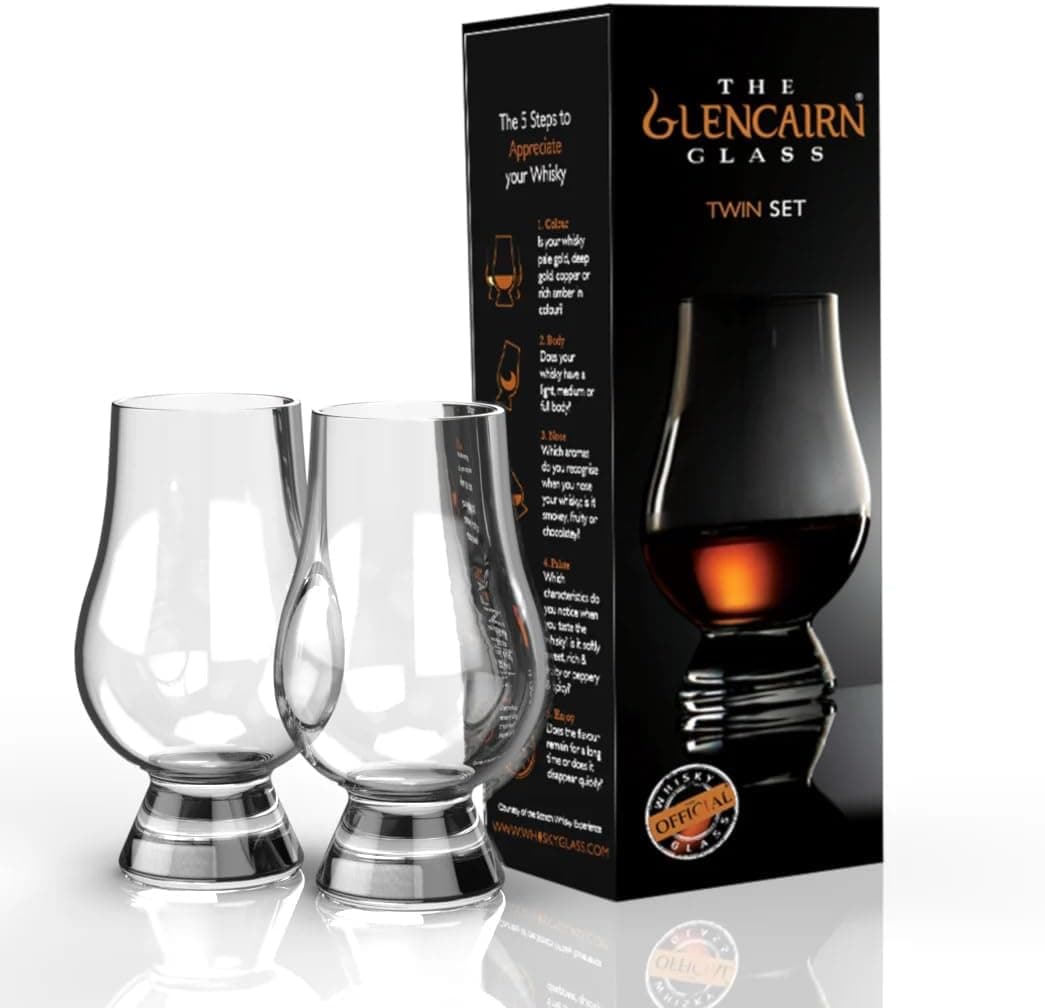
Glencairn Whisky Glass (Set of 2)
The tasting glass a 150-bottle collector reaches for 90% of the time. The tulip bowl concentrates aroma — the single biggest upgrade to any pour.
What actually separates rye brands
Here's where I part ways with the usual take. The standard line is that sourced whiskey is a con and own-juice is virtuous. I don't buy it. I've had sourced ryes that outclassed distillery-made ones and paid less for the privilege.
Sourcing is a starting point, not a verdict. What separates brands is what they do with what they bought:
- Mash bill selection. MGP doesn't make one rye, it makes several. A brand choosing between a 95% rye and a 51% rye is making a real flavor decision before a drop is blended.
- Blending. Marrying barrels of different ages and mash bills is a craft. Done well it produces something none of the component barrels could manage alone.
- Proof. The single most under-discussed lever. The same whiskey at 80 proof and at 100 proof are different products, and the brands that proof down hardest are usually the ones chasing margin.
- Finishing. Secondary casks — rum, port, sherry — can transform a base spirit or bury it. Both happen.
- Patience. Buying young barrels and bottling immediately is a business model. Buying young barrels and sitting on them for six more years is a different one.
Judge a rye brand on those five things and the sourced-versus-distilled argument mostly evaporates. Two of the ryes I recommend most often sit on opposite sides of it.
Kentucky's big houses all make their own rye
Every one of these I've walked through, and the pattern is consistent: rye is the quiet product. It gets a fraction of the tour time bourbon does, it's usually the cheapest bottle in the gift shop, and it's frequently the best value the distillery sells.
Heaven Hill distills Rittenhouse and Pikesville at Bernheim in Louisville. Rittenhouse Bottled-in-Bond is, dollar for dollar, the most useful rye in America — 100 proof, four years minimum, and it holds its shape in a cocktail where softer ryes disappear. It's my cocktail pick for a reason.
Buffalo Trace makes Sazerac Rye in Frankfort, along with Thomas H. Handy, the barrel-proof rye in the annual Antique Collection. Sazerac Rye is the benchmark for the New Orleans classic it's named after, and it's the rare allocated-adjacent bottle that still turns up at reasonable prices if you're not precious about it.
Wild Turkey makes 101 Rye and Russell's Reserve 6 Year at Lawrenceburg, Kentucky — a different Lawrenceburg from the Indiana one, which has confused people for years. Russell's Reserve 6 Year is badly underrated and rarely mentioned in the same breath as bottles costing twice as much.
Beam Suntory produces Jim Beam Rye, Knob Creek Rye, and Old Overholt at Clermont. Old Overholt is worth knowing about: it's one of the oldest continuously maintained whiskey brands in the country, born in Pennsylvania, now made in Kentucky. The label's history and the liquid's address stopped matching a long time ago.
Brown-Forman makes Old Forester Rye in Louisville and Woodford Reserve Rye in Versailles. Old Forester Rye at 100 proof is the better cocktail bottle of the two.
The Kentucky independents distilling their own
This is the group I find most interesting right now, because they're doing the genuinely hard version: distilling rye from scratch and then waiting.
New Riff in Newport bottles a bonded rye from a 95/5 mash bill — the same ratio MGP made famous, made in-house. Bottled-in-bond, no chill filtration, and priced like they're not trying to gouge anyone.
Peerless in Louisville uses a sweet mash process and released rye before bourbon, which is a telling order of operations. Wilderness Trail in Danville does the same, out of a fermentation-science background that shows up in how clean the spirit is — though Campari bought them in 2022. The whiskey is still made the same way by the same people, but "independent" quietly stopped being accurate, which is exactly the kind of detail a guide like this exists to surface.
Castle & Key in Frankfort is on the site of the old Old Taylor distillery, and their Restoration Rye is their own. Walking that property is the closest thing Kentucky has to time travel — it sat ruined for decades before the restoration.
Michter's deserves a caveat rather than a clean label. They spent years sourcing while their own distillate matured, and their Shively distillery came online in 2015. Their US*1 Straight Rye is one of the bottles I recommend most and one whose supply chain has genuinely changed over time — a good argument for judging what's in the glass now instead of relitigating what was in it in 2012.
Sagamore Spirit: sourcing done right
Sagamore is the brand I point to when someone tells me sourced rye is a scam.
They're a Maryland operation, reviving a regional style that Prohibition erased. For years their core rye was built from two different MGP mash bills — a high-rye and a lower-rye — blended together and proofed with limestone-filtered spring water. They've since built their own distillery in Baltimore and started folding in their own distillate.
The blending is the whole point. Neither component alone is as good as the result. It's a genuine act of craft performed on whiskey somebody else distilled, and it produces a bottle I'd put up against most distillery-made ryes at the price. If the "it depends what you do with it" argument needs a single exhibit, this is it.
Want to run this comparison yourself without buying five full bottles? The Ultimate Whiskey Sampler ships a guided flight of minis in one box — an easy way to taste sourced-versus-distilled side by side before committing to a full bottle of either.
WhistlePig: where the premium stops making sense
And here's the other side.
WhistlePig built its reputation on a 10 Year rye that was, for much of that reputation's life, sourced Canadian whiskey. They've since done the real work — farming rye in Vermont, distilling on site — and I want to be fair about that, because it's expensive and slow and plenty of brands never bother.
But the price never came back down to earth. The 10 Year asks meaningfully more than Sagamore, Rittenhouse, or Russell's Reserve, and I've never been able to taste the gap. What you're paying the premium for is the farm, the barn, the pig on the label, and the feeling of having bought something serious.
The whiskey is good. It is not, in my experience, two-to-three-times-Rittenhouse good. If a rye's story is doing more work than its proof point, that's the moment to check what else your money buys.
If a rye's story is doing more work than its proof point, check what else your money buys.
"Canadian rye" is usually not rye at all
This one trips up more people than any other item on this page.
In Canada, "rye" is essentially a synonym for whisky, left over from an era when rye grain actually dominated the mash. Canadian regulations require aging at least three years in small wood in Canada — but they set no minimum rye content. A bottle labeled "Canadian Rye Whisky" can be overwhelmingly corn.
Canadian whisky rules also permit a small proportion of other spirits in the blend, which is why Canadian whisky is generally softer, sweeter, and rounder than an American straight rye. That's a style, not a defect. But if you want the dry pepper-and-dill profile that American straight rye delivers, a typical Canadian bottle will not get you there.
Genuine exceptions exist — Alberta Premium is made from rye in earnest, and the Alberta distillery is where a lot of premium American-labeled "rye" quietly originated. If you're shopping specifically for Canadian rye, buy the exceptions on purpose rather than assuming the word on the label means what it means south of the border.
How to read a rye label in ten seconds
Four checks, in order:
- Find the "distilled by" line. Not "produced by," not "bottled by," not "crafted by." Distilled by. If it names a state that isn't where the brand's story is set, you've found a sourced whiskey. "Distilled in Indiana" means Lawrenceburg.
- Look for "straight." Straight rye means at least 51% rye grain, at least two years in new charred oak, and no added color or flavoring. It's the cleanest quality floor on the shelf. What "straight" actually covers is worth knowing in full.
- Look for bottled-in-bond. It's the strongest transparency signal in American whiskey: one distillery, one distilling season, at least four years, exactly 100 proof, and the producing distillery identified on the label. A brand can't hide behind a bond statement.
- Check the proof. Anything at 80 proof is telling you the producer chose volume. 100 proof and up is telling you they chose flavor — and it's why bonded ryes punch so far above their price in cocktails.
That's the entire skill. It takes longer to read about than to do.
Frequently asked questions
- What is MGP rye whiskey?
- MGP refers to the distillery in Lawrenceburg, Indiana now formally called Ross & Squibb, owned by MGP Ingredients. It distills rye whiskey — most famously from a 95% rye, 5% malted barley mash bill — and sells it in bulk to other companies, who then bottle it under their own brand names. Dozens of well-known American rye labels have used MGP distillate.
- Is Bulleit Rye actually made by Bulleit?
- No. Bulleit Rye is sourced from the Ross & Squibb (MGP) distillery in Indiana, not distilled by Bulleit. That doesn't make it a bad whiskey — it uses the well-regarded 95/5 rye mash bill and remains a strong everyday bottle — but the brand does not distill it.
- Which rye whiskey brands distill their own whiskey?
- Among the large producers: Heaven Hill (Rittenhouse, Pikesville), Buffalo Trace (Sazerac Rye), Wild Turkey (101 Rye, Russell's Reserve), Beam Suntory (Jim Beam Rye, Knob Creek Rye, Old Overholt), and Brown-Forman (Old Forester Rye, Woodford Reserve Rye). Among independents: New Riff, Peerless, Castle & Key, and Wilderness Trail all distill their own rye in Kentucky.
- Is sourced rye whiskey worse than distillery-made rye?
- Not inherently. Sourcing is a starting point, not a verdict. What separates rye brands is mash bill selection, blending, proof, finishing, and how long they were willing to wait. Some of the best-value ryes available are skillfully blended sourced whiskey, and some distillery-made ryes are bottled too young and too cheap to be interesting.
- Is Canadian rye whisky really made from rye?
- Often not. In Canada, 'rye' is used broadly as a synonym for whisky, and Canadian regulations set no minimum rye content — they require aging at least three years in small wood in Canada. A bottle labeled Canadian Rye Whisky can be predominantly corn. Alberta Premium is a notable exception genuinely built on rye grain.
- What does bottled-in-bond mean on a rye whiskey?
- It means the whiskey is the product of one distillery and one distilling season, aged at least four years in a federally supervised warehouse, bottled at exactly 100 proof, and labeled with the distillery that produced it. It is the most informative single phrase on an American whiskey label, which is why bonded ryes like Rittenhouse are such reliable buys.
Where to go from here
Knowing who makes what is the groundwork. The payoff is buying better:
- The five rye whiskeys worth buying in 2026 — my actual picks, ranked by what you're using them for
- What rye whiskey is — the category rules, and how rye spice differs from alcohol heat
- High rye bourbon — if you want rye character without leaving bourbon
- Rye vs. bourbon — the practical differences in the glass
- The bourbon brands field guide — the same ownership map, for bourbon
- The right glass — rye's herbal top notes are the first thing a bad glass throws away
The shortest version of everything above: read the "distilled by" line, respect the bond statement, and let the story on the front of the bottle be the last thing you consider rather than the first.