How I picked these
Ownership and sourcing facts come from distillery tours, label reading, and public records; where I learned something on a tour floor, the text says so. Opinions about the bottles come from a 150+ bottle collection.
Updated Jul 31, 2026
Here's the thing almost nobody realizes until someone points it out: Buffalo Trace, Eagle Rare, and Blanton's aren't three competitors. They're the same distillery, the same owner, and in some cases barrels aged in the same rickhouse, sorted later by taste and marketing into three different price tiers. I toured that distillery in Frankfort myself, and the guide said it almost as an aside, like everyone already knew. Most people don't.
This guide is the ownership map nobody hands you at the liquor store. Which brands are actually distilled where, which parent companies own which distilleries, and which "craft" labels are sourced whiskey from a plant in Indiana wearing a story about a family recipe. None of this makes a bottle worse. It just means you should know what you're actually paying for.
The ownership map, at a glance
| Brand | Parent Company | Distillery | Sourced or Own Juice |
|---|---|---|---|
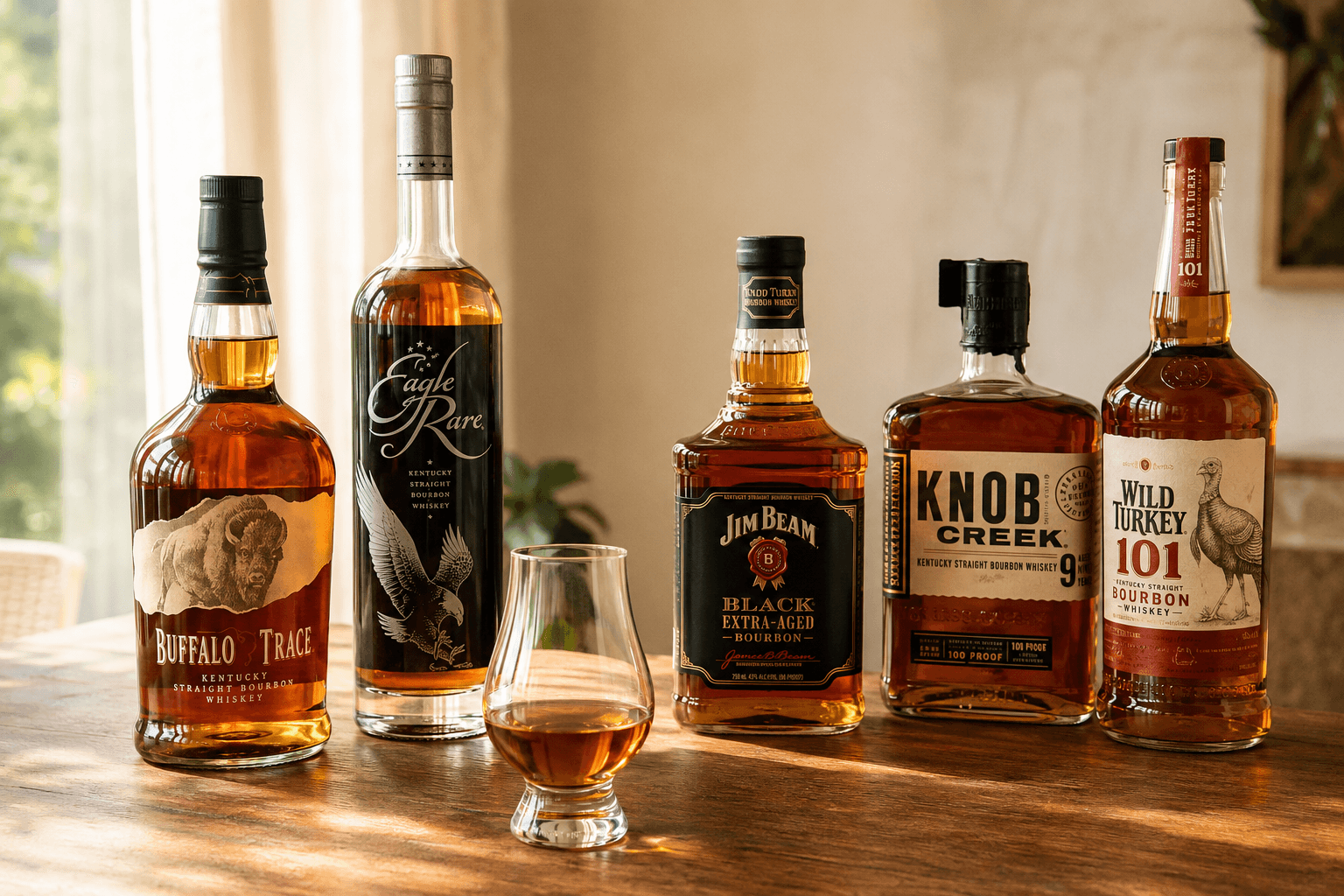
| Buffalo Trace, Eagle Rare, Blanton's, W.L. Weller, E.H. Taylor, Stagg | Sazerac | Buffalo Trace (Frankfort, KY) | Own juice |
| 1792, Very Old Barton | Sazerac | Barton 1792 (Bardstown, KY) | Own juice |
| Jim Beam, Knob Creek, Booker's, Basil Hayden, Baker's | Beam Suntory | Jim Beam (Clermont, KY) | Own juice |
| Evan Williams, Elijah Craig, Larceny, Old Fitzgerald, Henry McKenna | Heaven Hill | Bernheim (Louisville, KY) | Own juice |
| Woodford Reserve | Brown-Forman | Woodford Reserve (Versailles, KY) | Own juice |
| Old Forester | Brown-Forman | Old Forester Distillery (Louisville, KY) | Own juice |
| Wild Turkey, Russell's Reserve | Campari Group | Wild Turkey (Lawrenceburg, KY) | Own juice |
| Four Roses | Kirin (Japan) | Four Roses (Lawrenceburg, KY) | Own juice |
| Bulleit | Diageo | Bulleit Distilling Co. (Shelbyville, KY), historically sourced | Transitioning to own juice |
| Redemption, George Remus, Rossville Union, Belle Meade, Smooth Ambler (early releases) | Various independents | MGP (Lawrenceburg, IN) | Sourced |
| Willett, New Riff, Wilderness Trail, Michter's | Independent | Own named distillery | Own juice |
That table is the entire article in miniature. Everything below just fills in why it matters.
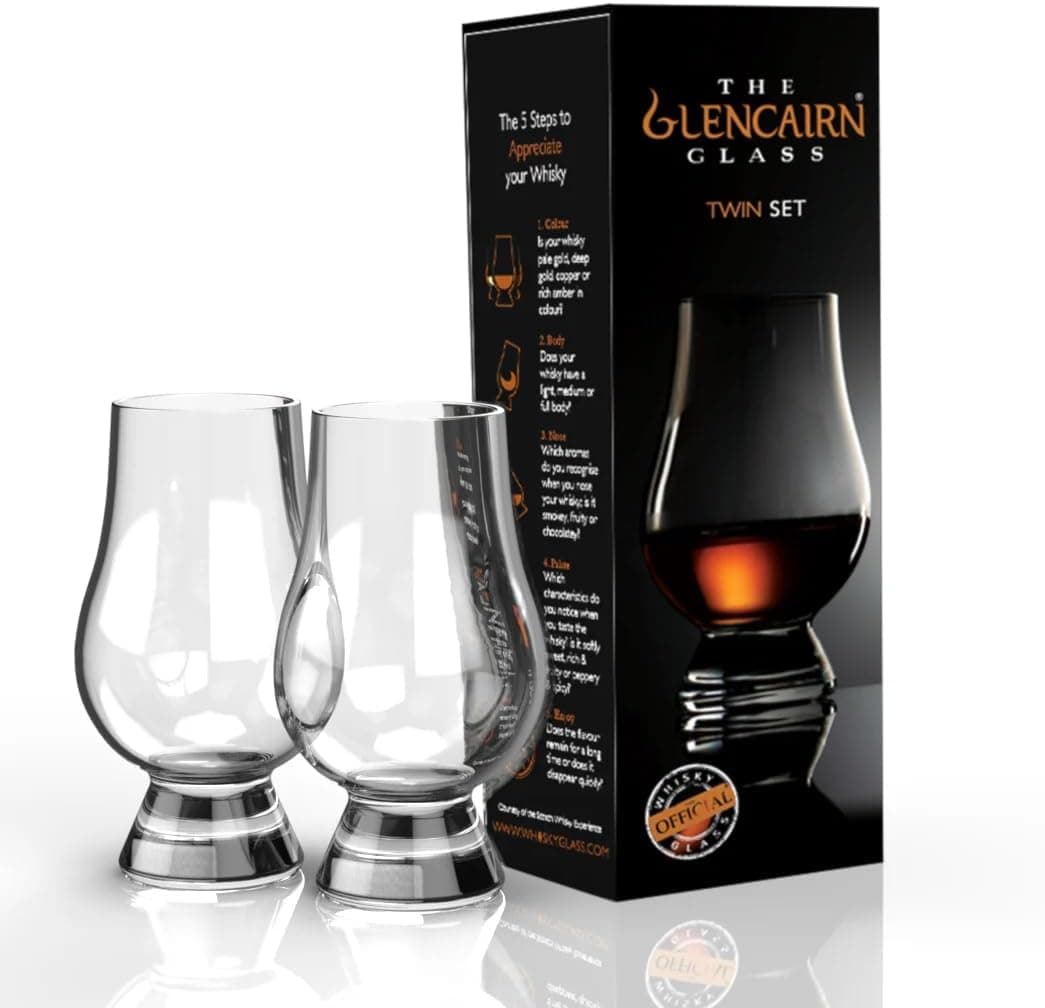
Glencairn Whisky Glass (Set of 2)
The tasting glass a 150-bottle collector reaches for 90% of the time. The tulip bowl concentrates aroma — the single biggest upgrade to any pour.
Sazerac: the biggest player you didn't know owned half your bar cart
Sazerac Company owns Buffalo Trace Distillery in Frankfort, and that one property produces an absurd range of price tiers: Buffalo Trace itself ($30), Eagle Rare ($40), Blanton's ($65-plus if you can find it at retail), Weller Special Reserve up through the impossible-to-find Weller 12 and William Larue Weller, plus E.H. Taylor and George T. Stagg. Sazerac also owns Barton 1792 Distillery in Bardstown, a completely separate physical plant, which makes 1792 Small Batch and Very Old Barton.
Standing in the Buffalo Trace warehouses, what struck me wasn't the size, it was how ordinary the process looked for bottles that trade for hundreds of dollars on the secondary market. Same mashbills, same warehouses, same barrels. What separates a $30 bottle of Buffalo Trace from a $2,000 bottle of Pappy Van Winkle (also distilled there, under contract for the Van Winkle family) is barrel selection, age, and allocation, not some separate premium production line.
Beam Suntory: one distillery, one family name, endless price tiers
Jim Beam Distillery in Clermont, Kentucky runs the exact same playbook as Buffalo Trace: one property, one mashbill family, sorted by age and barrel into wildly different products. White label Jim Beam is the entry point. Knob Creek, Baker's, and Basil Hayden step up in age or proof. Booker's, uncut and unfiltered barrel-strength, sits at the top. All of it comes off the same stills the Beam family has run for seven generations, now owned by Japan's Suntory Global Spirits.
Heaven Hill: the biggest independent family-owned name
Heaven Hill is privately held by the Shapira family and distills everything at Bernheim Distillery in Louisville, one of the largest bourbon distilleries in the world by volume. Evan Williams, Elijah Craig, Larceny (wheated), Old Fitzgerald, and Henry McKenna Bottled-in-Bond all come out of the same plant. Elijah Craig Barrel Proof is arguably the best value-per-dollar barrel-proof bourbon on the market right now, and it's the same lineage as the $20 Evan Williams Black Label on the bottom shelf.
Brown-Forman: two distilleries, two very different personalities
Brown-Forman is the only major player running two genuinely separate distilleries with different mashbills and different characters. Woodford Reserve, made at the historic Versailles site with pot stills, leans fruity and rich. Old Forester, now distilled at its own dedicated Louisville distillery on Whiskey Row (opened in 2018), runs a different, spicier mashbill entirely. These aren't the same juice sorted by age. They're genuinely different bourbons from the same parent company, which is rarer than it sounds in this industry.
Four Roses and Wild Turkey: independent-feeling, foreign-owned
Four Roses in Lawrenceburg is owned by Kirin, the Japanese beverage giant, but it operates as its own standalone distillery with a genuinely unusual production model: two mashbills times five proprietary yeast strains equals ten distinct recipes, blended in different combinations for each label. Wild Turkey, also in Lawrenceburg, is owned by Italy's Campari Group and still runs under Jimmy and Eddie Russell's direction. Neither brand sources a drop from anywhere else. Foreign ownership doesn't mean the whiskey isn't genuinely their own.
The MGP story: the sourcing everyone should know about
Here's the myth-busting part. MGP Ingredients runs a massive distillery in Lawrenceburg, Indiana that doesn't sell a single bottle under its own name at retail. Instead, it sells bulk whiskey to dozens of brands that bottle it under their own labels, often with a founder story about a family recipe or a small-batch craft operation that has nothing to do with where the liquid actually came from.
"Distilled by" and "Bottled by" are two different sentences on a label, and the gap between them is where most of the bourbon industry's marketing budget gets spent.
Bulleit was sourced, first from Four Roses and later from MGP, for most of its history before Diageo built the Bulleit Distilling Co. plant in Shelbyville to bring production in-house. Redemption, George Remus, Rossville Union, and Belle Meade are current or recent MGP-sourced brands. Smooth Ambler and Angel's Envy both started as MGP-sourced brands and later built their own distilleries, which is genuinely one of the better outcomes in the category: start honest about sourcing, then earn your own stills.
None of this means MGP whiskey is bad. MGP makes very good, very consistent bourbon and rye, and several of the best-value ryes on the market (see our best rye whiskey guide) are MGP juice. The problem was never the liquid. It's brands that let a founder-story label imply a distillery that doesn't exist.
Curious what actually separates one company's style from another's? The Ultimate Whiskey Sampler ships a guided flight of minis in one box, so you can taste the house differences side by side instead of taking a label's word for it.
The genuine independents: distilling their own from day one
A short list of brands that actually built or bought their own working distillery and run their own mashbills, rather than sourcing or inheriting a legacy plant:
- Willett Distillery (Bardstown) — family-owned since the 1930s, distills its own juice today though it also sourced during a lean period in the 1980s-2000s
- New Riff Distilling (Newport, KY) — bottled-in-bond, distilled and aged entirely on-site since 2014
- Wilderness Trail Distillery (Danville, KY) — built from scratch, known for a proprietary sweet mash process
- Michter's — now distills its own whiskey at a dedicated Shively, Louisville plant, after years of sourcing during the brand's relaunch
These are the names to reach for if "who actually made this" is the thing you care about most when you buy a bottle.
How to spot it yourself on any label
Federal law requires every bottle to state who bottled it, via a "Bottled by" or "Distilled by" line and a DSP (Distilled Spirits Plant) number, usually in small print on the back label. "Distilled by" plus the brand name matching the DSP owner means it's their own juice. "Produced and bottled by" with a different name, or a DSP number that traces back to MGP (DSP-KY-354 in Indiana), is your tell that it's sourced. It takes ten seconds to check once you know to look, and it's the single most useful trick for cutting through craft-bourbon marketing at the store.
None of this is a reason to avoid sourced whiskey. Some of the best rye on shelves right now is honest about coming from MGP. It's a reason to stop assuming a nice label and a founder's signature means a working still somewhere with that name on the door.