How I picked these
Based on five Kentucky trips, years of standing in line for bottle drops, and a Tokyo trip that turned up Blanton's I can't find at home. Where a method is one I haven't used myself, such as state lotteries, the text says so.
Updated Jul 31, 2026
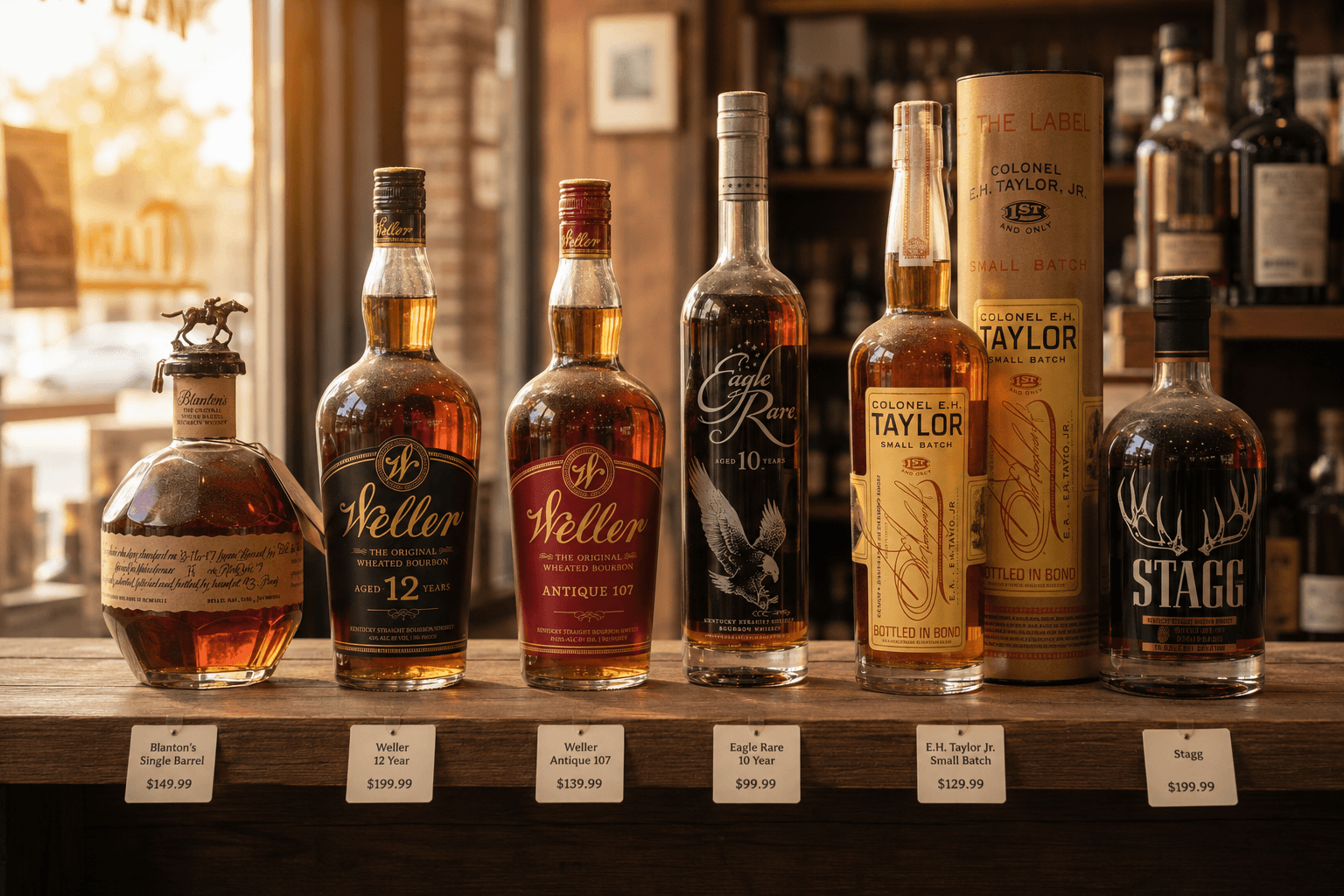
Allocated bourbon is bourbon that's rationed. Demand for certain bottles outstrips what the distillery can produce, so instead of stores ordering as many cases as they want, distributors decide who gets what and how much. That's the whole concept. Weller, Blanton's, E.H. Taylor, Eagle Rare, Stagg: none of these are technically "limited editions." They're regular products that simply can't be made fast enough, so they get parceled out a few bottles at a time.
I've spent years hunting these bottles, and I've landed most of the ones people chase: Weller Antique 107, Weller 12 Year, Weller Full Proof, Blanton's Gold, Blanton's Straight from the Barrel, Stagg, E.H. Taylor Small Batch and Single Barrel. Not one of them came from the same method twice. This guide covers how allocation actually works, why it happened, and the realistic ways to get a bottle without losing your weekends or your sanity.
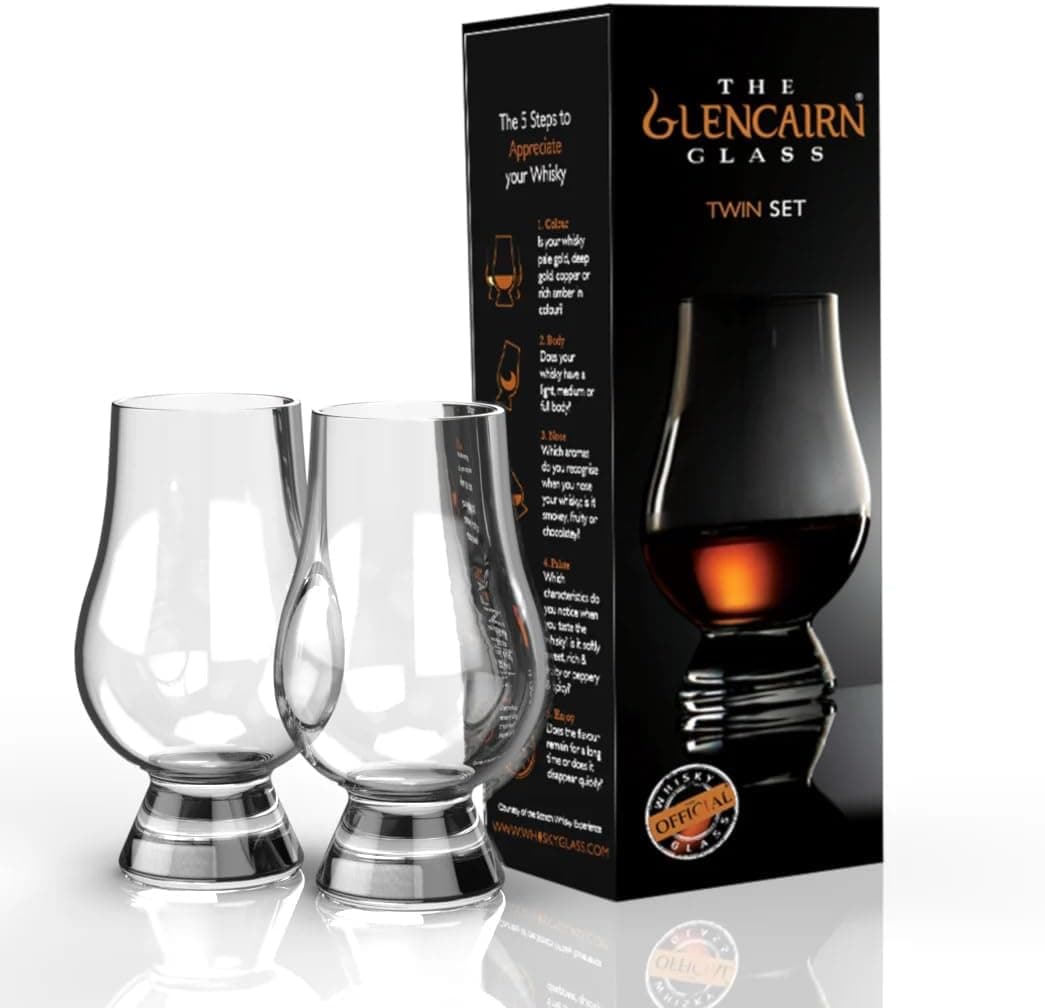
Glencairn Whisky Glass (Set of 2)
The tasting glass a 150-bottle collector reaches for 90% of the time. The tulip bowl concentrates aroma — the single biggest upgrade to any pour.
What "allocated" actually means
Alcohol in the US moves through a three-tier system. By law, the distillery sells to a distributor, the distributor sells to retailers, and retailers sell to you. Nobody skips a tier. When a bourbon becomes allocated, the rationing happens at that middle layer: the distributor receives a limited number of cases for the whole region and splits them among the stores it services.
This is why your local shop isn't lying when they say they can't just order Blanton's. They genuinely can't. A store might get two bottles a month, or six bottles a quarter, and the amount often depends on how much other product they buy from that distributor. Big accounts get bigger allocations. Small shops get scraps.
There's no official "allocated" stamp on a label, either. Allocation is a market condition, not a category. A bottle becomes allocated when demand outruns supply, and it can become a shelf bottle again if demand cools or production catches up. Eagle Rare sat on shelves for decades before it vanished. Some bottles drift in and out depending on your state.
Why bourbon got allocated in the first place
Bourbon has a built-in lag problem: today's supply was decided years ago. A 12-year wheated bourbon on the shelf in 2026 was distilled and barreled around 2014, back when distilleries were forecasting demand in a much quieter market. Then the bourbon boom hit, demand for premium aged whiskey exploded, and there was physically no way to conjure more 10-year-old liquid out of thin air.
Distilleries have responded by expanding capacity, and they have, massively. But every new barrel they fill still needs six to twelve years before it's ready. So for the bottles people want most, the ration system fills the gap. The result is the modern bourbon hunt: empty shelf space where the Weller should be, and a secondary market happy to charge three to five times retail.
The bottles people actually mean
When someone says "allocated bourbon," they're usually talking about a fairly short list, most of it from one distillery:
- The Buffalo Trace family. Weller (all of them: Special Reserve, Antique 107, 12 Year, Full Proof, Single Barrel), Blanton's, E.H. Taylor, Eagle Rare, Stagg, and the granddaddies: Pappy Van Winkle and the Buffalo Trace Antique Collection. Buffalo Trace makes the most hunted bottles in America, which is ironic given their flagship Buffalo Trace bourbon is still easy to find and excellent.
- Annual limited releases. Old Forester Birthday Bourbon, Four Roses Limited Edition, Parker's Heritage, Heaven Hill Heritage Collection. These really are limited; once the year's release sells through, it's gone.
- Store picks and single barrels of otherwise findable bourbons, which sell out because a good pick at regular price is one of the best deals in whiskey.
If you want to understand what terms like single barrel, barrel proof, and bottled-in-bond actually mean on these labels, the types of bourbon guide decodes all of it.
Allocated does not mean better
This is the most important thing in this article. Allocated bourbon is not better bourbon by default. It's scarcer bourbon. Those are different things.
Everyone's palate is different, and every batch is different. Plenty of people pull the trigger on a hyped bottle after months of hunting and discover they'd rather drink a $35 shelf staple. I've had allocated pours that justified every bit of the chase, and I've had ones that made me shrug. Scarcity tells you about supply. It tells you nothing about whether you'll like what's in the glass.
How to actually get allocated bourbon
Here's what works, roughly in order of how reliably it pays off.
Decide your acceptable price before you hunt
This is my biggest piece of advice, and almost nobody talks about it. Before you chase anything, decide what that bottle is actually worth to you, not what the MSRP says it should cost.
You'll see endless complaining online about stores pricing anything above MSRP. But there's an opportunity cost to everything. Say you're hunting Weller Antique 107, MSRP around $50-60. You could spend days driving to every liquor store in town and never see one at that price. If a small independent shop has it at $100, I'm taking that bottle all day over burning entire weekends on the hunt. My time is worth more than the markup.
The flip side: you'll also walk into stores with every allocated bottle you can think of, marked up to several multiples of retail. The bourbon community calls these stores "museums," because the bottles are basically display pieces. They sit there collecting dust because nobody actually buys at those prices. Nobody's forcing you to either. Walk away.
Decide what a bottle is worth to you before you start hunting. A fair markup at a store in front of you beats a theoretical MSRP you'll never see.
A markup also creates negotiating room that MSRP-only thinking misses. I once found a bottle of Weller 12 at a store in Houston that ran a points program reserving allocated bottles for their most loyal customers. I had no points and I live in Dallas. I talked with the owner, offered to pay $129 against the $50-55 MSRP, and after initially telling me it was customers-only, he agreed. Was it "over retail"? Sure. It was also a bottle of Weller 12 in my hand instead of a story about one I almost got.
Become a regular at an independent store
The store relationship is the classic playbook for a reason, and it's the most consistent method in the hobby. Skip the big chains and find a small independent shop where you'll see the same owner or employees every visit. Buy your regular bottles there. Talk to them. Ask what they're excited about. Liquor stores decide who gets their two bottles of Blanton's, and they reward the customer who's been buying Buffalo Trace, barrel proof pours, and gifts there all year over the stranger who walks in cold asking "got any Pappy?"
That cold walk-in, by the way, is the one thing you should never do. Every store hears it ten times a week. It marks you instantly as someone hunting trophies rather than building a relationship, and those allocated bottles will stay in the back.
That Houston points program is what this looks like when a store formalizes it: loyalty in, allocation out. Most shops run the same system informally in the owner's head.
Plug into your local bourbon community
Some of my bottles came from plain word of mouth on Reddit, specifically r/whiskyDFW for the Dallas-Fort Worth area. Most regions have an equivalent: a local subreddit, Facebook group, or Discord where people post shelf sightings, store pick announcements, and raffle heads-ups. When someone posts "Store X just put out Eagle Rare," that's actionable intelligence you will never get driving around blind.
These communities are also where you learn which local stores price fairly and which ones are museums, which saves you a lot of gas.
Enter the lotteries
If you live in a control state (Virginia, North Carolina, Ohio, Pennsylvania, and others), the state liquor authority runs lotteries for allocated bottles, and the prices are MSRP. I've never lived in a lottery state myself, but people land incredible bottles this way, including Pappy and BTAC at retail. It costs nothing to enter. If your state runs one, sign up and treat any win as a bonus. Some large retailers like Total Wine run periodic raffles too.
Hunt where the bottles actually are: abroad
Here's one most articles never mention: some of the hardest bottles in America sit on shelves overseas. On a trip to Tokyo, I picked up Blanton's Gold and Blanton's Straight from the Barrel, both sold in the US but nearly impossible to actually find on a shelf here, plus Blanton's Black and Red, the two Japan exclusives. The wildest part: Amazon Japan sells alcohol, and they shipped the bottles straight to my hotel. No hunting required.
I'm not suggesting you book a flight for bourbon. But if you're already traveling internationally, check the local market and the duty-free shops. Allocation is an American demand problem, and stepping outside American distribution resets the board.
The Kentucky reality check
A lot of people assume a bourbon pilgrimage solves the problem: just buy it at the source. It doesn't work that way. By law, even in Kentucky, bourbon flows through distributors, and the bottles are just as allocated in Louisville as they are in your hometown. I've made five trips to Kentucky, and the shelves at the famous stores look a lot like the shelves everywhere else.
What Kentucky does offer is something better than allocation: distillery exclusives. Most distilleries sell gift-shop-only expressions and distillery-series bottles you genuinely cannot get anywhere else. Chasing those beats chasing allocations, because you'll actually come home with something, and a bottle with a story always pours better than a trophy. A few gift shops also run daily drawings for allocated bottles (Buffalo Trace is the famous one), so it's worth a morning stop if you're visiting anyway.
The smarter play while you wait
The hunt is genuinely fun once you accept it's a long game. But don't let an empty Weller shelf convince you there's nothing to drink. Some of the best value in bourbon right now is sitting in plain sight: the best bourbons under $50 list is full of bottles that outdrink their price, and several picks in the barrel proof guide deliver the intensity people chase Stagg for, at regular retail. If you're earlier in your bourbon journey, start with the beginner bottles and build your palate first. You'll enjoy the allocated stuff far more when you can actually taste what makes it different.
If you'd rather build that palate across styles instead of committing to one shelf bottle at a time, the Ultimate Whiskey Sampler ships a guided flight of minis in one box — a low-stakes way to figure out what you actually chase before you spend months hunting for it.
Frequently asked questions
- What does it mean when a bourbon is allocated?
- It means demand exceeds supply, so distributors ration the bottles among stores instead of letting them order freely. A store might receive only a few bottles a month. Allocation is a market condition, not an official label, and bottles can move in and out of allocated status over time.
- Why is Blanton's so hard to find?
- Blanton's is a single barrel bourbon from Buffalo Trace, and single barrel production can't scale quickly. Demand grew far faster than the supply of properly aged barrels, so every market gets a limited allocation. Expressions like Blanton's Gold and Straight from the Barrel are sold in the US but far easier to find overseas, and two expressions, Blanton's Black and Red, are Japan exclusives.
- Is allocated bourbon worth the price?
- Sometimes, but not by default. Allocation reflects scarcity, not quality, and every palate is different. Try a pour at a whiskey bar before committing to a bottle, and decide your personal acceptable price in advance. A modest markup on a bottle in hand often beats months of hunting for MSRP, but museum-level markups of three to five times retail are rarely worth it.
- How do liquor stores decide who gets allocated bourbon?
- Most stores reward their regulars. Loyal customers who consistently buy from the store get first call on allocated bottles, sometimes through formal points programs, more often informally. Walking in cold and asking for rare bottles almost never works. Build a genuine relationship with an independent store first.
- Is bourbon easier to find in Kentucky?
- No. Bourbon moves through distributors by law even in Kentucky, so allocated bottles are rationed there just like everywhere else. The real advantage of visiting Kentucky is distillery exclusive bottlings sold only at gift shops, plus daily lottery drawings some distilleries run for allocated bottles.
The bottom line
Allocated bourbon is a supply problem wearing a mystique costume. The bottles are real and some are excellent, but the difference between people who land them and people who complain about them comes down to a few habits: be a genuine regular somewhere, plug into your local community, know your acceptable price walking in, and taste before you chase. Do that, and the bottles find you more often than you'd think. And on the nights the shelf is empty, the bourbon that's actually available right now is better than it's ever been.