How I picked these
The legal side comes from the federal standards of identity, Tennessee's 2013 whiskey law, and the Tennessee whiskey definitions written into NAFTA and Canadian regulation. The tasting and bottle notes come from a 150+ bottle collection and a visit to the Lynchburg distillery.
Updated Sep 18, 2026
Yes. Jack Daniel's meets every legal requirement to be called bourbon, and it has for as long as those requirements have existed. It just doesn't use the word, because Brown-Forman would rather sell you Tennessee whiskey.
That's the whole answer. The interesting part is why a company would turn down the most valuable word in American whiskey, and whether the thing they do instead actually changes what's in the glass.
How Jack Daniel's does against the bourbon rules
Bourbon isn't a style or a tradition. It's a set of federal requirements, and a bottle either clears all of them or it can't use the name. Here's Jack Daniel's against each one.
| The rule | Jack Daniel's | Pass? |
|---|---|---|
| Made in the United States | Lynchburg, Tennessee | Yes |
| At least 51% corn | 80% corn, 12% rye, 8% malted barley | Yes |
| Aged in new charred oak barrels | New charred American oak, coopered by Brown-Forman | Yes |
| Distilled to no more than 160 proof | Well under the cap | Yes |
| Barreled at no more than 125 proof | Within the limit | Yes |
| Bottled at 80 proof or higher | Old No. 7 is exactly 80 proof | Yes |
| No added coloring or flavoring | Nothing added | Yes |
Seven for seven. An 80% corn mashbill is higher than a lot of bottles that proudly print BOURBON across the front. If you poured Old No. 7 into an unlabeled bottle and handed it to the federal government, there is no rule it would fail.
The charcoal step everyone points to
The one thing Jack Daniel's does that a Kentucky distillery typically doesn't is the Lincoln County Process. Before the new-make spirit goes into a barrel, it drips through ten-foot stacks of sugar maple charcoal. Jack Daniel's grinds its charcoal first, which packs the column tighter than the loose chunks some other producers use.
I toured Lynchburg once, and the rickyard is the part that stuck with me. They burn their own sugar maple outdoors, in stacks, and the smell carries across the property long before you see the flames. It's the least industrial step in an otherwise very industrial operation, and it's genuinely the thing the brand is built on.
The step takes days, and it costs them spirit and time. This is not a gimmick. But it also isn't disqualifying, and that distinction is where most of the internet gets confused.
Why filtering doesn't knock it out of the category
The bourbon rule people misread is "no added coloring or flavoring." Charcoal mellowing doesn't add anything. It pulls things out: some of the heavier, oilier compounds that would otherwise ride through into the barrel. Filtration is subtractive, and the federal standards regulate what goes in, not what comes out.
Plenty of bourbon gets filtered too. Chill filtration before bottling is standard practice across the category, and nobody argues those bottles stopped being bourbon. Jack Daniel's just does its filtering earlier in the process and makes a bigger deal of it.
Tennessee whiskey isn't a different category from bourbon. It's bourbon with a house style and a better story.
The part nobody brings up: the U.S. government already calls it bourbon
This is the detail that should end the argument, and it almost never comes up.
When the United States negotiated NAFTA, it had to define Tennessee whiskey in writing so other countries would protect the term. The definition it used describes Tennessee whiskey as a straight bourbon whiskey authorized to be produced only in the State of Tennessee. Canadian regulation uses nearly identical language, describing it as a straight bourbon whisky produced in the State of Tennessee.
Read that again. In the binding international agreements that protect the category, Tennessee whiskey is defined as a kind of bourbon with a geographic restriction attached. The U.S. government's own position, in treaty text, is that Jack Daniel's is bourbon from Tennessee.
Brown-Forman has never disputed this. They simply decline to print the word.
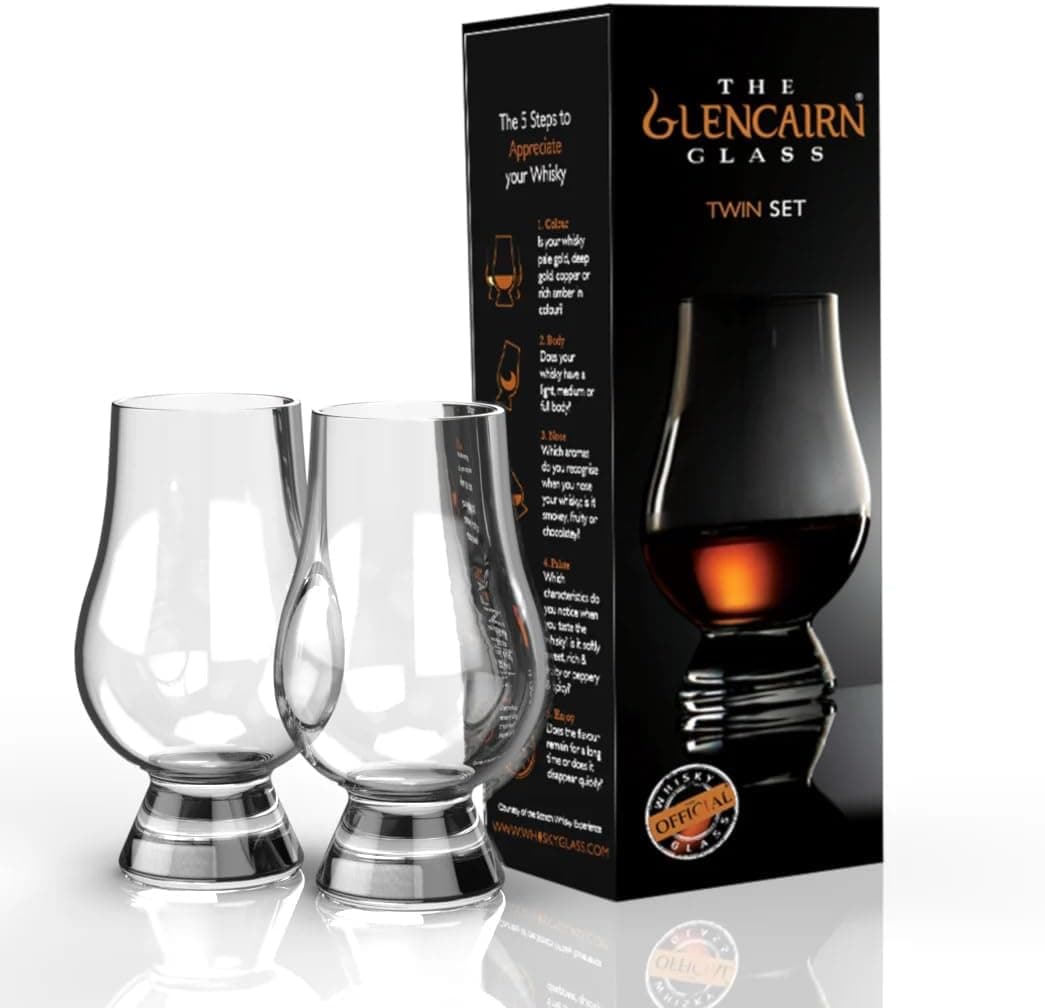
Glencairn Whisky Glass (Set of 2)
The tasting glass a 150-bottle collector reaches for 90% of the time. The tulip bowl concentrates aroma — the single biggest upgrade to any pour.
So why give up the word "bourbon"?
Three reasons, in rough order of how much they matter.
Differentiation is worth more than the category. Bourbon is a crowded shelf. Jack Daniel's is the best-selling American whiskey on earth, and it got there by being its own thing rather than one more bourbon. Being the whole category of Tennessee whiskey beats being a face in the bourbon crowd.
They wrote the rules to protect it. In May 2013, Tennessee passed House Bill 1084, which legally defined Tennessee whiskey at the state level: the Lincoln County Process, at least 51% corn, new charred oak. Jack Daniel's backed the bill. Diageo, which owns George Dickel, fought it and accused Jack Daniel's of using the law to squeeze out smaller producers. The law carved out a specific exemption for Benjamin Prichard's, which doesn't use charcoal mellowing at all and still says Tennessee whiskey on the label.
The Kentucky association runs deep. "Bourbon" carries a Kentucky connotation whether or not the law requires it, and it never helped a Tennessee distillery to compete on Kentucky's home turf.
Can you actually taste the charcoal?
Sometimes, and it's subtler than the brand would like you to believe.
Charcoal mellowing takes an edge off. In a blind pour I can occasionally pick out a rounder, slightly sweeter entry with less of the sharp grain bite you get in a young Kentucky bourbon at the same proof. But it's a soft signal, not a tell. Proof, barrel age, and warehouse position move the flavor far more than the charcoal does, and a barrel-proof Jack Daniel's does not taste "mellow" in any sense of the word.
If you want to test it honestly, compare at matched proof. Jack Daniel's Bonded at 100 proof against a Kentucky bottled-in-bond is a fair fight. Old No. 7 at 80 proof against a 100-proof bourbon tells you about proof, not process.
Which Jack Daniel's is actually worth buying
Old No. 7 is why everyone dismisses the brand, and it's the least interesting thing they make. It's also been quietly getting weaker for decades: 90 proof until 1987, dropped to 86, then down to 80 proof in 2002 with no announcement. There is a reason it drinks thin.
The rest of the lineup is a different conversation.
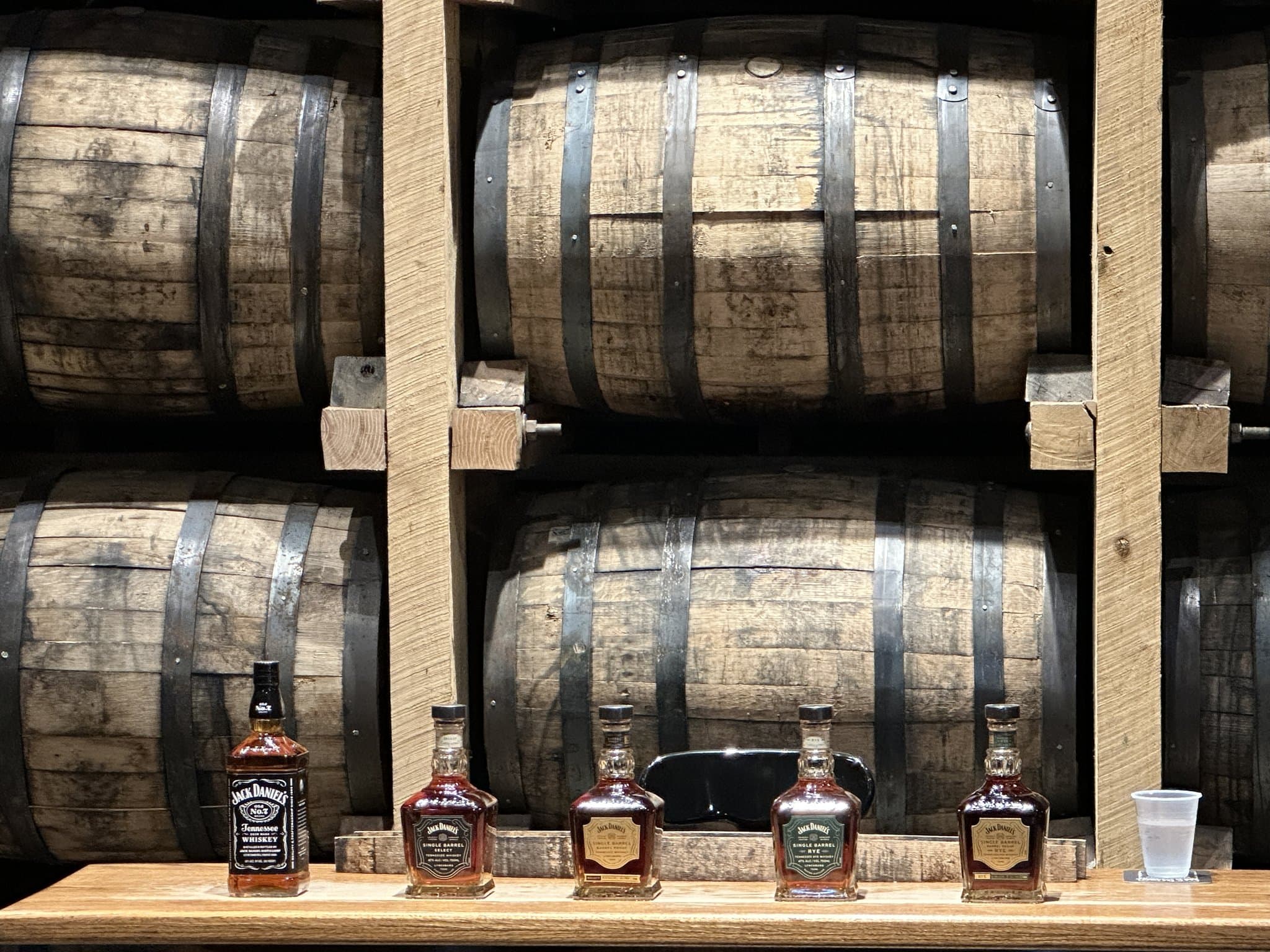
| Bottle | Proof | Who it is for |
|---|---|---|
| Single Barrel Barrel Proof | 125-140 | The standout. Full-strength, single-barrel Tennessee whiskey with real depth. Not a beginner bottle. |
| Single Barrel Barrel Proof Rye | 125-135 | Equally good and arguably better value. A barrel-proof rye at a price the category usually doubles. |
| Bonded | 100 | The best starting point. Bottled-in-bond, honest proof, and the bottle most likely to change someone's mind about the brand. |
| Single Barrel Select | 94 | Approachable step up from the flagship if 100 proof feels like a lot. |
| Old No. 7 | 80 | The one everyone knows and the one to skip. |
Both barrel proof expressions are incredible and I recommend them without hesitation, with one caveat: they are not beginner bottles. At 125 proof and up they will run right over a palate that isn't used to high proof, and someone new to whiskey will decide they hate it when really they just started too hot. Point a beginner at Bonded or Single Barrel Select instead. If barrel strength is new territory generally, our barrel proof bourbon guide covers how to approach it without wrecking your palate.
The Single Barrel Barrel Proof Rye is also our best splurge pick in the best rye whiskey guide, for what it's worth. It's the bottle that makes the "tourist whiskey" reputation look silly.
Serving any of the high-proof bottles to guests? The Aged & Charred Signature Series glasses have a base heavy enough for a large cube, which is how most people will want a 125-proof pour anyway.
Frequently asked questions
- Is Jack Daniel's a bourbon or a whiskey?
- Both. All bourbon is whiskey, and Jack Daniel's meets every federal requirement for bourbon. The label says Tennessee whiskey because of the charcoal mellowing step and a branding decision, not because it fails any legal test.
- Why doesn't Jack Daniel's call itself bourbon?
- Marketing, mostly. Being the defining brand of Tennessee whiskey is worth more than being one bourbon among hundreds. Jack Daniel's also backed Tennessee's 2013 law that formally defined the category and requires charcoal mellowing.
- What is the Lincoln County Process?
- Filtering new-make spirit through roughly ten feet of sugar maple charcoal before it goes into the barrel. Jack Daniel's grinds its charcoal first. The step removes heavier compounds and softens the spirit, and Tennessee law requires it for anything labeled Tennessee whiskey.
- What is Jack Daniel's mashbill?
- 80% corn, 12% rye, and 8% malted barley. The corn content is higher than many bottles that are labeled bourbon.
- Is Tennessee whiskey the same as bourbon?
- Legally it is a subset of it. NAFTA and Canadian regulation both define Tennessee whiskey as a straight bourbon whiskey that can only be produced in Tennessee. In practice the producers decline the bourbon label.
- What proof is Jack Daniel's Old No. 7?
- 80 proof, or 40% ABV. It was 90 proof until 1987, then 86 proof, then quietly dropped to 80 proof in 2002.
- Is George Dickel a bourbon too?
- Same situation. George Dickel meets the bourbon requirements and uses charcoal mellowing, so it is labeled Tennessee whisky. Diageo, its owner, opposed the 2013 law that locked in the definition.
The bottom line
Jack Daniel's is bourbon by every measure that the law actually uses, and the only reason to say otherwise is that the bottle says otherwise. The Lincoln County Process is real, it takes real effort, and it nudges the spirit in a direction you can occasionally catch in a blind pour. It doesn't create a separate category, no matter how well the marketing works.
Judge the bottles, not the word on the label. Skip Old No. 7, start at Bonded, and go find a Single Barrel Barrel Proof.
Keep exploring
- Want the full rulebook? What is bourbon breaks down every federal requirement and the myths around them
- Still sorting out the categories? Bourbon vs whiskey covers where scotch, rye, Irish, and Tennessee whiskey all fit
- Curious what else is out there? Types of bourbon explains wheated, high-rye, bottled-in-bond, and single barrel
- Ready for high proof? Our barrel proof bourbon guide is where to go before you open a 130-proof bottle
- Buying for someone else? See the best bourbon gifts guide for bottles and barware at every budget