How I picked these
Starts from the silicone directional-freeze mold that lives in my freezer, then covers the rest of the category. Where I haven't used a product, the copy says so and explains why it's included. All eight Amazon listings were checked live on August 29, 2026.
Updated Aug 29, 2026 · Prices checked Aug 29, 2026
I use a silicone directional-freeze mold. Not a press, not a countertop machine, not a cooler I saw off chunks from with a bread knife. A $40 mold that lives in my freezer, makes four cubes at a time, and requires exactly one decision from me: remember to refill it.
I'm telling you that up front because most clear ice guides are written by people who own nothing and rank everything. This one starts from what's actually in my freezer, then covers the rest of the category honestly — including the countertop machine I'd buy tomorrow if I had the counter space for it.
And one more piece of honesty most of these pages won't give you: clear ice matters most for cocktails, not neat pours. If you drink your bourbon neat or with a few drops of water, the ice conversation is largely irrelevant to you. If you build Old Fashioneds, it's one of the highest-return upgrades in your whole bar.
What clear ice actually does — and what it doesn't
Clear ice does two real things and one imaginary one.
Real: it melts slower. Cloudy ice is cloudy because it's full of trapped air bubbles and dissolved gas. Those bubbles are structural weak points — they give the cube more internal surface area and let it fracture and melt faster. A dense, clear cube of the same size lasts noticeably longer in the glass. In an Old Fashioned you're sipping over fifteen or twenty minutes, that's the difference between the last sip tasting like the first and the last sip tasting like cold water.
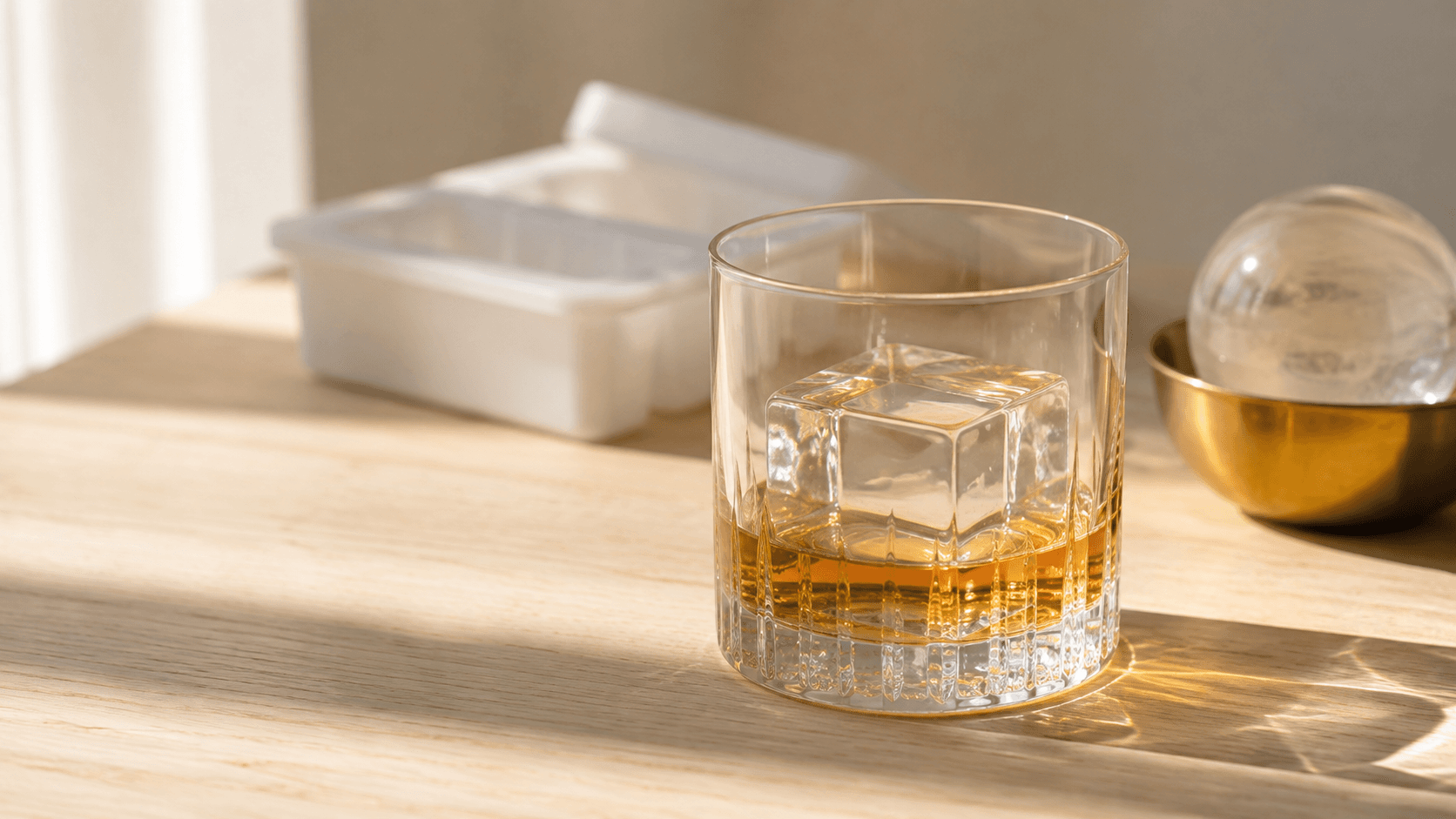
Real: it looks better. This is not a small thing and I'm not going to pretend it is. A single clear cube or sphere in a rocks glass is the visual difference between a drink you made and a drink that looks like it came from a bar. If you have people over, they notice. Every time.
Imaginary: it changes the flavor. It doesn't. Clear ice made from tap water and cloudy ice made from the same tap water taste identical. What changes is dilution rate, which changes how the bourbon tastes over time. That's a real effect with an honest explanation — it just isn't the ice tasting better.
Why your freezer makes cloudy ice (and how directional freezing fixes it)
A standard ice tray freezes from all sides at once. The outside solidifies first, and every air bubble and dissolved mineral in the water gets pushed toward the middle, where it has nowhere left to go. It freezes in place. That white core in the middle of a normal ice cube is the trapped junk, locked in.
Directional freezing forces the water to freeze from one direction only — usually top down — using an insulated container. The ice front advances slowly in a single direction and pushes the air and impurities ahead of it, down into a reservoir of still-liquid water at the bottom. When you're done, the top portion is perfectly clear and the cloudy leftovers are in the bottom, which you throw away.
That's the entire technology. Every mold, tray, cooler, and $400 machine on this page is doing the same thing. What you're paying for is convenience, yield, and shape — not a better principle.
The four methods, compared
| Method | Cost | Time per batch | Yield | Best for |
|---|---|---|---|---|
| Cooler (DIY) | $0-25 | 18-24 hrs + cutting | One large slab, cut by hand | Patient people who want max ice for no money |
| Silicone directional mold | $30-60 | 18-24 hrs | 4-8 cubes | Almost everyone — the practical default |
| Ice ball press | $90-250 | About 60 seconds | One sphere at a time | Speed, drama, and people who already have ice |
| Countertop machine | $300-400 | 20-40 mins | Continuous | Entertainers with counter space to spare |
Read that table with one thing in mind: the press does not make ice. It shapes ice you already have. That trips people up constantly — more on it below.
Best Overall: True Cubes Crystal Clear Ice Cube Maker
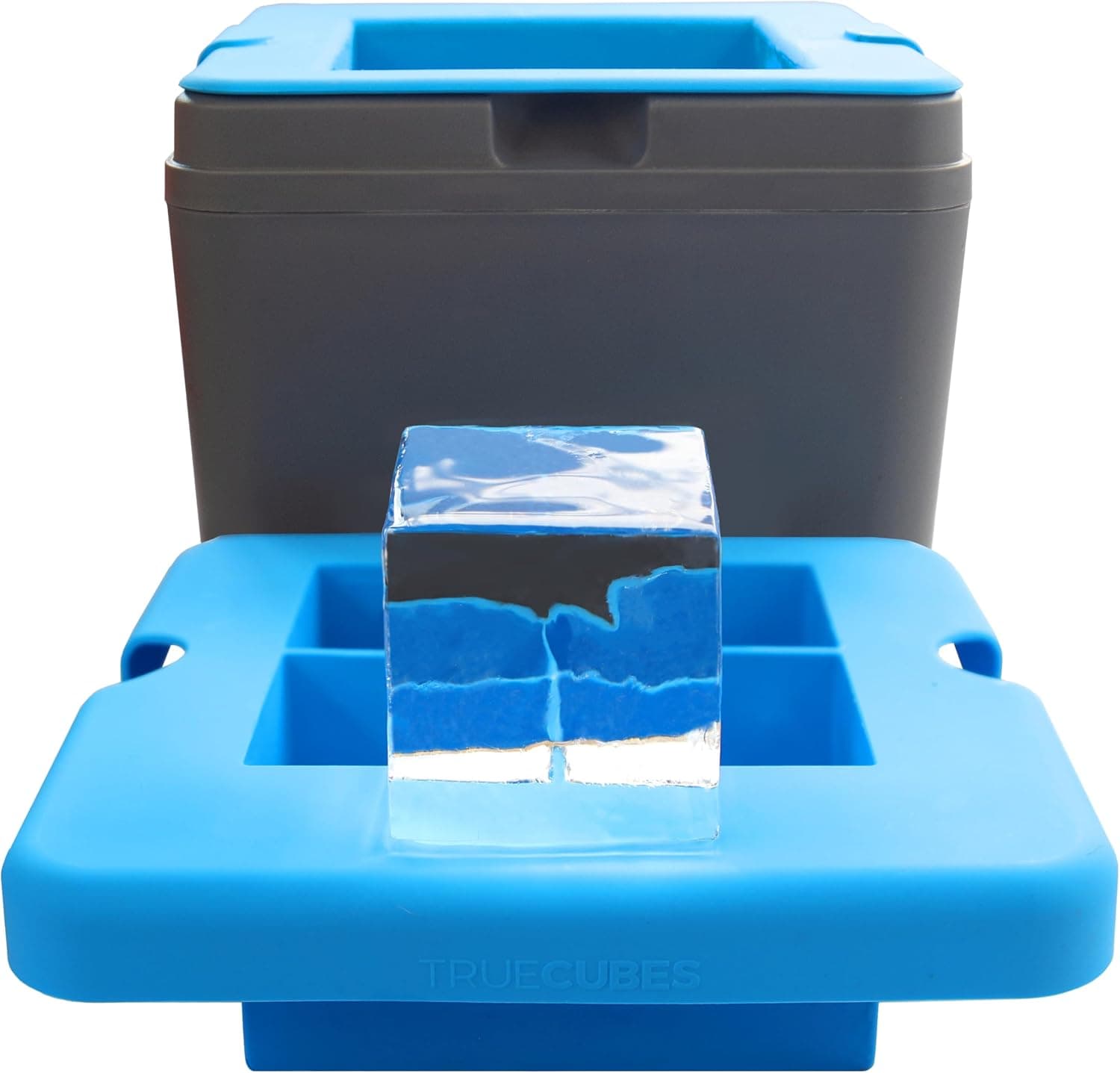
True Cubes Crystal Clear Ice Cube Maker
An insulated silicone mold that makes four 2-inch clear cubes per cycle using directional freezing and ordinary tap water. Fill it, freeze it for about a day, pop the tray out, drain the cloudy reservoir at the bottom, and release four bar-quality cubes.
If you buy one thing off this page, buy this. It's the closest thing the category has to a default, and it's the format I actually use at home. The workflow is boring in the best way: fill it Sunday night, have clear ice all week, refill when you're down to the last cube.
The one honest limitation is yield. Four cubes is exactly enough for one person's week or one evening with a couple of friends — not both. If you entertain regularly, size up.
Best for Entertaining: Berlinzo Clear Ice Cube Maker
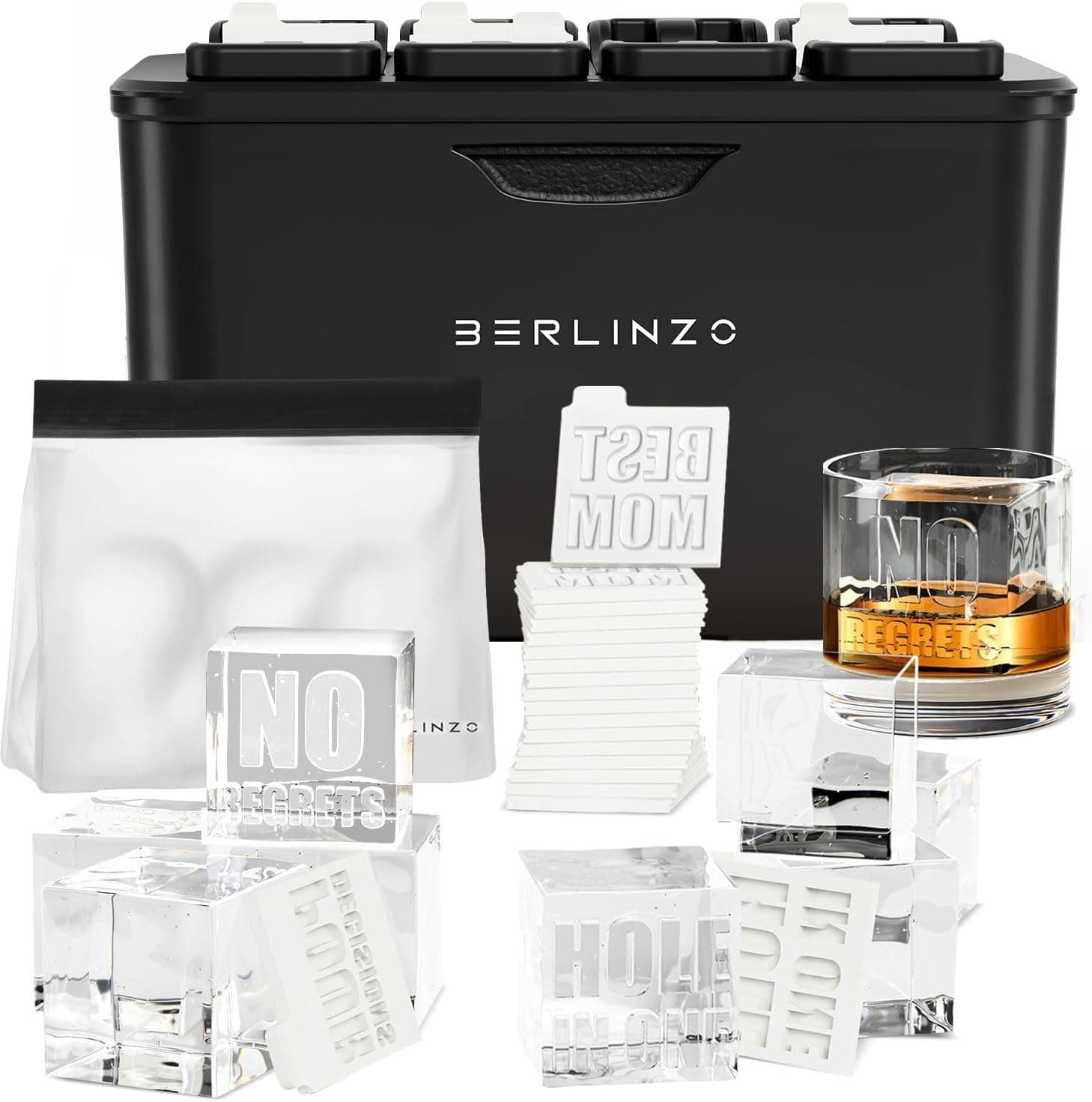
Berlinzo Clear Ice Cube Maker Mold (8 Cubes)
A non-electric directional-freeze mold that produces eight 2.1-inch clear cubes per cycle instead of four. Same principle as the True Cubes tray, roughly double the output for about 50% more money.
The math on this one is simple. If you're regularly making drinks for more than yourself, a four-cube mold means you're either running two trays or planning your hosting around your freezer schedule. Eight cubes solves it. The rating is a touch lower than True Cubes (4.2 versus 4.4) and the reviews are thinner, but the format advantage is real and it's the one I'd point a host toward.
Best Budget: TINANA 2-Inch Clear Ice Cube Tray
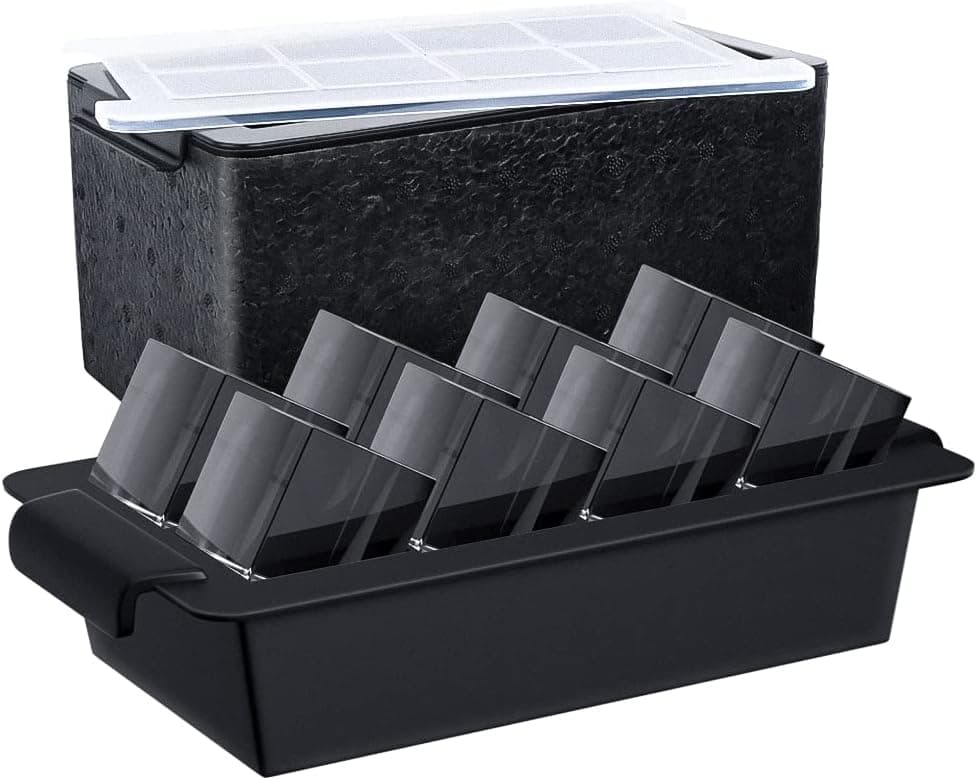
TINANA 2-Inch Clear Ice Cube Tray (8 Cubes)
Eight 2-inch clear cubes per cycle at the lowest price in the category, using the same insulated directional-freeze approach as the pricier molds.
I'd rather see someone spend $30 and use it than spend $60 on my recommendation and feel obligated. This is the low-risk entry point, and eight cubes at this price is genuinely good value.
Best Sphere: Clear Ice Ball Maker (Stainless, 2.5-Inch)
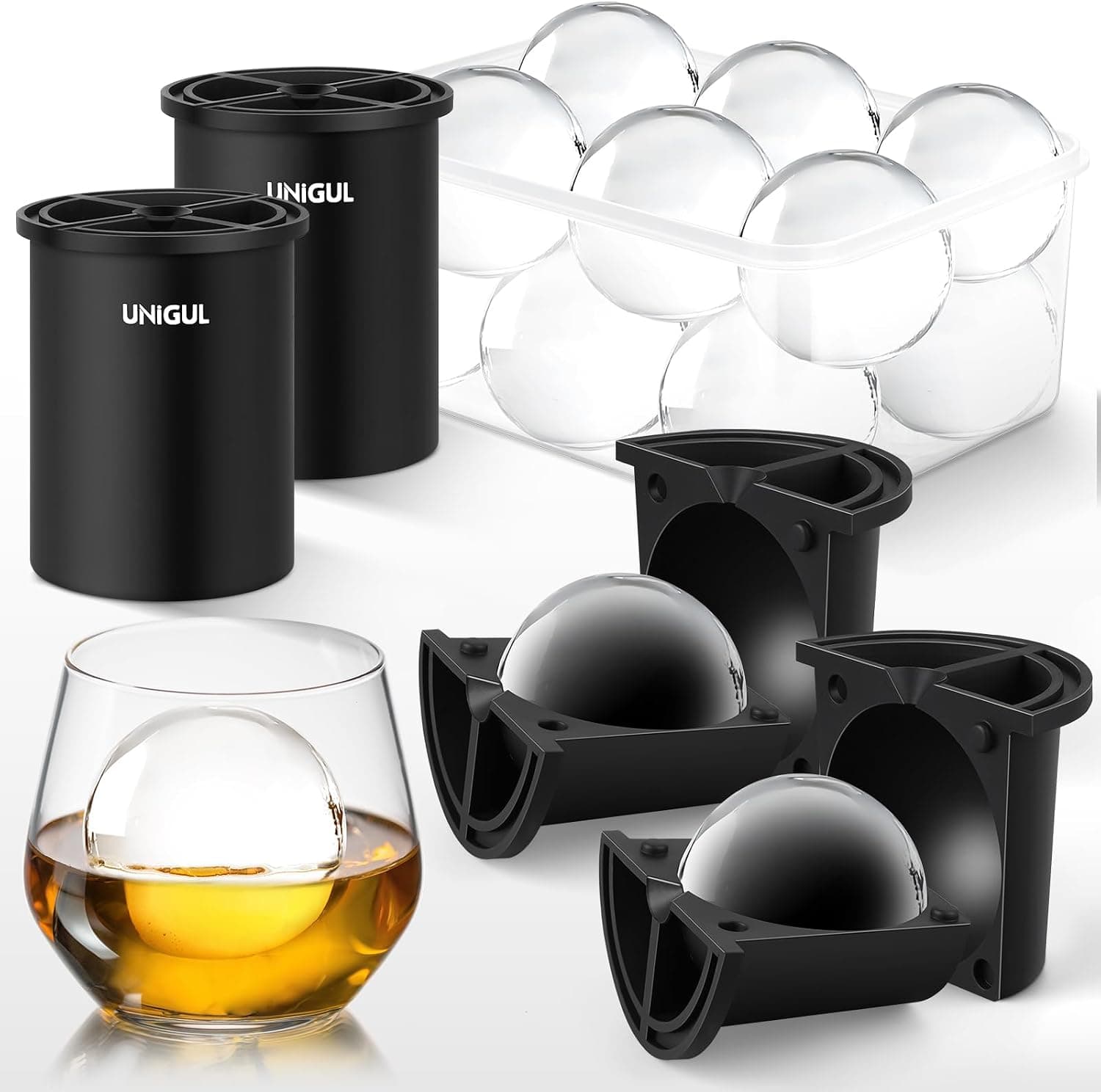
Clear Ice Ball Maker, 2.5-Inch Stainless (2-Pack)
Two stainless-shelled directional molds that each produce a 2.5-inch clear sphere, bundled with tongs and an insulated storage box for the finished ice.
I like both shapes and I won't pretend there's a serious performance gap between a 2-inch cube and a 2.5-inch sphere — there isn't one you'd notice. The difference is theater. The cube is what I use for myself. The sphere is what I use when people are watching, and it works every single time.
One sizing note: a 2.5-inch sphere needs a genuinely wide glass. Check your rocks glasses before you buy — our rocks and Old Fashioned glass guide covers the capacity math, but the short version is you want 12 ounces or more for a sphere this size.
Best Splurge: Aluminum Ice Ball Press
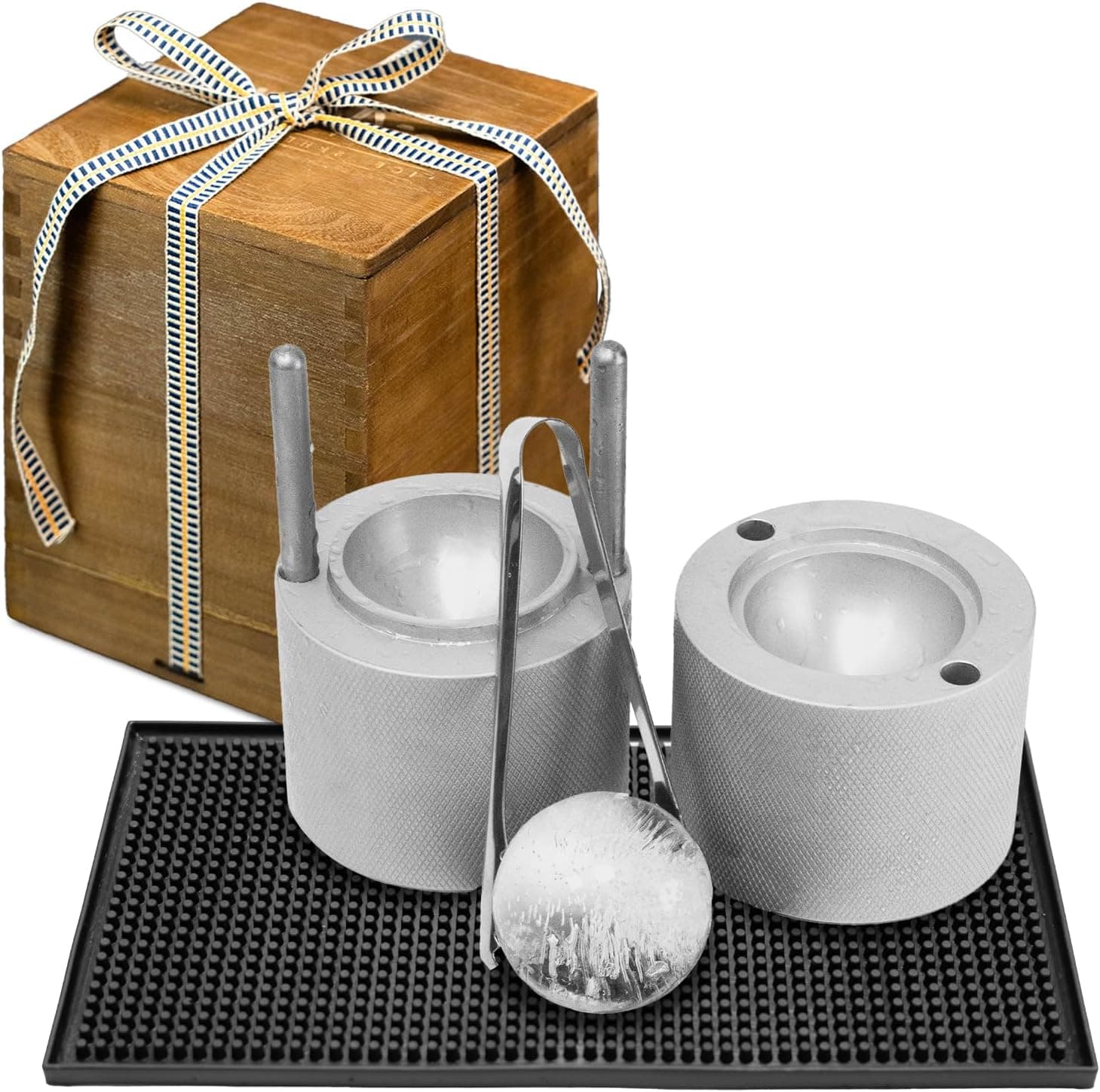
Ice Ball Press Set with Wooden Gift Box
A solid aluminum press that shapes a rough chunk of ice into a 2.4-inch sphere in about a minute using nothing but the metal's weight and thermal mass. Ships in a wooden box with tongs.
Here's the thing about presses that product pages bury: a press does not make ice. It shapes ice you already have. You still need a source of big, ideally clear chunks — which means a cooler, a mold, or a bag of craft ice from a grocery store. If you buy a press expecting it to solve the clear-ice problem on its own, you've bought a very handsome paperweight.
Bought as a second piece of gear alongside a cooler or a mold, it's excellent, and it turns making a drink into a small performance. Fair warning on this specific listing: it's well-rated at 4.6 stars but only has around 22 reviews, so the sample is thin. If you want a more established option, the Klaris Aluminum Ice Ball Press Kit (~$250) is the serious-money version.
The Dream Setup: Countertop Clear Ice Machine
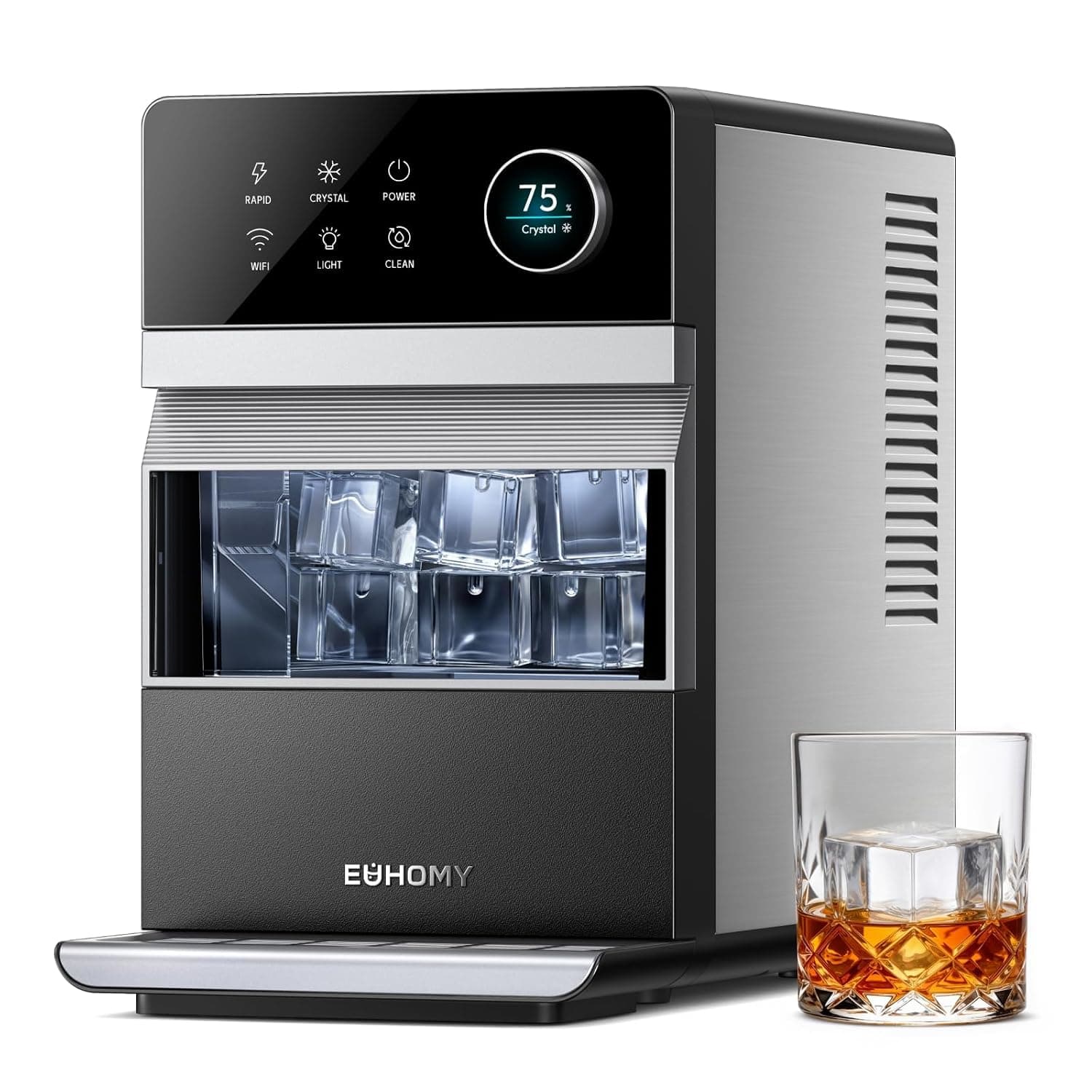
EUHOMY 2-Inch Countertop Clear Ice Maker
A countertop appliance that produces roughly 110 clear 2-inch cubes a day on a 20-to-40-minute cycle, with app control and self-cleaning. No molds, no 24-hour wait, no freezer real estate.
I don't own one of these, and I'm not going to tell you I do. But it's the piece of gear I'd buy tomorrow if I had the counter space to give up, and I think that's the honest way to frame it for you too: this is not a better result than a $40 mold. The cube that comes out is about the same. What you're buying for $360 is the elimination of planning and the elimination of the yield ceiling.
Ask yourself two questions before spending it. Do you have permanent counter space for something roughly the size of a bread machine? And do you entertain often enough that the freezer-cycle wait is a real annoyance rather than a theoretical one? Two yeses and it's a great purchase. One no and buy the Berlinzo instead and keep the $300.
Free: The Cooler Method
You do not have to spend anything. The cooler method is how bars did this before the gadget market existed, and it works exactly as well.
- Take a small hard-sided cooler — a six-pack cooler is ideal — and remove the lid.
- Fill it with tap water, two-thirds of the way up.
- Put it in your freezer, uncovered, for 18 to 24 hours.
- The insulated walls and base force the freeze to advance top-down. Pull it out while the bottom inch or two is still liquid.
- Turn out the block, pour off the cloudy water, and cut the clear slab into cubes with a serrated knife and a few taps from a mallet.
The trade-offs are real and worth stating plainly: it eats a shelf of your freezer, it takes practice to cut cleanly, and the cubes come out slightly irregular. The upside is that you get far more clear ice than any mold produces, for zero dollars, and cut-by-hand ice with visible facets looks fantastic in a glass.
If you already own a small cooler, try this before you buy anything. You'll learn whether you care about clear ice for free, and if you decide you do, a mold will feel like a bargain rather than a gamble.
Clear ice is the cheapest way to make a home pour feel like a bar pour. It's also the single most oversold item in home bar gear. Both things are true, and which one applies to you depends entirely on whether you're making cocktails or drinking neat.
Cube or sphere?
I genuinely like both, and anyone telling you there's a decisive winner is selling one of them.
The 2-inch cube is the practical default. It fits a standard 9-to-11-ounce rocks glass with room to pour around it, it's easier to store, and it's what I reach for most nights. Molds that make cubes also tend to yield more per cycle, because cubes pack better in a tray.
The 2.5-inch sphere melts a hair slower — less surface area for the same volume — and it is unquestionably the better-looking option. If you're pouring for guests, the sphere earns its keep on reaction alone. It needs a wider glass, and most molds make fewer per cycle.
If you're buying your first thing: get a cube mold. If you're buying your second: get a sphere mold for company. If you're buying a gift for someone who already has bottles they love, the sphere is the more impressive object to unwrap.
What to skip
- Whiskey stones. Granite or steel chilling rocks sound clever and fail at the actual job. They have a fraction of the thermal capacity of ice, so they chill your bourbon a few degrees and then stop, while real ice absorbs enormous energy as it melts. And the "no dilution" pitch misreads the problem — a little dilution opens up bourbon, especially at barrel proof. You don't want zero dilution. You want dilution you control. Stones are a perennial gift-guide favorite and a perennial disappointment.
- Reusable plastic "ice cubes." Same problem as stones, plus plastic sitting in your bourbon.
- Any "clear ice" tray without insulation. If the product is just a silicone tray with no insulated jacket and no drainage reservoir, it cannot do directional freezing and it will not make clear ice, whatever the listing photo shows. Insulation and a place for the cloudy water to go are the two non-negotiable features.
- Boiled-water tricks as a substitute for a mold. Boiling helps a little. It does not produce clear ice in a normal tray, and people who try it usually conclude clear ice is a myth. It isn't — the method was just wrong.
- Anything over 2.5 inches unless you've measured your glass. Oversized novelty molds make ice that won't fit what you own.
Frequently Asked Questions
- How do you make clear ice at home?
- Use directional freezing: freeze water from one direction only, inside an insulated container, so air bubbles and impurities get pushed ahead of the ice front into a reservoir of water you throw away. You can do this for free with a small hard-sided cooler in your freezer, or with a purpose-built insulated silicone mold for around $30 to $60. Plain tap water is fine — special water is not required.
- Do I need distilled or boiled water for clear ice?
- No. The cloudiness in normal ice comes from the direction of the freeze, not the water itself. Boiling helps marginally and distilled water helps marginally, but neither produces clear ice in a standard tray. Directional freezing with ordinary tap water beats every water-prep trick.
- Does clear ice actually make bourbon taste better?
- Not directly — clear ice and cloudy ice made from the same water taste identical. What clear ice does is melt more slowly, because it has no internal air bubbles to weaken it. Over a 15-to-20-minute cocktail that means less dilution and a drink that tastes the same at the end as it did at the start. It matters most for Old Fashioneds and other spirit-forward cocktails, and much less for neat pours.
- Is an ice ball press worth it?
- Only as a second piece of gear. A press shapes ice you already have into a sphere in about a minute — it does not make ice, and it doesn't make cloudy ice clear. If you already have a cooler or a mold producing large chunks, a press is a fast and genuinely impressive addition at $90 to $250. As a first purchase it will disappoint you.
- Are whiskey stones better than ice?
- No. Whiskey stones hold far less cold than ice does, so they chill your pour slightly and then stop, and they never reach the temperature real ice does. The 'no dilution' selling point also misunderstands the goal — a small amount of water opens up bourbon, particularly at barrel proof. What you want is controlled dilution, which a single large clear cube gives you.
- What size ice cube should I use for whiskey?
- Two inches is the standard for a rocks glass, and 2.5 inches for a sphere if your glass is wide enough. Bigger ice has less surface area relative to its volume, so it melts slower. Check your glass first: a 2-inch cube needs at least a 9-to-11-ounce rocks glass, and a 2.5-inch sphere wants 12 ounces or more.
- How long does clear ice take to freeze?
- Between 18 and 24 hours for most molds and for the cooler method. This is the real trade-off against a countertop machine, which produces clear cubes in 20 to 40 minutes. If you tend to decide on a drink the same evening rather than the day before, that wait is the main thing you're paying to eliminate.